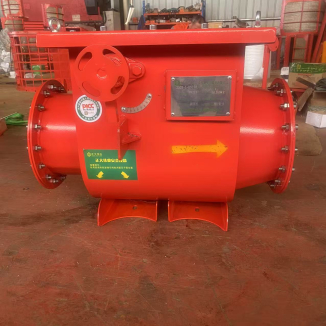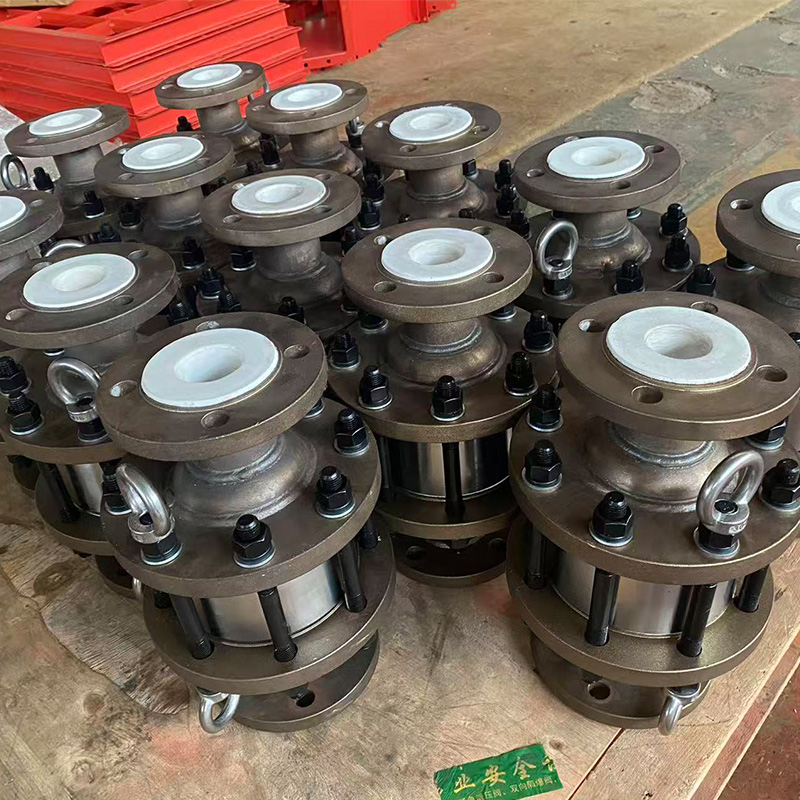
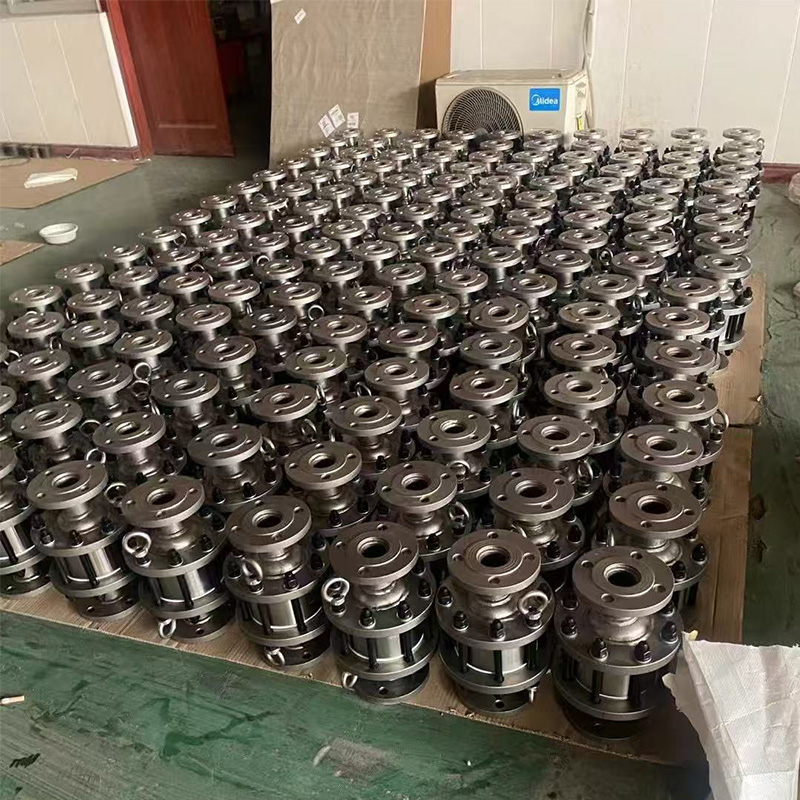
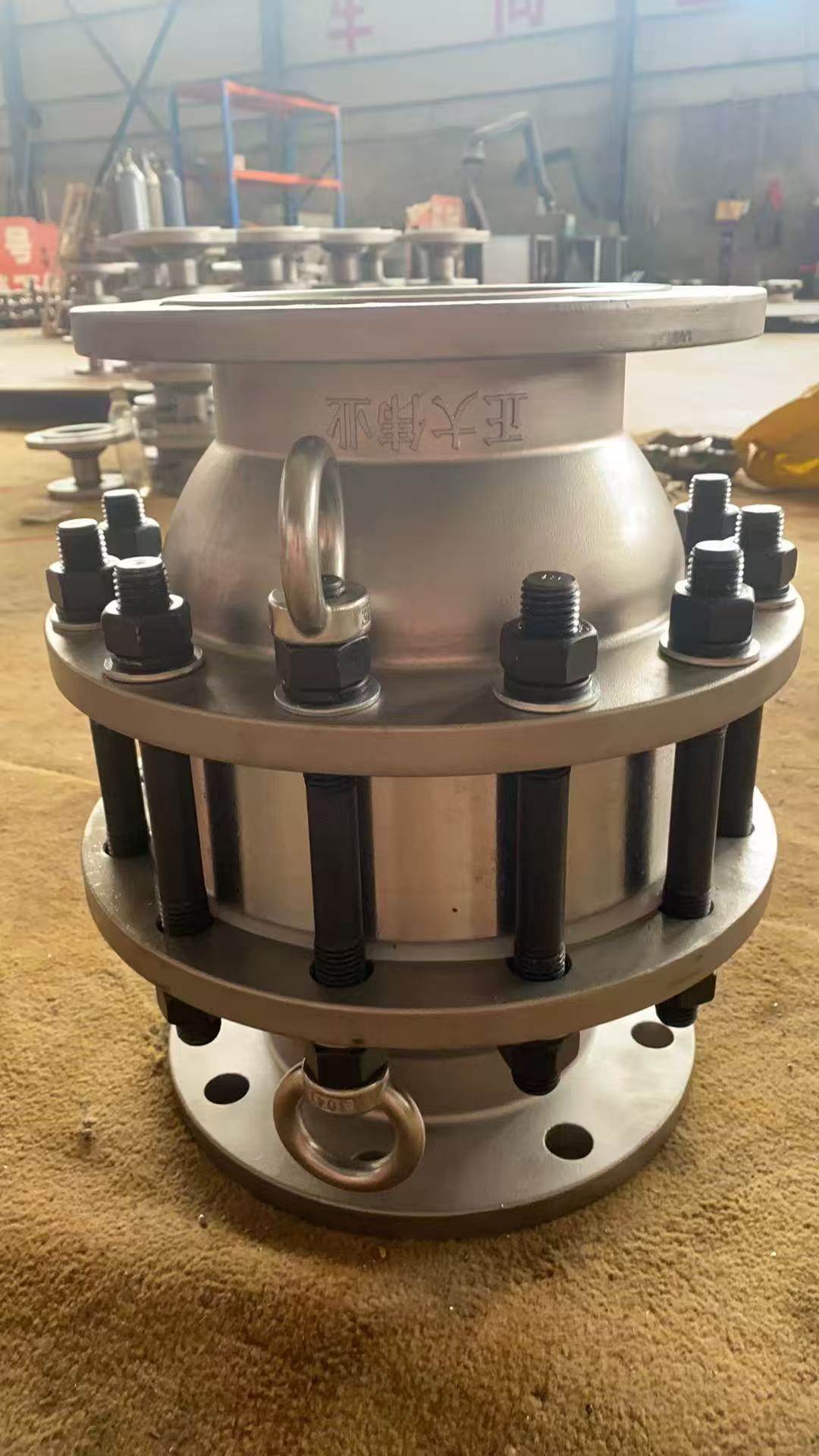
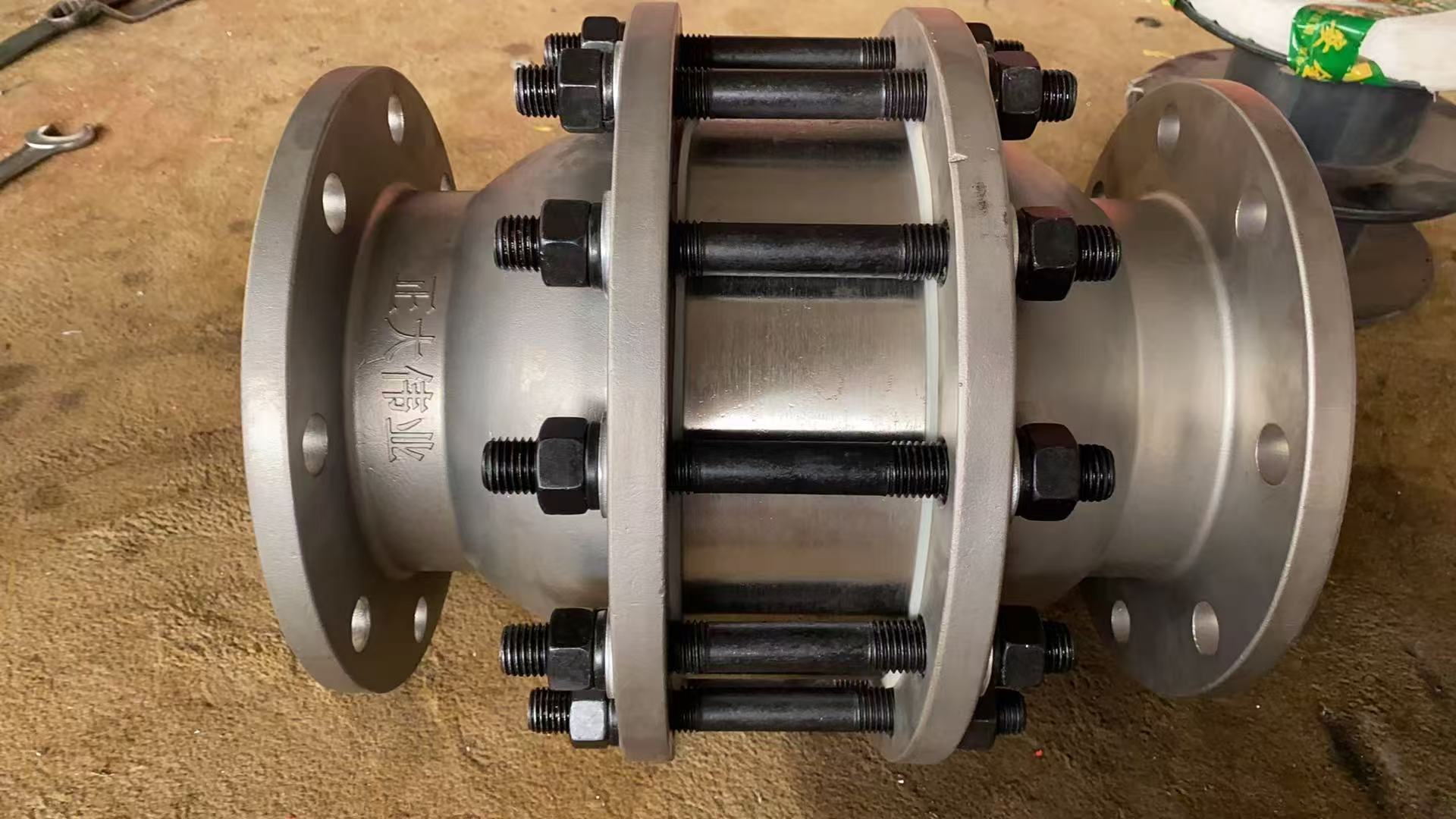
In Line Detonation Flame Arrester
Maximum flow , small pressure drop
Easy to clean, not easy to clog, less maintenance
Standard temperature detection port
Easy to install, removable fire barrier for easy inspection and maintenance
Bidirectional structure
Support ANSI, DIN and HG/T20592~20635-2009 flange
The core function of a flame arrester is not pressure relief, but flame arresting. It contains a special internal component (usually a "flame arrester element" composed of metal corrugated strips or parallel plates) with a large number of narrow channels.
Its working principle is as follows:By utilizing the thermal conductivity of the metal material and the "quenching effect" of the narrow channels, the heat of the flame is quickly dissipated. This prevents the flame from maintaining the temperature required for combustion when passing through the flame arrester element, causing the flame to be extinguished on one side of the flame arrester and stopping it from spreading to the other side.
A simple analogy: It is like a highly efficient "flame filter" that only allows gas and pressure to pass through, while capturing and extinguishing flames.
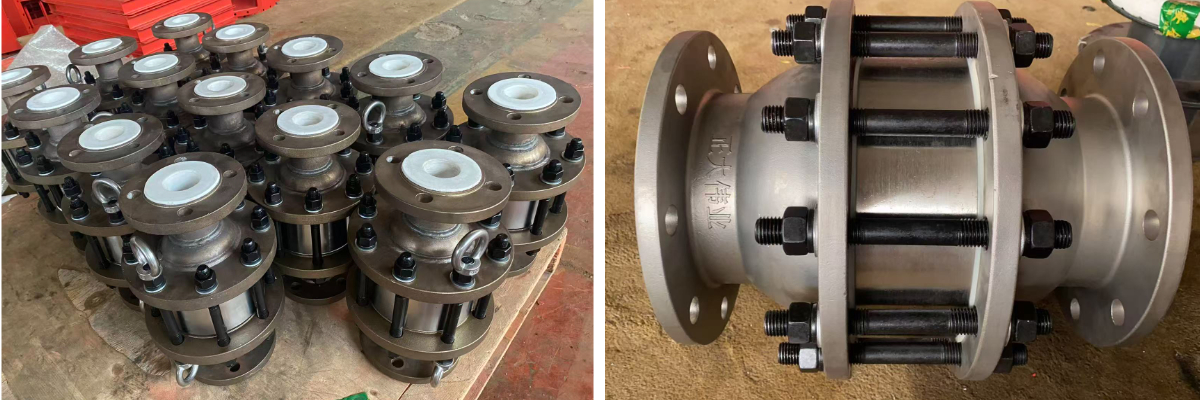
Deflagration-to-Detonation Transition (DDT) Flame Arrester / Detonation Flame Arrester
· Function: Prevents the propagation of detonation flames. Detonation refers to a supersonic combustion wave accompanied by intense shock waves, which is extremely destructive. The pressure and velocity of a detonation wave are much higher than those of deflagration.
· Features: Its structure is more robust than that of deflagration-type flame arresters, enabling it to withstand extremely high pressure and impact force. It is usually heavier and more expensive.
Flame Arrester Production Process
Flame arresters are used to prevent flame propagation and protect equipment safety, and are commonly applied in scenarios such as petrochemical industries and gas pipelines. Strict control over each link of the production process is required to ensure that the flame arresting effect meets standards.
1. Preliminary Preparation
Before production, customer requirements are clarified and the type of flame arrester is determined. Common types include corrugated plate type, metal mesh type, and packed type. Materials are selected based on the application scenario, usually high-temperature and corrosion-resistant metals such as stainless steel, aluminum alloy, and copper alloy. After material procurement, inspections of composition, thickness, and strength are conducted to ensure compliance with industry standards. For example, stainless steel plates must meet the requirements of GB/T 4237, with a tensile strength of no less than 520 MPa.
2. Processing and Forming
Materials are cut into the designed dimensions, with the error controlled within ±0.5 mm. For corrugated plate flame arresters, a hydraulic press is used to press corrugations at a specific angle, with a corrugation depth of approximately 1-2 mm and uniform spacing. For metal mesh flame arresters, a weaving machine is used to cross-weave metal wires; the mesh aperture is adjusted according to the flame speed, generally ranging from 0.15 mm to 0.5 mm. For packed flame arresters, metal particles or ceramic balls are filled into the shell, and the filling density must reach 1.2-1.5 tons per cubic meter.
3. Flame Arresting Core Assembly
Corrugated plates or metal meshes are stacked and placed into the shell, and positioning pins are used to fix the layers to prevent misalignment. For packed flame arresters, vibration compaction is performed after filling to avoid excessive gaps. During assembly, the tightness of the shell’s welded joints is inspected, and a helium detector is used to test the leakage rate, which requires the leakage volume to be less than 0.01 cm³/s.
4. Surface Treatment
The outer shell of the flame arrester undergoes sandblasting to remove rust and is sprayed with high-temperature resistant paint. The coating thickness is 80-120 microns, and it must pass a 48-hour salt spray test without peeling. The internal flame arresting core is subjected to passivation treatment to prevent metal oxidation. Flame arresters used in some special environments require nickel electroplating to enhance corrosion resistance.
5. Performance Testing
Flame arresters must pass the explosion arrestment test and the fire resistance test. In the explosion arrestment test, a propane-air mixture is ignited to observe whether the flame penetrates. The fire resistance test involves continuous combustion for 2 hours, with the shell temperature not exceeding 400°C. Test data is recorded, and non-conforming products are reworked or scrapped.
6. Quality Inspection and Packaging
Qualified products are labeled with information such as model, production date, and implementation standards. During packaging, the flame arrester is wrapped with foam cotton, and shockproof marks are printed on the outer box. Before shipment, order information is verified to avoid model or quantity errors.
7. Precautions
The production workshop must maintain ventilation, with the metal dust concentration below 4 mg/m³. Employees are required to wear protective equipment and receive regular training on safe operation specifications. Waste materials are sorted and recycled, and pickling wastewater is discharged only after neutralization treatment to meet standards.
The production of flame arresters may seem simple, but in fact, every detail affects the final performance. For example, a 2-degree deviation in the angle of corrugated plates may reduce the flame arresting efficiency by 30%; a 0.1-mm error in the metal mesh aperture may allow flames to penetrate directly. There was once a manufacturer that used low-quality aluminum alloy to cut costs, resulting in shell melting during the fire resistance test and causing a major safety accident.
Regular maintenance of production equipment is also crucial. The pressure sensors of hydraulic presses are calibrated quarterly, and the yarn guide wheels of weaving machines are filled with high-temperature lubricating oil monthly. The quality inspection room is equipped with precision instruments such as infrared thermal imagers and gas analyzers, whose accuracy is verified by third-party institutions annually.
Customer customization needs are increasing. For instance, flame arresters used on offshore platforms require an additional galvanized layer, and those used in oil refineries need to be equipped with differential pressure alarm devices. The production line reserves 10% flexible production capacity to facilitate rapid process adjustments.
Industry competition is gradually shifting towards technological innovation. Some enterprises have developed flame arresters with self-cleaning functions, which remove carbon deposits through ultrasonic vibration; others use 3D printing technology to manufacture flame arresting cores with complex structures, increasing the flame arresting efficiency by 15%.
Producing a flame arrester is like making a shield to protect lives—it must be sturdy and reliable, while also being accurately adapted to needs. From a single metal plate to a safety barrier, it relies on the rigorous control of more than 20 processes. Next time you pass by those silver-gray pipelines in a chemical plant, you might think of these flame arresters working silently. With their precision structures measured in millimeters,
Product Specifications
Model | Size | Gas Group (IEC/NEC) |
6400 | 1”(DN25) ~ 40”(DN 1000) | Ⅱ A/D |
Materials
Model | Case | Fire barrier |
6400 In-Line Detonation Flame Arrester | carbon steel304316LHastelloy alloy | 304316LHastelloy alloy |
Where should each piece of equipment in a complete chemical workshop be installed?
A rupture disc is installed on the reaction kettle to prevent physical overpressure.
• A pipeline flame arrester is mounted on the exhaust pipe of the reaction kettle to prevent flame flashback.
• If the reaction kettle is at risk of dust explosion, a flameless venting device may be installed to achieve both pressure relief and flame extinguishing.
• A terminal vent flame arrester is fitted at the outlet of the breather valve of the solvent storage tank in the workshop to prevent external ignition sources (such as lightning strikes) from entering the storage tank.