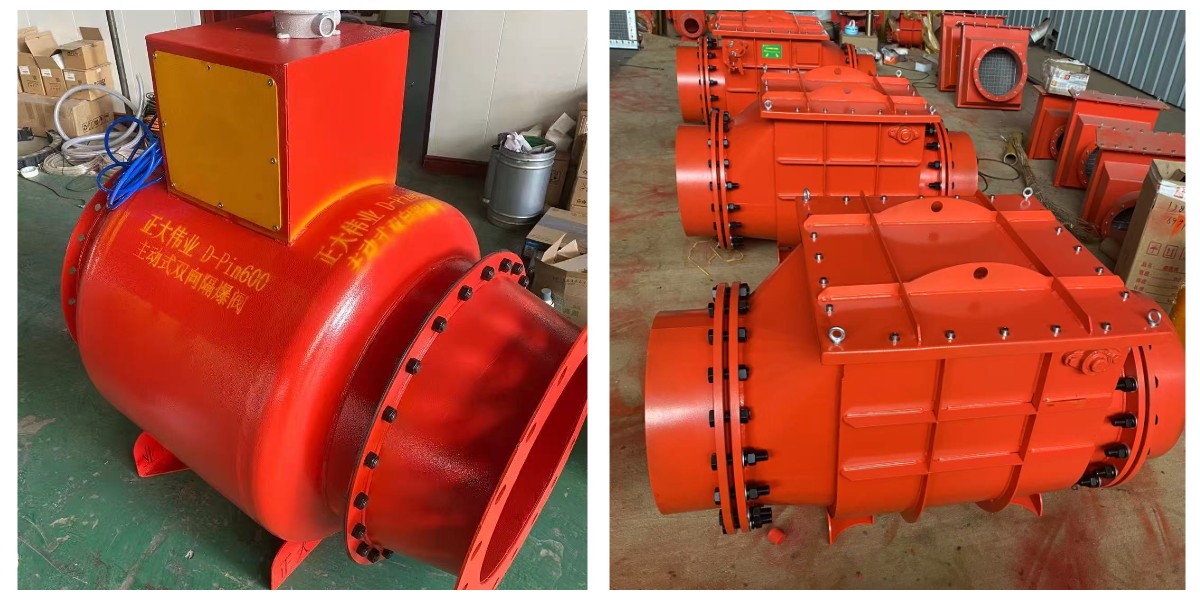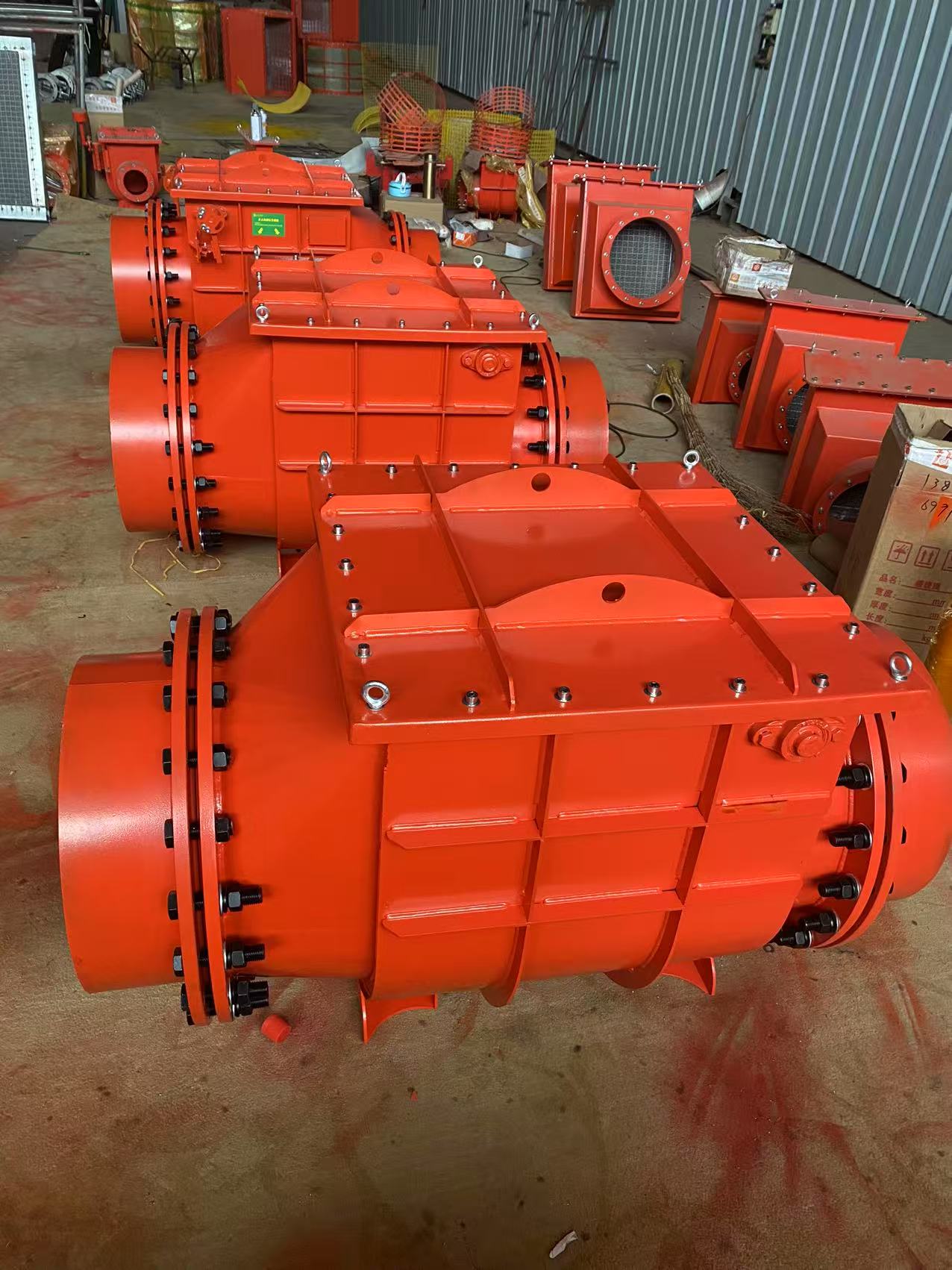
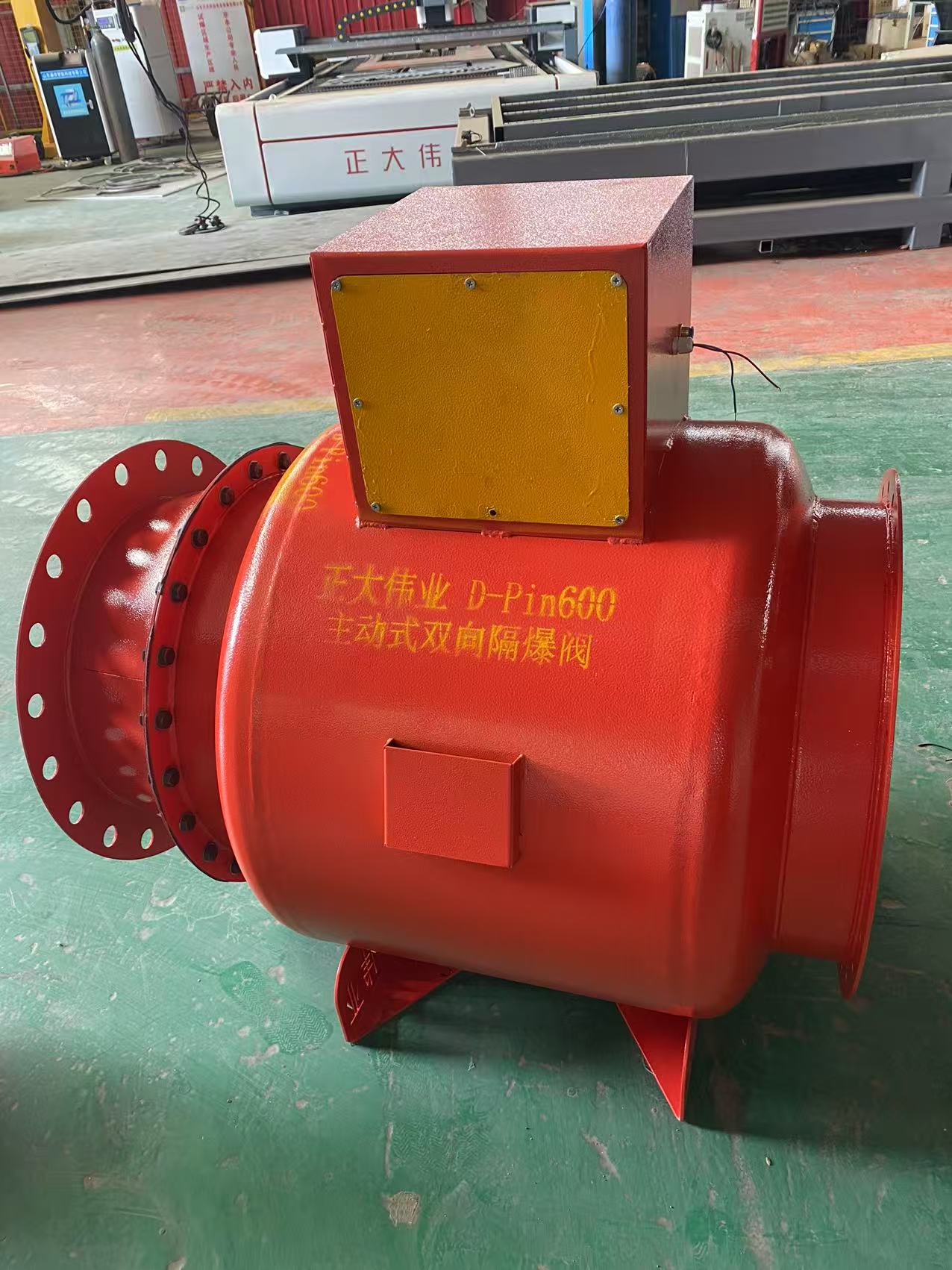
Isolation Valve
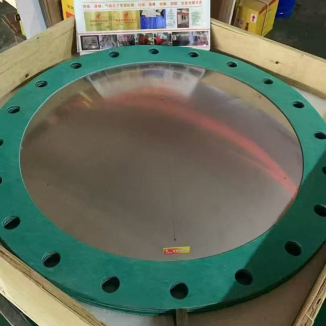
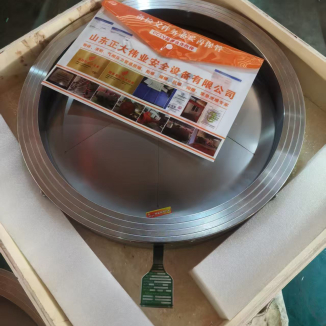
Material Build: Constructed from Carbon Steel for the housing and Stainless Steel for the internal sealing gate.
Pressure Specification: Specified pressure loss does not exceed 500 Pa at a flow rate of 25 meters per second.
Allows for complete on-site maintenance and inspection routines without the removal of pipeline sections.
Designed primarily for mounting in horizontal duct runs; arrangements can be made for implementation in vertical configurations.
Incorporates a normally-unobstructed gate; an optional high-speed pressure sensing device can be integrated to confirm closure actuation.
Fitted with a fail-safe mechanical interlock to prevent gate reopening after closure.
Utilizes an electromagnetic trip system to achieve an exceptionally fast closure sequence.
The interior flow path is aerodynamically profiled to minimize resistance and deter the adherence of particulate matter.
Product Information
Operational Context
In continuous process industries, the interconnection of equipment via piping is fundamental for material and airflow. This network, however, presents a conduit for hazard escalation should a deflagration occur. A primary event in a single unit can rapidly transmit destructive energy downstream. The installation of a pressure-actuated isolation valve creates a decisive break in this pathway. Engineered to close automatically upon sensing the unique pressure signature of an explosion, it acts to isolate the affected section, thereby preventing a chain reaction and safeguarding interconnected assets and operational zones.
This device functions as an autonomous safety interlock within industrial ductwork. Its core objective is to detect and physically block the propagation of explosion flames and pressure, ensuring that an incident is confined to its point of origin and protecting downstream infrastructure and personnel.
Core Advantages
Autonomous Pressure Response: Engineered to be triggered by the initial overpressure pulse of an explosion, achieving full closure autonomously and rapidly, independent of external power or control signals.
Engineered for Industrial Rigors: Manufactured from selected alloys to ensure structural integrity and reliable performance across a wide operational spectrum, including exposure to high temperatures, mechanical stress, and corrosive elements.
Streamlined for Practical Application: A design focused on ease of installation within standard pipe sizes and straightforward access for periodic inspection contributes to lower total cost of ownership.
Status Reporting Capability: Can be configured with position indication switches, enabling integration with plant monitoring systems to provide real-time open/closed status feedback.
Guaranteed Explosion Decoupling
The valve's efficacy is derived from its optimized gate geometry and a pressure sensor with minimal response latency. This combination ensures closure occurs within the critical timeframe required to intercept the flame front, a principle central to effective explosion isolation as defined in global safety standards (e.g., NFPA 69, ATEX).
Long-Term Operational Integrity
Built with an emphasis on durability and corrosion resistance, the valve is designed for sustained reliability in demanding environments. This robust construction minimizes lifecycle costs through reduced maintenance frequency and ensures continuous protective readiness.
Zero Interference with Normal Flow
Under standard operating conditions, the gate is maintained in a fully retracted position, presenting a clear bore that imposes negligible additional system pressure drop. This design ensures process efficiency remains uncompromised while the safety mechanism remains on constant standby.
Certified Explosion-Proof Enclosure
Approved Overpressure Detection Sensor
Functioning Methodology
The valve's operation is predicated on the physical phenomenon where the pressure wave (shock front) of an explosion precedes the flame. A dedicated pressure sensor, integral to the valve assembly, is calibrated to detect this rapid pressure rise. Upon reaching a predetermined threshold, the sensor instantaneously triggers the release mechanism. The gate is then propelled to its closed position by a stored-energy device (e.g., a spring). A positive mechanical latch engages upon closure, securely holding the gate sealed against the subsequent explosion forces.
Post-event, once the environment is confirmed safe, the valve can be easily reset to its open position via a manual procedure. A brief visual inspection and operational check are recommended. During normal service, the gate is held open by a low-energy retention system.
Product Specifications (Descriptive Format)
The valve series is available in a comprehensive range of sizes. Key specifications are detailed as follows: The DN100 model features external dimensions of 409 mm in length, 324 mm in width, and 497 mm in height, certified for ST1 and ST2 explosion protection levels. Both the DN150 and DN200 models share identical dimensions of 587 mm (L) x 386 mm (W) x 550 mm (H), suitable for ST1 and ST2 environments. The DN250 model measures 628x443x624 mm (LxWxH), compliant with ST1 and ST2 standards. For larger applications: the DN300 model dimensions are 778x507x693 mm (ST1, ST2); the DN350 is 868x641x788 mm (ST1, ST2); and the DN400 is 946x641x813 mm (ST1, ST2). The DN450 and DN500 models both have an overall size of 1093x795x922 mm and are rated for ST1 and ST2. Furthermore, the DN550 model measures 1240x885x1020 mm (ST1, ST2), and the DN600 is 1240x885x1074 mm (ST1, ST2). The DN650 model dimensions are 1300x989x1191 mm, and the DN700 is 1390x989x1191 mm, both designed for ST1-rated applications. All dimensions represent the valve body's length, width, and height.
Optional Equipment
Blast Pressure Sensor: Standard Type HE (High Energy threshold)
Operational and Maintenance Procedures
Pre-Operational Safety Check: Before initiating system airflow, it is essential to verify manually that the valve gate is in the fully open position and that the mechanism moves freely.
Preventive Maintenance Schedule: Implement a routine inspection plan with a minimum frequency of once per month. In systems subject to heavy dust loading, condensation, or thermal cycling, more frequent inspections of the moving parts and latch are advised.
Post-Maintenance Function Test: Following any servicing, always conduct a manual operation test to confirm smooth opening, positive closing, and secure latching of the valve before returning the system to service.
Manufacturer Details
Shandong Zhengda Weiye Safety Equipment Co., Ltd. is a solution-oriented enterprise dedicated to advancing industrial safety through the development and production of pressure relief and explosion isolation technologies.
Our core product offerings include precision-engineered rupture discs, a full range of safety and relief valves, flame arresters, and integrated explosion protection systems.
Based in Jinan, our operations leverage dedicated R&D and quality-controlled manufacturing processes. We are committed to providing reliable safety solutions and maintain full compliance with industry regulations, holding the Chinese Special Equipment Manufacturing License, ISO 9001 certification, and relevant national explosion-proof product certifications.