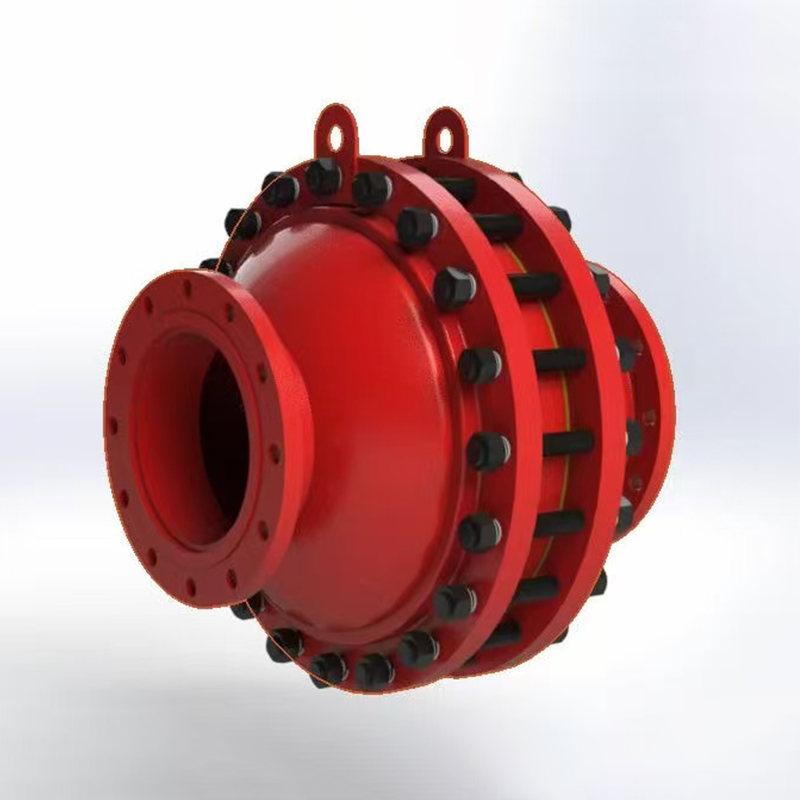
In Line Deflagration Flame Arrester
Maximum flow rate, small pressure drop
Easy to clean, not easy to clog, less maintenance
Standard temperature detection port
Easy to install, removable fire barrier for easy inspection and maintenance
Bidirectional structure
Support ANSI, DIN and HG/T20592~20635-2009 flange
Used within 50d of the pipe end and close to the pipe end, that is, the f lame development has not yet reached the detonation stage. It meets the requirements of ISO16852, GB13347 and other standards and is more economical than detonation flame arresters. The two-way structure can prevent low-pressure, medium-pressure and high-pressure deflagrations, and can eliminate the high speed and high pressure generated by deflagration while extinguishing the flame
Flame Arrester Production Process
Flame arresters are used to prevent flame propagation and protect equipment safety, and are commonly applied in scenarios such as petrochemical industries and gas pipelines. Strict control over each link of the production process is required to ensure that the flame arresting effect meets standards.
1. Preliminary Preparation
Before production begins, customer requirements are confirmed and the appropriate flame arrester type is selected. Common designs include corrugated plate, metal mesh, and packed structures. Material selection depends on the working environment, typically choosing high-temperature, corrosion-resistant metals such as stainless steel, aluminum alloy, or copper alloy. After materials are procured, they undergo inspections for composition, thickness, and mechanical properties to ensure compliance with industry standards. For example, stainless steel plates must meet GB/T 4237 requirements, with a tensile strength of at least 520 MPa.
2. Processing and Forming
Raw materials are cut to the specified dimensions with a tolerance of ±0.5 mm.
Corrugated plate type: Corrugations are formed using a hydraulic press at precise angles, typically with a depth of 1–2 mm and uniform spacing.
Metal mesh type: Metal wires are interwoven using a specialized weaving machine, adjusting the mesh opening based on flame speed—commonly between 0.15 mm and 0.5 mm.
Packed type: Metal granules or ceramic balls are filled into the housing, requiring a packing density of 1.2–1.5 t/m³.
3. Assembly of the Flame Arresting Core
Corrugated plates or mesh layers are stacked inside the housing and fixed using positioning pins to prevent displacement. For packed designs, vibration compaction is applied to remove voids. During assembly, all welded joints are checked for sealing integrity; helium leak detection is used to verify that leakage is less than 0.01 cm³/s.
4. Surface Treatment
The flame arrester shell undergoes sandblasting to remove surface impurities, followed by coating with high-temperature-resistant paint. The coating thickness is controlled at 80–120 μm and must pass a 48-hour salt-spray test without peeling. The flame arresting core is passivated to prevent oxidation, and in harsh environments, a nickel-plated coating may be applied to further improve corrosion resistance.
5. Performance Testing
Each flame arrester must pass explosion-proof and endurance tests.
Explosion arresting test: A propane–air mixture is ignited to verify that the flame does not propagate past the arrester.
Fire endurance test: Continuous combustion is applied for two hours, during which the shell temperature must remain below 400°C.
All test data are recorded, and any nonconforming units are repaired or scrapped.
6. Quality Inspection and Packaging
Qualified products are labeled with model number, production date, and applicable standards. For packaging, the flame arrester is wrapped with protective foam and placed in a box marked with shock-resistant symbols. Before delivery, order details are verified to ensure accuracy in model and quantity.
7. Precautions
The production workshop must stay well-ventilated, maintaining metal dust concentrations under 4 mg/m³. Operators must wear protective equipment and undergo regular safety training. Scrap materials are sorted for recycling, and pickling wastewater must be neutralized before discharge.
Although manufacturing a flame arrester may appear straightforward, every detail influences its final safety performance. For instance, a 2° deviation in the corrugation angle can reduce flame arresting efficiency by 30%, and a 0.1-mm error in mesh size can allow flames to pass through. One manufacturer once used substandard aluminum alloy to cut costs—the shell melted during a fire endurance test, leading to a major safety incident.
Regular equipment maintenance is equally important. Hydraulic press pressure sensors are recalibrated quarterly, and weaving machine guide wheels require monthly lubrication with high-temperature grease. Precision instruments in the quality control lab—such as infrared imagers and gas analyzers—must be verified annually by third-party agencies.
As customization demands grow, manufacturers must adapt. Offshore platforms may require galvanized finishes, while refineries often need differential-pressure alarm add-ons. Production lines typically reserve about 10% flexible capacity to handle rapid changes.
Competition in the industry is increasingly driven by innovation. Some companies have introduced self-cleaning flame arresters using ultrasonic vibration to remove carbon buildup, while others use 3D printing to produce complex flame-arresting cores with up to 15% higher efficiency.
Producing a flame arrester is like crafting a shield that safeguards lives—it must be strong, reliable, and precisely engineered. From a single metal sheet to a fully functional safety device, over twenty tightly controlled processes ensure its integrity. The next time you see those silver-gray pipes in a chemical plant, remember the flame arresters inside them, silently protecting the system with millimeter-level precision.