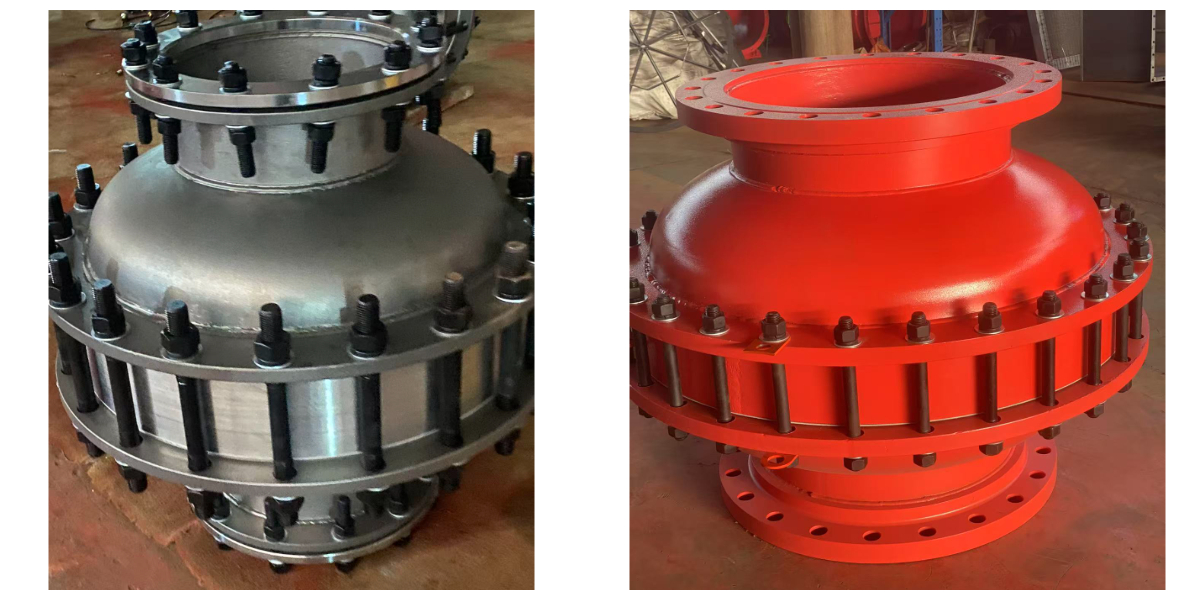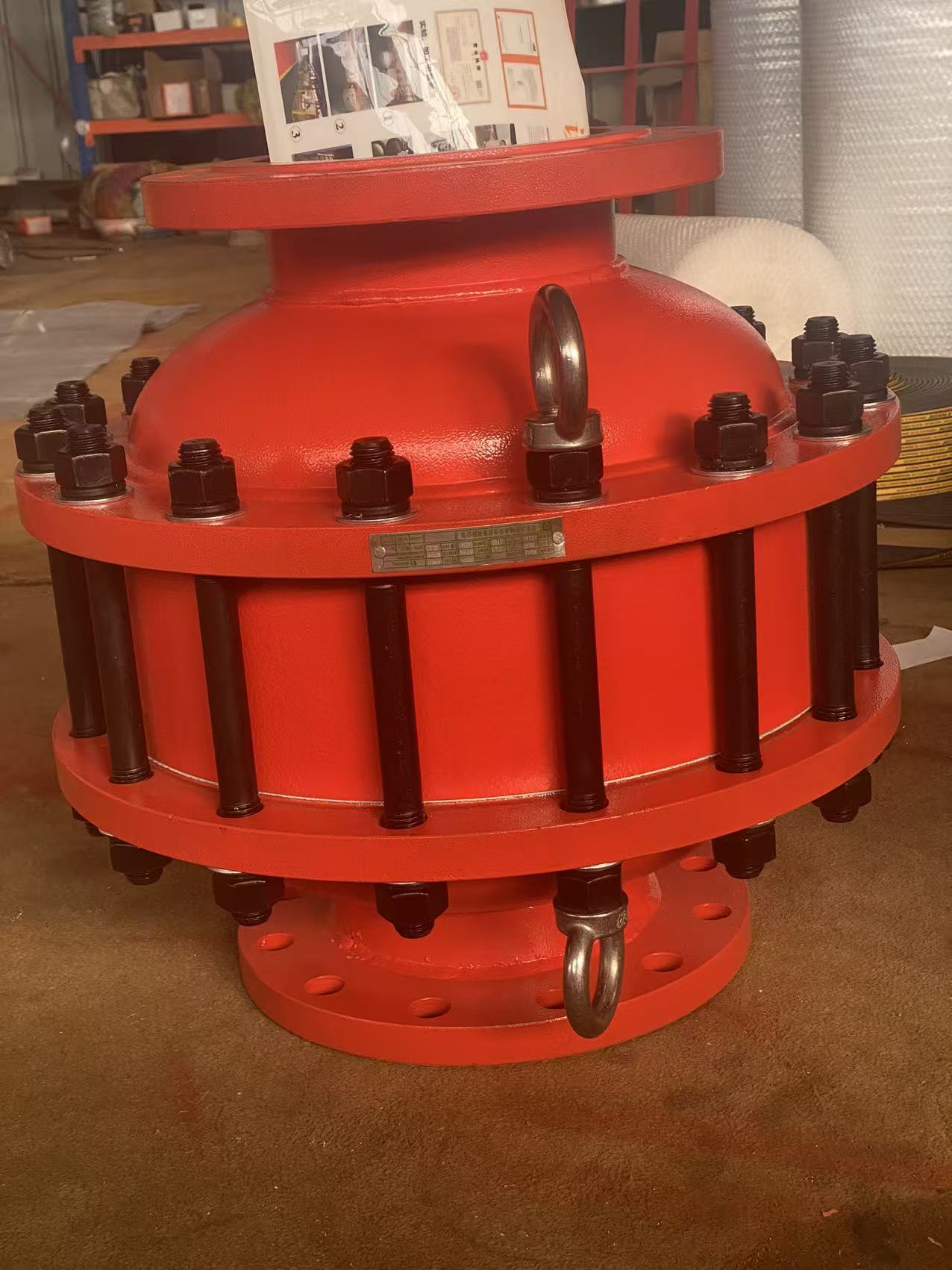
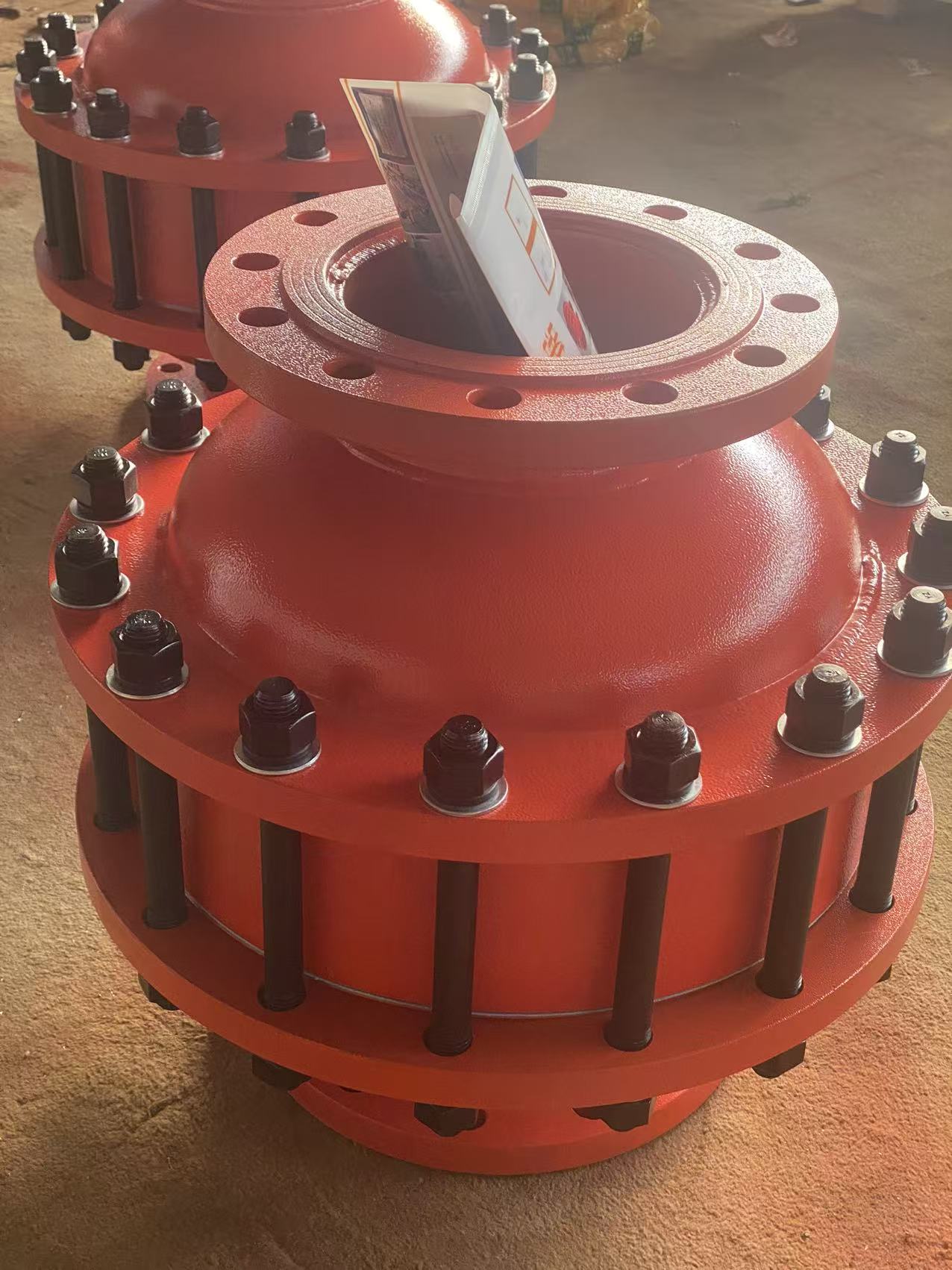
Explosion Isolation Flap Valve
Product Model: ZD-FA10 (Explosion Isolation Valve)
Type: Active Isolation Valve (mechanical)
Material: Housing: Carbon Steel or Stainless Steel. Valve Disc: Stainless Steel. Seals: High-temp elastomer or graphite.
Key Feature: A mechanical valve that closes within milliseconds upon detection of an explosion pressure wave, physically isolating sections of ducting or piping.
Actuation: Triggered by the pressure wave itself (pressure sensor) or a remote signal. Uses springs or pyrotechnic actuators for speed.
Typical Use: Interconnecting ductwork between dust collectors, silos, mixers, and mills to prevent explosion propagation in powder handling industries (food, pharma, chemical, metal).
Overview
In dust explosion protection, passive flame arresters are not always suitable for powder-laden ducts. The Explosion Isolation Valve provides an active, mechanical solution. Installed in the duct, it remains open during normal operation. Upon detection of an explosion—either by an integrated pressure sensor or a signal from a remote detector—it slams shut in milliseconds. This creates a physical barrier that stops the flame front, burning embers, and pressure wave from traveling to connected equipment, effectively preventing a secondary explosion. It is a key component in a comprehensive explosion protection strategy.
Features & Benefits
Ultra-Fast Response: Closure times typically < 100 ms, outpacing the flame front.
Positive Mechanical Barrier: Creates a solid, leak-tight seal upon closure, superior to quenching alone for stopping pressure and burning solids.
Suitable for Dusty Streams: Not susceptible to plugging like a static arrester element; the valve disc clears the flow path when open.
Can be Reset: After an event and inspection, many models can be manually reset for reuse, unlike a ruptured disc.
Various Trigger Options: Can be triggered by pressure, optical flame sensors, or control system signals.
How It Works
Standby: The valve disc is held open by a low-force latch or magnet.
Detection: An explosion pressure wave or sensor signal is detected.
Actuation: The holding mechanism releases instantly. A powerful spring or actuator forces the valve disc to rotate or translate into the closed position.
Sealing: The disc seals against a seat, often assisted by the explosion pressure itself, creating an isolation barrier.
Reset: After the event, the valve is manually unlatched and reset to the open position.
Specifications (Descriptive)
Sizes cover common ductwork: DN150 to DN800 and rectangular equivalents. Closure time is a critical spec (e.g., ≤ 50 ms). Holding force and spring energy are designed for the specific explosion severity (Kst). Valve leakage rating after closure is defined. Materials are selected for abrasion resistance (for the disc) and structural strength (for the housing). It is certified according to EN 16447 or similar for explosion isolation devices.
Q&A
Q: How is this different from a flame arrester?
A: A flame arrester quenches a flame but may allow some pressure wave and hot particles to pass. An isolation valve physically blocks the entire duct, stopping flame, pressure, and burning material completely. It is an active device, while an arrester is passive.
Q: Where should it be installed in a duct run?
A: As close as possible to the protected equipment (e.g., just before the inlet to a dust collector), and at least a certain minimum distance from potential ignition sources inside the duct to allow time for closure. Standards provide guidance on placement.
Q: What happens if the triggering system fails?
A: Redundancy (e.g., dual sensors) is often used for critical applications. The valve should be integrated into a safety loop with regular functional testing. Some valves have a mechanical pressure trip as a backup.
Q: Can it be used for gas explosions?
A: Yes, the principle is the same. The valve must be rated for the specific gas explosion characteristics (Kg) and the faster flame speeds involved.
About ZD Safety
We provide active defense against explosion propagation. Our isolation valves are precision-engineered mechanical systems designed to act with decisive speed, compartmentalizing explosions and protecting interconnected assets in powder and process industries.