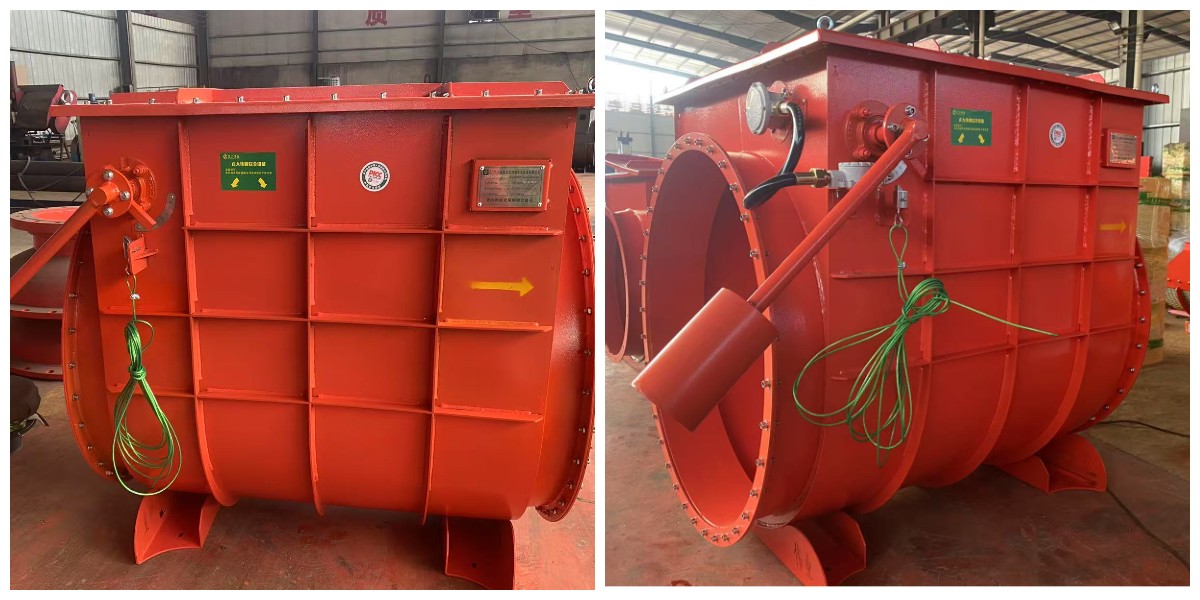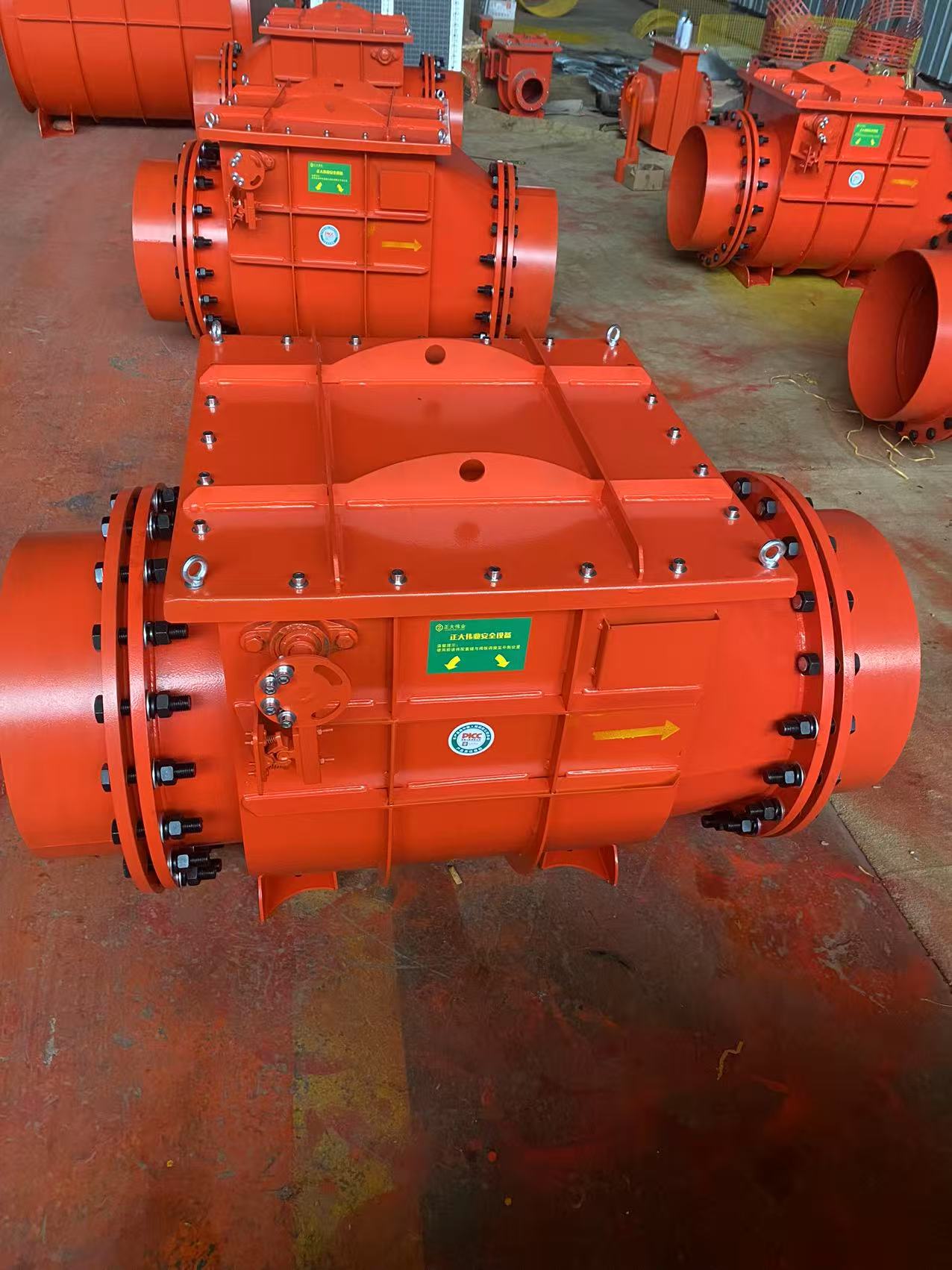
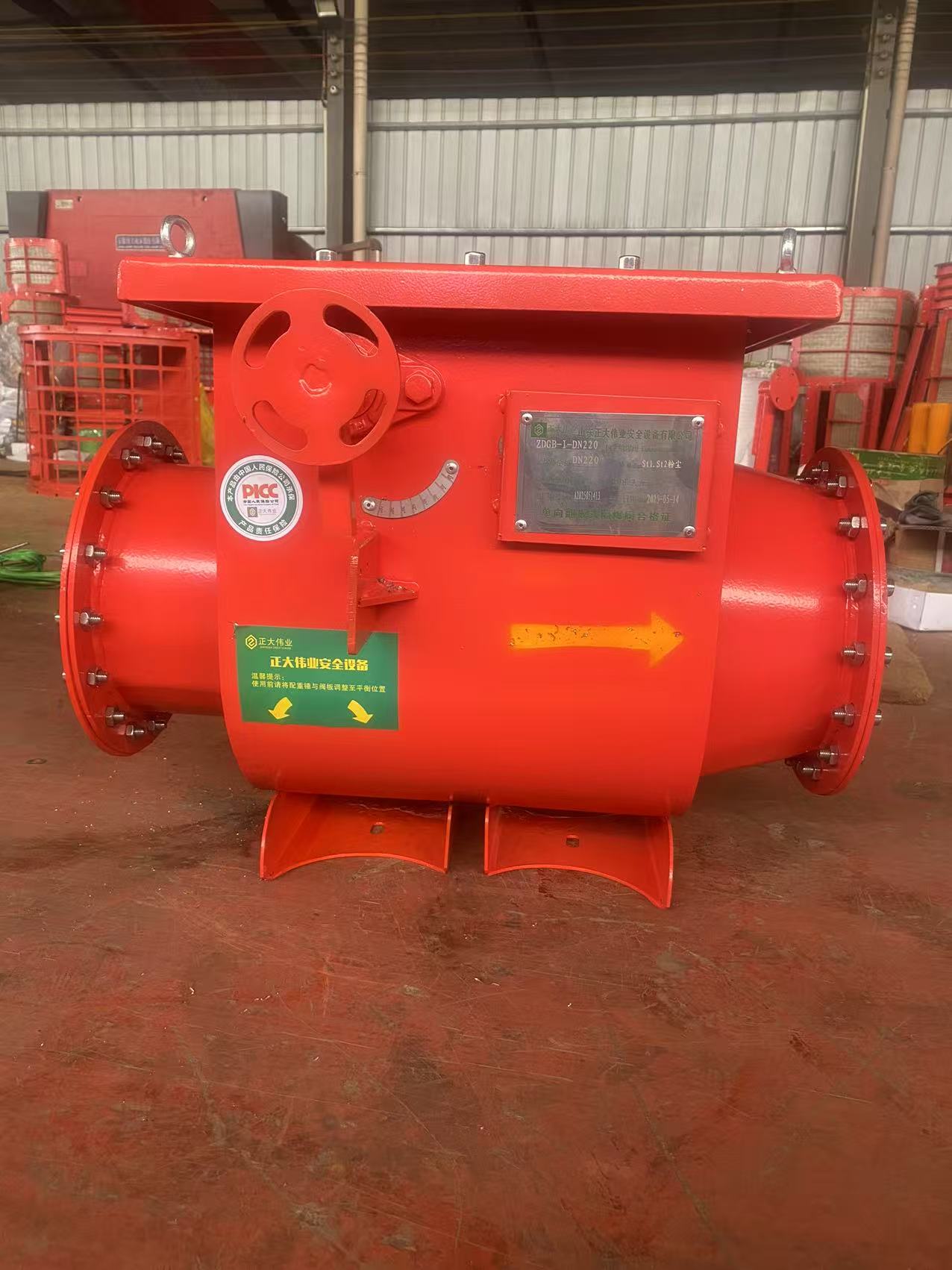
Rapid Acting Explosion Stop Valve
Composition: Carbon Steel Structural Frame / Stainless Steel Sealing Plate
Flow Impedance: Pressure loss ≤ 500 Pascal at a duct velocity of 25 m/s
Designed for in-situ servicing, eliminating the need for cutting or removing pipeline sections
Intended for horizontal installation as standard; a vertical mounting kit can be supplied for specific layouts
Employs a spring-assisted, normally-open plate; an explosion pressure transducer is available for shutdown confirmation
Incorporates a final-position catch to eliminate plate flutter post-closure
Deploys a solenoid-driven release for instantaneous action
Internal aerodynamics are optimized to maintain clean surfaces and prevent material buildup
Product Details
Product Summary
The interconnection of process equipment via ducts is a common design, yet it creates a potential highway for explosive propagation. A deflagration in a single vessel, like a mixer or filter, can channel destructive energy to connected units, magnifying the initial event. Installing a rapid-acting pipeline explosion stop valve introduces a reliable break-point in this chain, designed to close automatically and isolate hazardous zones, thereby protecting capital equipment and personnel from cascading damage.
This device functions as an automated safety shutter within material handling and ventilation systems. Its specific role is to prevent the transmission of explosion effects—both pressure and flame—beyond a designated point, ensuring that an incident remains localized.
Defining Features and Benefits
Millisecond-Level Response: Engineered to react to the precursor shockwave of an explosion, achieving a sealed state before the arrival of the main flame, a critical factor in effective isolation.
Resilient Construction: The valve is fabricated from grades of stainless steel or equivalent alloys chosen for their ability to perform under thermal stress, mechanical load, and in corrosive industrial atmospheres.
Streamlined for Integration: A space-conscious design facilitates installation in tight spaces and allows for easier maintenance access compared to bulkier alternatives.
Monitoring Capability: For enhanced system awareness, the valve can be fitted with auxiliary switches that provide a remote signal indicating its operational status (open/closed).
Assured Explosion Decoupling
Performance is driven by a balanced plate design and a trigger mechanism with minimal activation energy. This synergy allows the valve to achieve the rapid closure times mandated for effective explosion isolation in standards such as NFPA 69. Its use is a best-practice engineering control in industries handling combustible dusts or gases.
Built for Industrial Longevity
Focus on material quality and robust construction ensures the valve delivers consistent performance over an extended service life, reducing lifecycle costs and enhancing overall system reliability.
Unrestricted Process Flow
During standard operation, the sealing plate is held fully retracted, presenting a clear bore to the flow. This ensures the valve does not act as an unintended orifice or restrictor, preserving system design efficiency for ventilation or product transfer.
Ex-Proof Certified Control Compartment
Ex-Proof Certified Pressure Event Sensor
Operational Mechanics
Operation is based on detecting the leading pressure transient (shock front) of an explosion. A dedicated sensor monitors for this specific signature. Upon confirmed detection, it energizes the release mechanism, allowing the plate to swing to its closed position. A mechanical interlock then positively engages, holding the plate firmly sealed against the high pressures and temperatures of the subsequent flame front.
After a safety event has been mitigated, the valve features a straightforward manual reset procedure. A quick inspection for debris or damage and a function test are recommended before placing the valve back into standby mode. In its normal state, a low-force retention system keeps the plate open.
Configuration and Ratings
Nominal Diameter Length × Width × Height (mm) Explosion Protection Rating
DN100 409 × 324 × 497 ST1, ST2
DN150 587 × 386 × 550 ST1, ST2
DN200 587 × 386 × 550 ST1, ST2
DN250 628 × 443 × 624 ST1, ST2
DN300 778 × 507 × 693 ST1, ST2
DN350 868 × 641 × 788 ST1, ST2
DN400 946 × 641 × 813 ST1, ST2
DN450 1093 × 795 × 922 ST1, ST2
DN500 1093 × 795 × 922 ST1, ST2
DN550 1240 × 885 × 1020 ST1, ST2
DN600 1240 × 885 × 1074 ST1, ST2
DN650 1300 × 989 × 1191 ST1
DN700 1390 × 989 × 1191 ST1
Associated Components
Pressure Pulse Sensor: Model HP (High-Pressure detection variant)
Usage, Inspection, and Care
Integrity Check Prior to Commissioning: A mandatory step before system start-up is to visually and/or manually confirm the valve plate is in the fully open and unlocked position.
Routine Condition Assessment: Implement a documented inspection schedule, with monthly checks as a baseline. Increase the frequency in applications with abrasive materials, moisture, or thermal cycling.
Verification After Intervention: Any work performed on the valve should conclude with an operational test to verify free movement, positive latching, and seal integrity before the protected system is re-pressurized.
Company Background
Shandong Zhengda Weiye Safety Equipment Co., Ltd. is an established manufacturer at the forefront of industrial safety technology, specializing in pressure relief and explosion mitigation solutions.
Our core expertise lies in producing safety-critical components such as bursting disc assemblies, pressure relief valves, vent panels, and integrated explosion isolation systems.
From our base in Jinan, we serve a diverse industrial clientele across China, providing products that combine technical innovation with practical reliability. As a full-service provider, our operational credentials include the PRC Special Equipment Manufacturing License, ISO 9001 certification, and compliance with national standards for explosion-protected equipment.