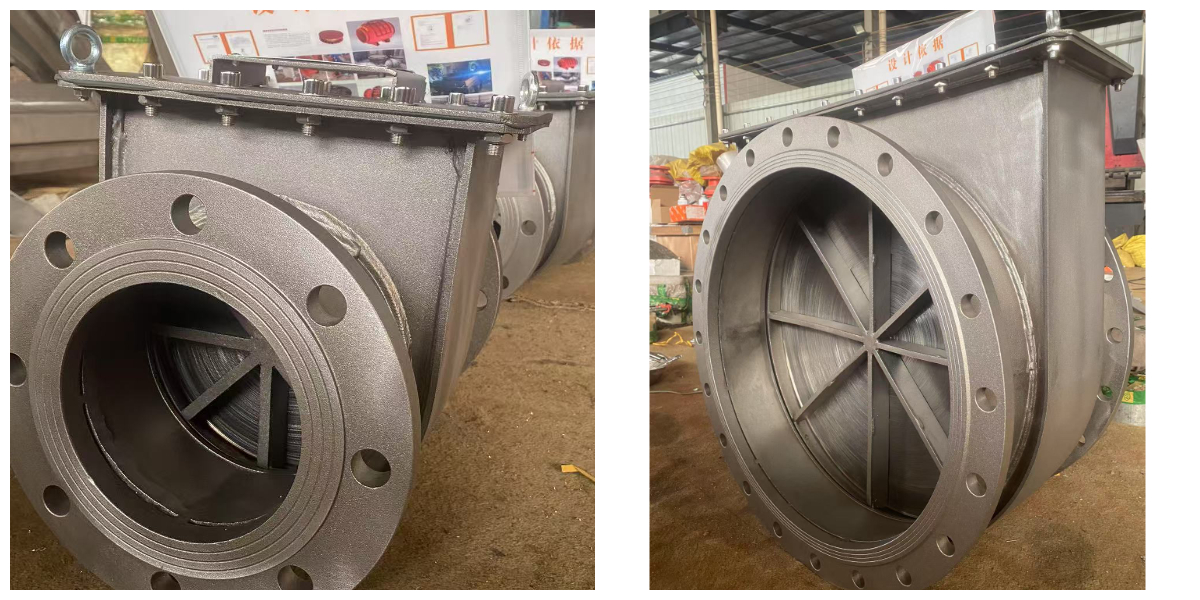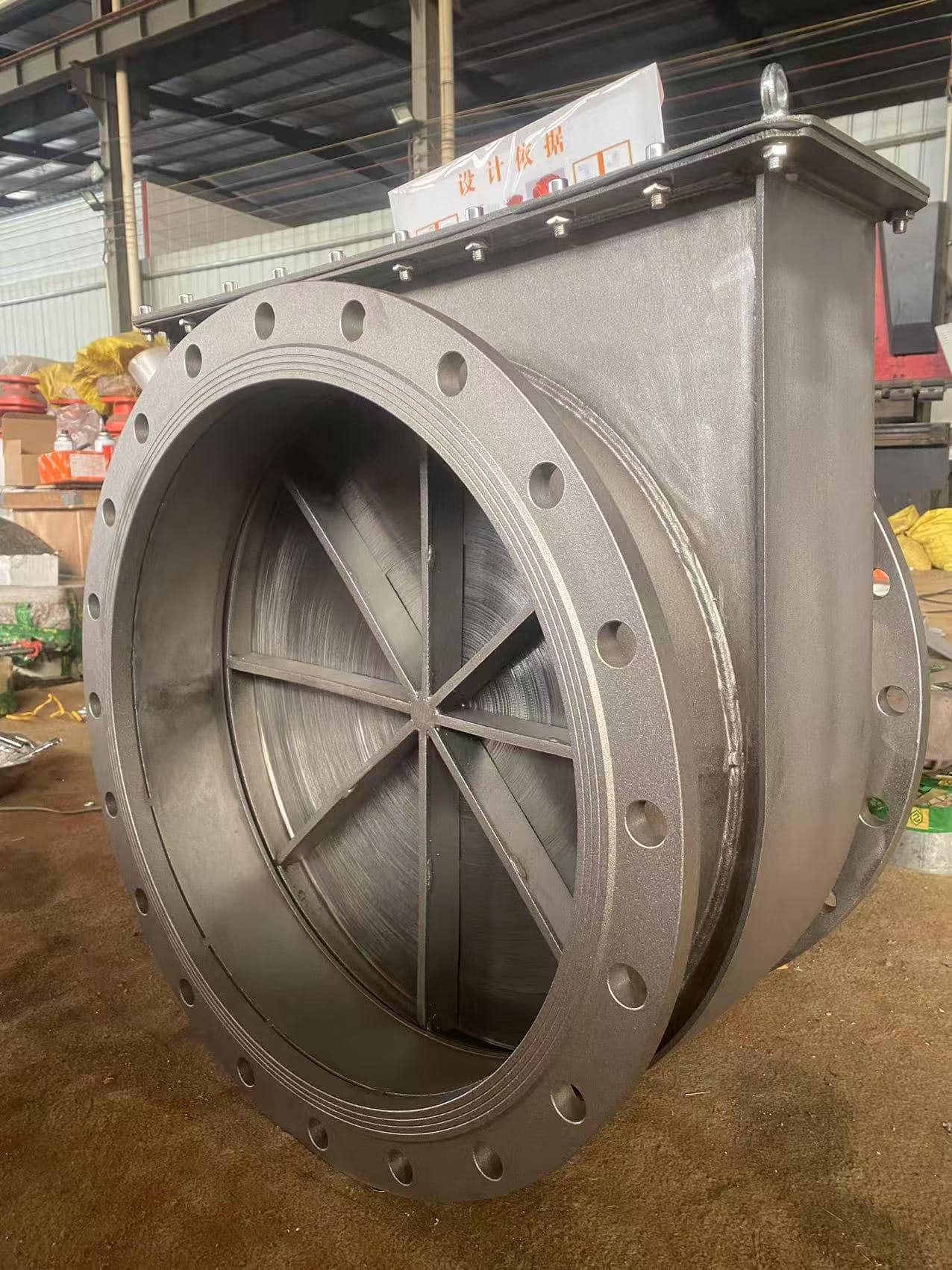
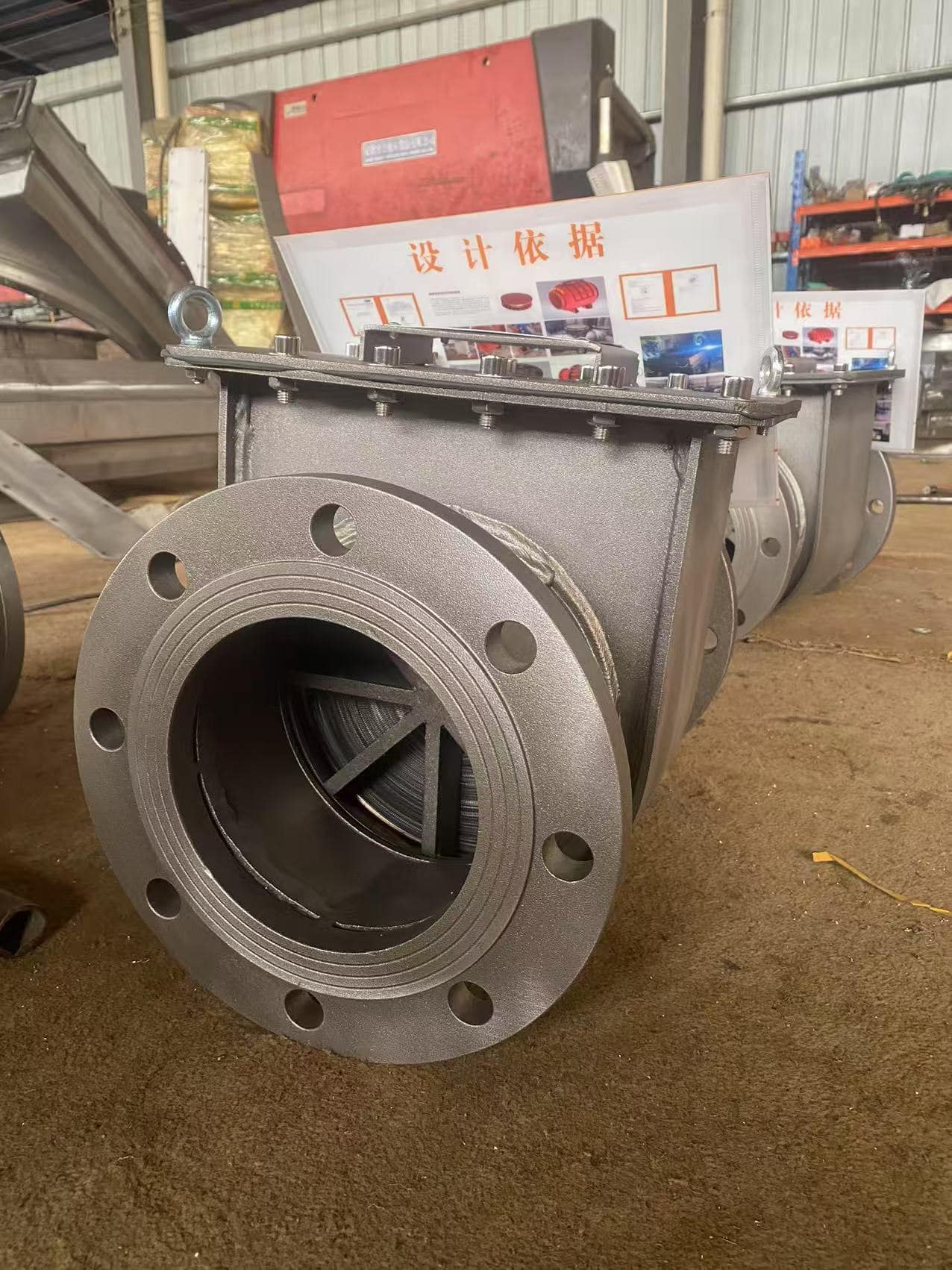
in-Line Deflagration Flame Arrester
Product Model: ZD-FA01 (Standard End-of-Line)
Type: Deflagration (End-of-Line) Arrester
Material: Housing: Carbon Steel (Epoxy Coated) or 304/316 Stainless Steel. Element: Crimped Metal Ribbon (Stainless Steel).
Key Feature: Installed at the vent termination of tanks or vessels to prevent external ignition sources from propagating back into the protected equipment.
Certifications: ATEX, IECEx, FM, UL (as applicable). Compliant with EN ISO 16852, NFPA 69.
Typical Use: Vent openings on storage tanks for flammable liquids (e.g., gasoline, solvents), atmospheric fixed roof tanks, and process vessel vents.
Overview
The End-of-Line Deflagration Flame Arrester is a critical safety device mounted at the termination of vent pipes from equipment containing flammable vapors. Its primary function is to act as a "firewall," allowing gases to flow freely during normal breathing and venting, but preventing an external flame (from lightning, nearby fire, or other sources) from traveling back through the vent pipe and igniting the vapor mixture inside the tank. It is a first line of defense against catastrophic tank explosions and is a standard requirement for many atmospheric storage tanks in refineries, chemical plants, and tank farms.
Features & Benefits
Prevents Flashback: The precision-engineered flame arrest element quenches flames by absorbing heat, preventing propagation into the protected space.
Low Pressure Drop: Designed for minimal resistance to normal tank breathing and emergency venting flows.
Robust Construction: Built to withstand harsh outdoor environments, including weather, UV exposure, and corrosive atmospheres.
Easy Inspection & Maintenance: Many designs allow for visual inspection or removal of the element for cleaning without removing the entire housing from the pipe.
Wide Industry Acceptance: Standard design accepted globally for atmospheric tank vent protection.
How It Works
Flame propagation is stopped through a combination of heat absorption and flame stretching. The arrester element consists of a compact matrix of narrow, parallel channels (formed by crimped metal ribbons). When a flame front attempts to pass through, the metal walls of the channels absorb the heat from the flame faster than it can be generated, lowering the gas temperature below its ignition point and extinguishing the flame.
Specifications (Descriptive)
Available in standard pipe sizes from DN50 to DN300 and larger. Connection types are typically ANSI flanges (150#) or DIN/EN flanges (PN6/PN10). The pressure drop is characterized and certified for both breathing (air in/out) and emergency venting flows. Elements are available for different gas groups (IIC, IIB, IIA as per ATEX) and MESG (Maximum Experimental Safe Gap) requirements. Standard housings include a weather hood and often an integral pressure/vacuum vent or mounting pad for one.
Q&A
Q: What is the difference between an end-of-line and in-line flame arrester?
A: An End-of-Line arrester is installed at the final opening to atmosphere (tank vent tip). An In-Line arrester is installed within piping between two pieces of equipment to prevent flame passage from one to the other. They are tested to different standards and have different flow and pressure requirements.
Q: How often does it need to be inspected or cleaned?
A: Regular inspection is crucial. For atmospheric tank vents, a visual inspection every 3-6 months is recommended. Cleaning frequency depends on the service; vents emitting heavy or polymerizing vapors may require more frequent cleaning to prevent plugging of the element channels.
Q: Can it handle emergency venting from a tank fire (large flow)?
A: Yes, a properly sized end-of-line arrester is certified to handle the required emergency venting flow rate (calculated per API 2000 or similar) while still performing its flame arresting function. Sizing is critical.
Q: What happens if it gets blocked by ice or debris?
A: A blocked vent is extremely dangerous as it can cause tank collapse or rupture. Regular inspections, protective weather hoods, and, in cold climates, heat tracing or special designs are used to mitigate this risk.
About ZD Safety
We are a leading provider of passive fire protection solutions. Our end-of-line flame arresters are engineered and tested to deliver reliable, maintenance-friendly protection for your storage assets, forming an essential part of your overall process safety strategy.