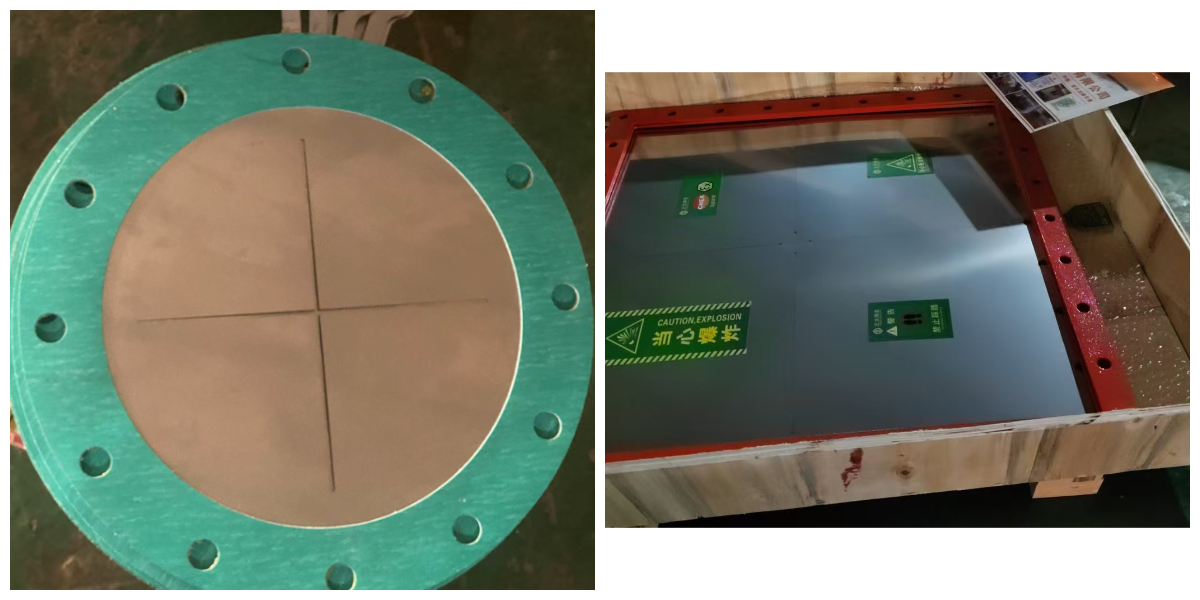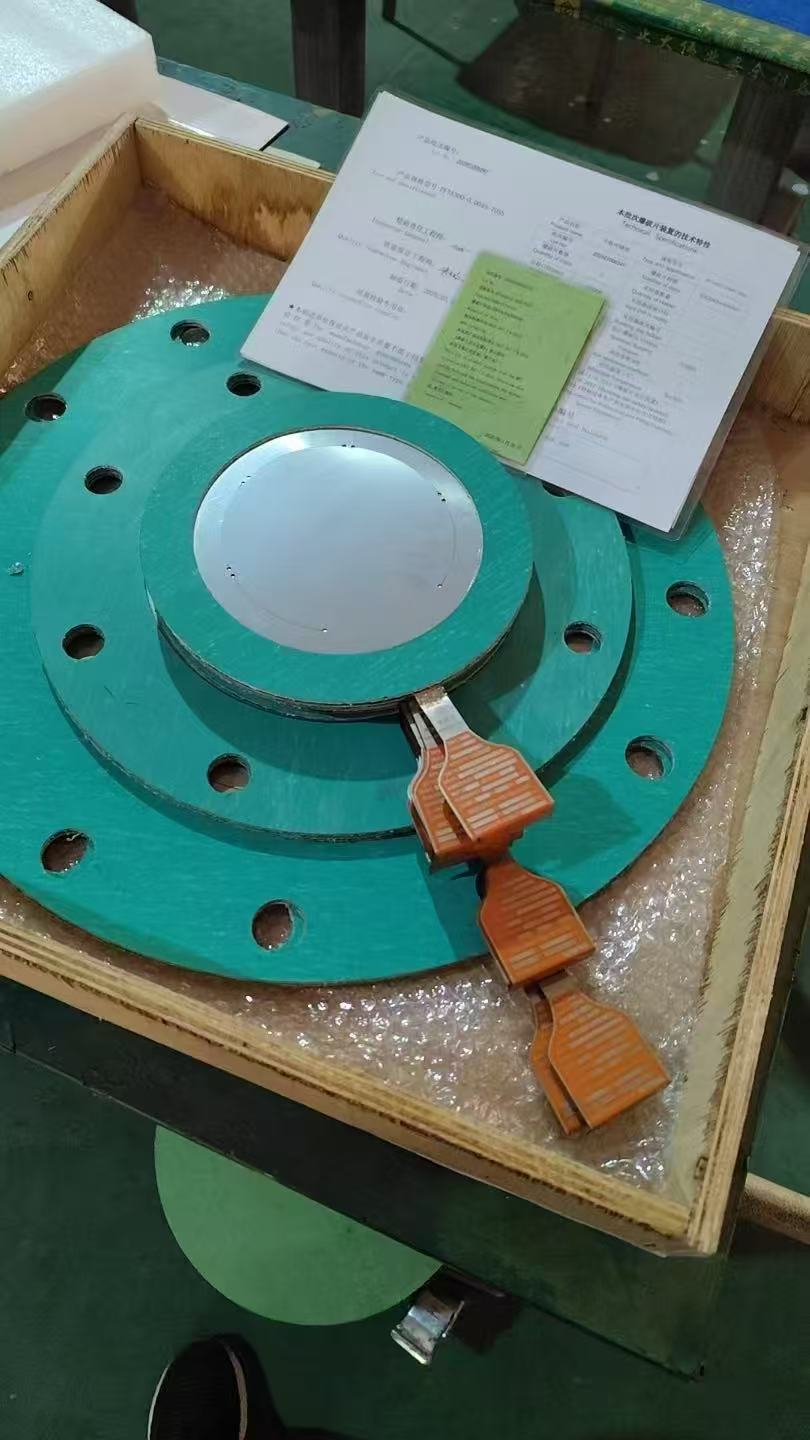
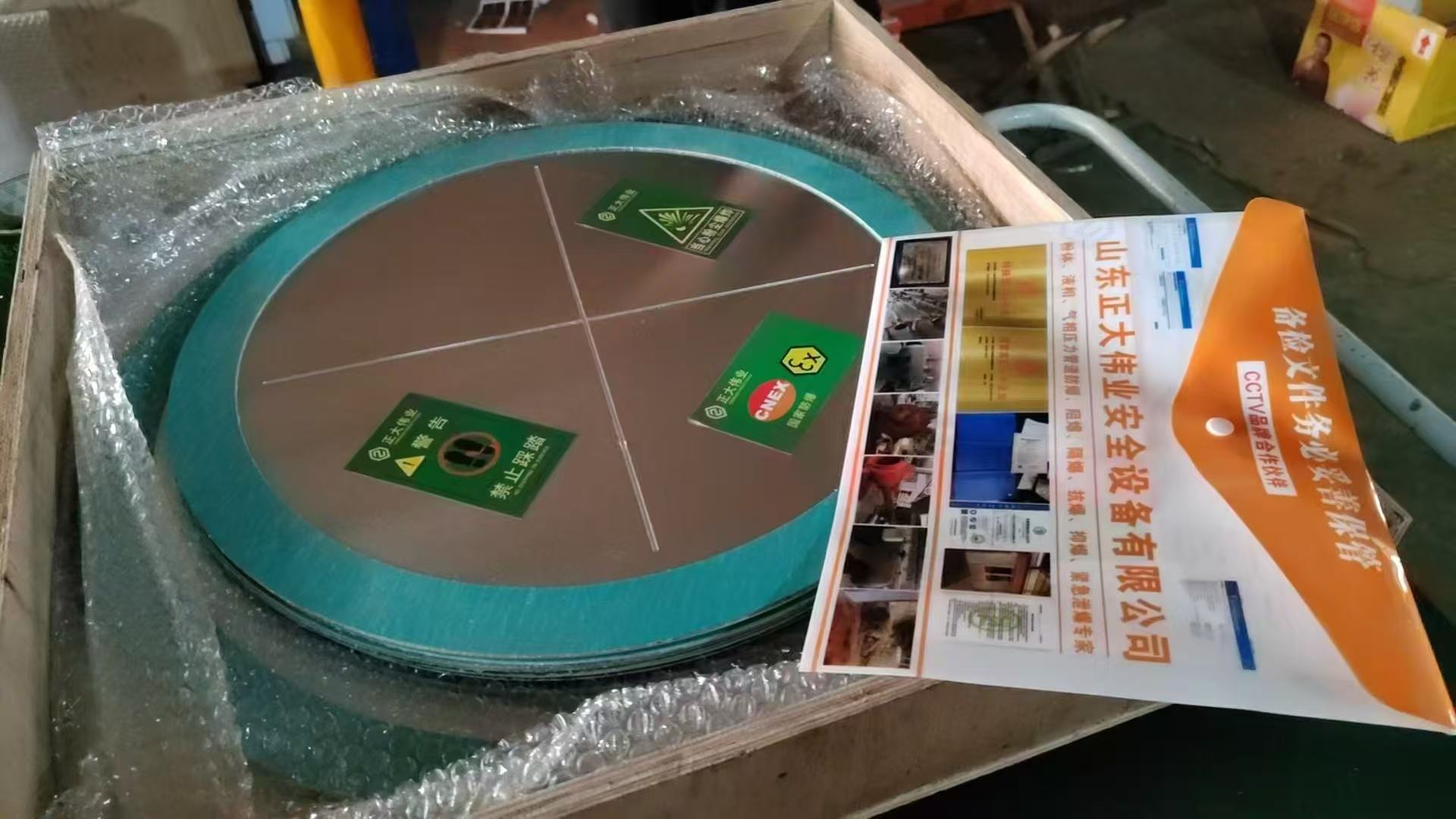
Tank Vent Flat Rupture Disc
Product Model: ZD-FL05 (Tank Breather Disc)
Material: Often Aluminum foil, thin stainless steel, or PTFE-coated materials.
Design: Very thin, flat membrane designed for extremely low differential pressure.
Function: Protects storage tanks from vacuum collapse during emptying or temperature drop. May also provide minimal overpressure relief.
Cracking Pressure: Typically 0.01 barg to 0.1 barg (1 to 10 mbar).
Primary Use: Atmospheric storage tanks for chemicals, oils, water, and silos. Emergency vacuum relief on reactors and vessels.
Type Selection Based on Installation:
If installed upstream of a safety valve, you must select a "Non-Fragmenting" design (e.g., ICON™) to prevent valve damage from fragments.
For standalone use or installation downstream of a safety valve, standard models can be chosen.
Media & Material: For corrosive media, prioritize Stainless Steel (e.g., 316L) or models with Corrosion-Resistant Linings.
Pressure & Certification:
Confirm the equipment's Maximum Allowable Working Pressure (MAWP) and required Burst Pressure.
Verify the product holds necessary industry or regional certifications (e.g., ASME, PED, API).
Product Overview | A flat bursting disc is a one-time-use, mechanical overpressure protection safety device. It features precisely calculated and machined weakened grooves that cause instantaneous rupture at a predetermined pressure, rapidly relieving pressure to protect more expensive primary system equipment from damage.
Typical Application Industries |
Chemical & Pharmaceutical: Reactors, drying equipment, piping systems.
Oil & Gas: Storage tanks, transport tankers (tank containers, railway tank cars), process pipelines.
Food & Dust Processing: Dust collectors, pneumatic conveying systems.
Aerospace & Military (specific models): Hydraulic and pneumatic systems.
Action & Procurement Advice |
As bursting discs are critical safety components, before final selection and purchase, it is recommended that you:
Define Operating Conditions: Detail media composition, temperature, pressure cycle frequency, need for vacuum resistance, etc.
Request Documentation: Contact qualified manufacturers or suppliers for the specific model's English Technical Data Sheet (TDS), Material Certificates, and Certification Documents.
Seek Expert Consultation: For critical or complex applications, consult a professional safety equipment engineer.