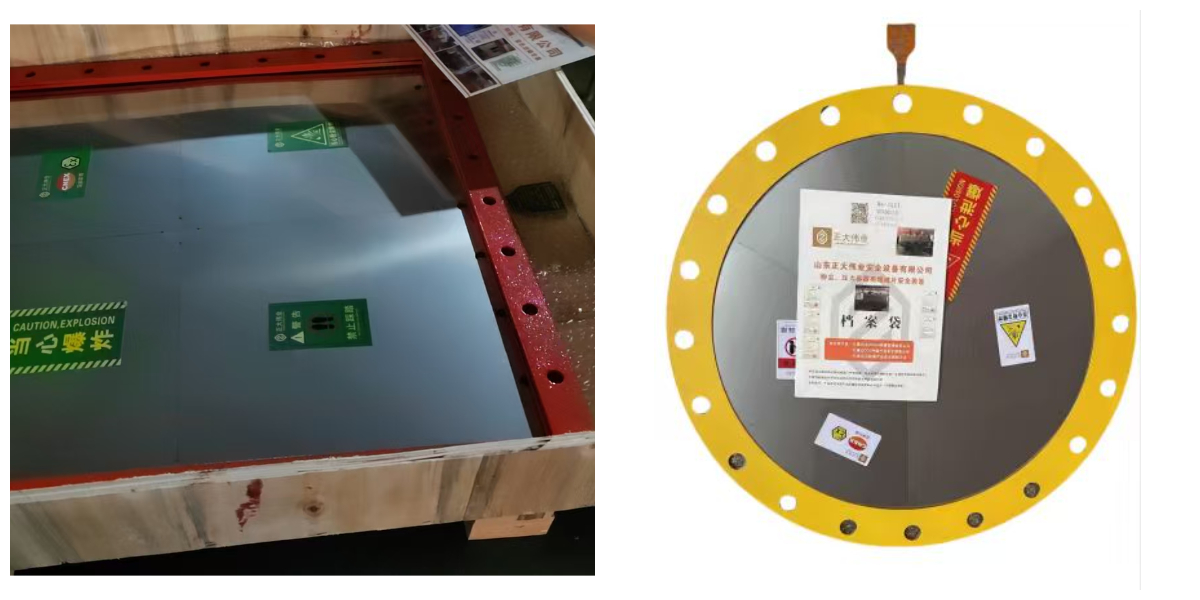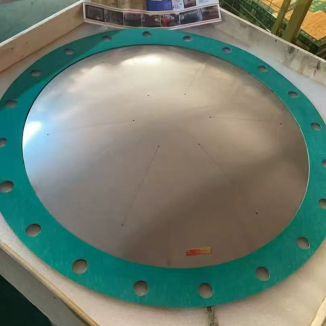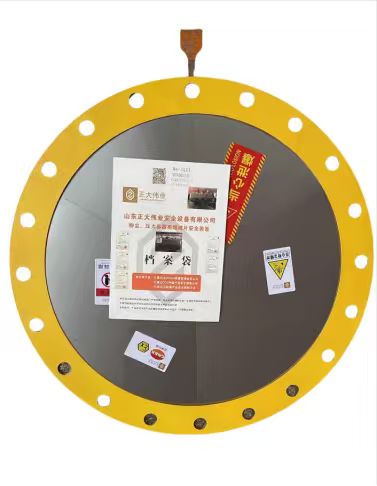
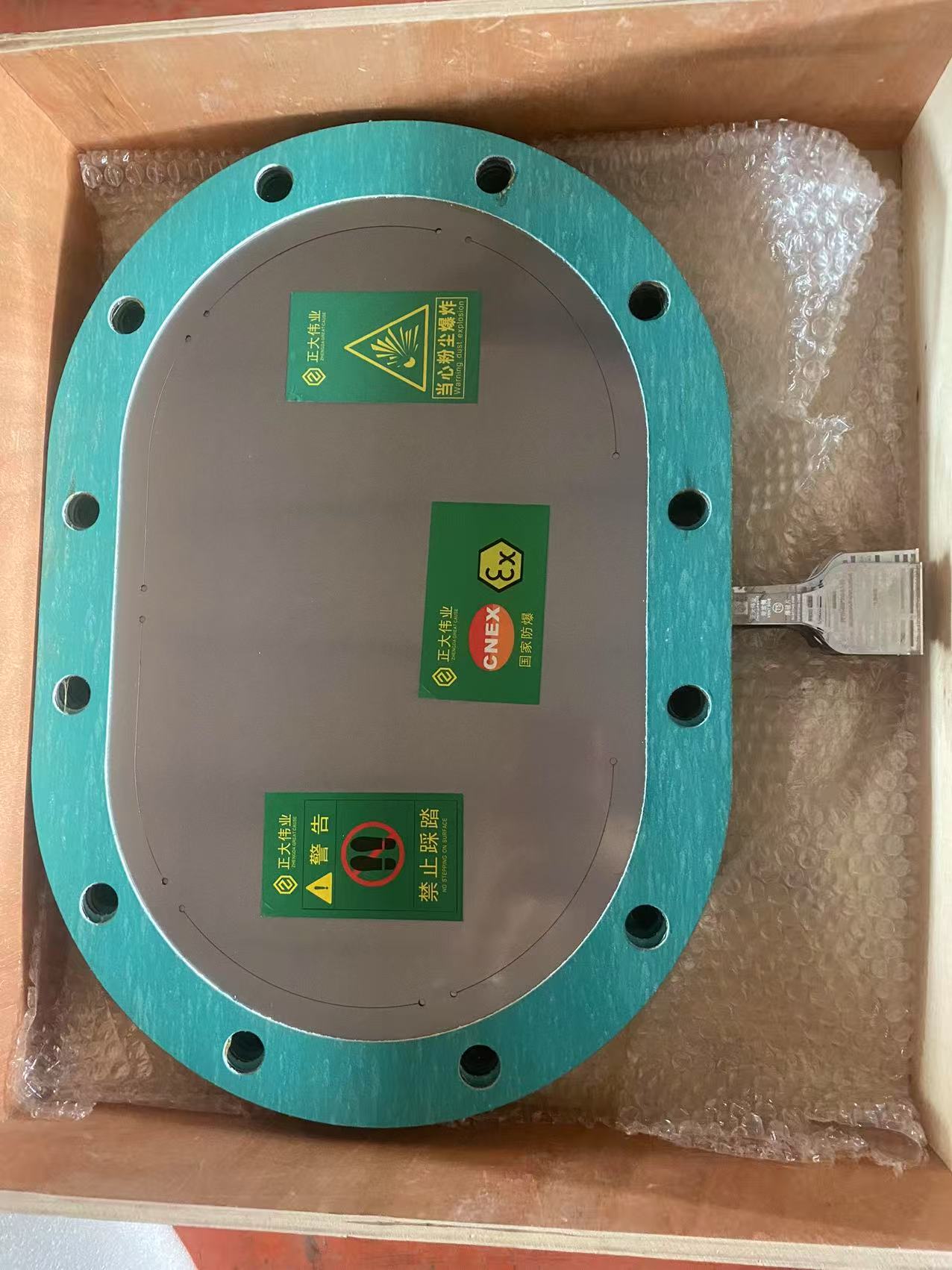
Composite Flat Rupture Disc
Product Model: ZD-FL04 (PTFE-Faced Flat Disc)
Construction: A thin metal membrane (SS316) laminated or clad with a PTFE (Teflon) layer on the process side.
Key Feature: PTFE face provides chemical resistance and non-stick properties; metal membrane provides structural strength and burst accuracy.
Pressure Range: 0.5 barg to 10 barg.
Primary Use: Chemical processing with sticky or highly corrosive media, food/pharmaceutical applications requiring non-contamination, and services where easy cleaning is essential.
Overview
For processes that demand both material compatibility and precise burst performance, the composite PTFE-faced flat disc is an elegant solution. It combines a thin, accurately calibrated metal burst membrane with a layer of inert PTFE on the wetted surface. This design ensures the process fluid only contacts the chemically inert PTFE, preventing corrosion and product adhesion, while the metal underneath guarantees a reliable and repeatable burst pressure. It is ideal for services that challenge standard metals but do not require the full capabilities (or cost) of a solid exotic alloy disc.
Features & Benefits
Chemical Inertness: The PTFE layer resists almost all chemicals, protecting the metal substrate and preventing product contamination.
Non-Stick Surface: Prevents buildup of polymers, resins, or food products, ensuring consistent performance and simplifying maintenance.
Accurate Burst Pressure: The burst rating is determined by the precisely manufactured metal layer, offering performance comparable to a standard metal disc.
Economical Alternative: Often more cost-effective than solid discs made from high-nickel or titanium alloys for comparable corrosion resistance.
How It Works
System pressure acts on the PTFE layer, which transmits the force to the metal membrane. At the burst pressure, the metal fails, typically along designed score lines. The PTFE layer, being bonded to the metal, tears concurrently, creating an opening lined with PTFE. The assembly often includes a fragment containment design.
Specifications (Descriptive)
Available in sizes from DN25 to DN200. The burst pressure range is based on the metal layer. The PTFE thickness is standardized (e.g., 1-2mm). The lamination process is critical to ensure a void-free bond. The holder may also feature a PTFE liner in the bore. Standard temperature limit is determined by the PTFE (typically 150°C).
Q&A
Q: What happens if the PTFE delaminates?
A: Proper manufacturing and bonding are essential to prevent this. Our discs undergo quality checks to ensure laminate integrity. Delamination could lead to seepage behind the liner or an inaccurate burst.
Q: Can this be used for aseptic service?
A: While PTFE is chemically inert, the design is typically for industrial flanges. For true aseptic/sanitary service with polished surfaces and clamp fittings, a dedicated sanitary model (like ZD-RA02 or ZD-009) is more appropriate.
Q: Is it suitable for liquid service?
A: Yes, the flat disc tensile rupture mechanism is well-suited for both liquid and gas service. The PTFE facing is compatible with both.
About ZD Safety
We create intelligent composites. Our PTFE-faced discs exemplify how combining materials strategically can yield a superior product—one that solves multiple process challenges (corrosion, sticking, precision) in a single, reliable device.