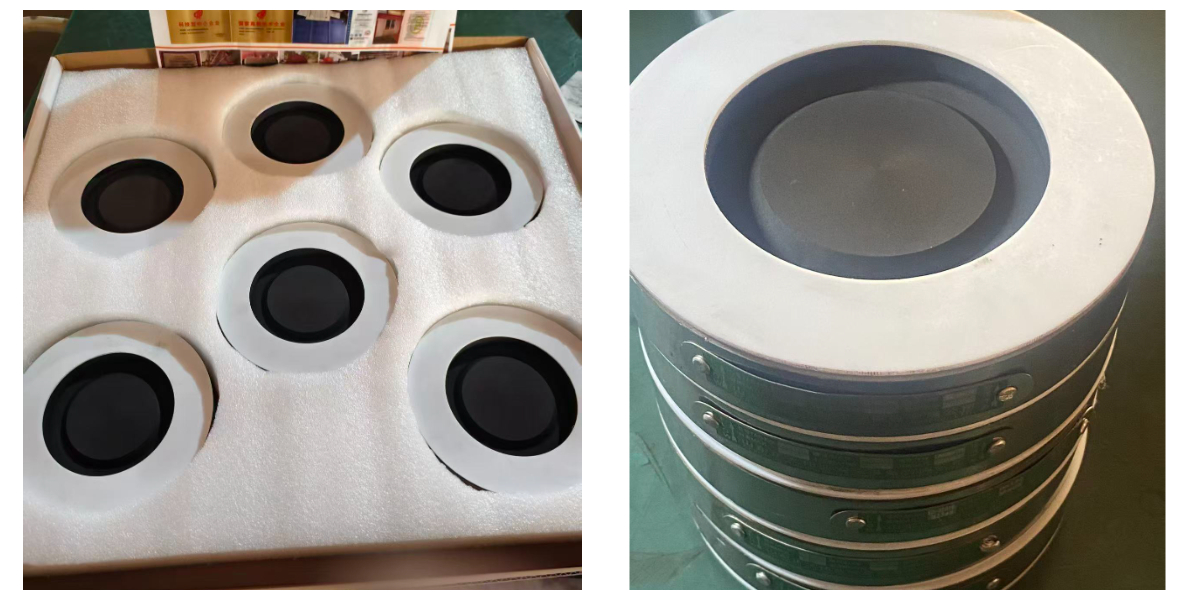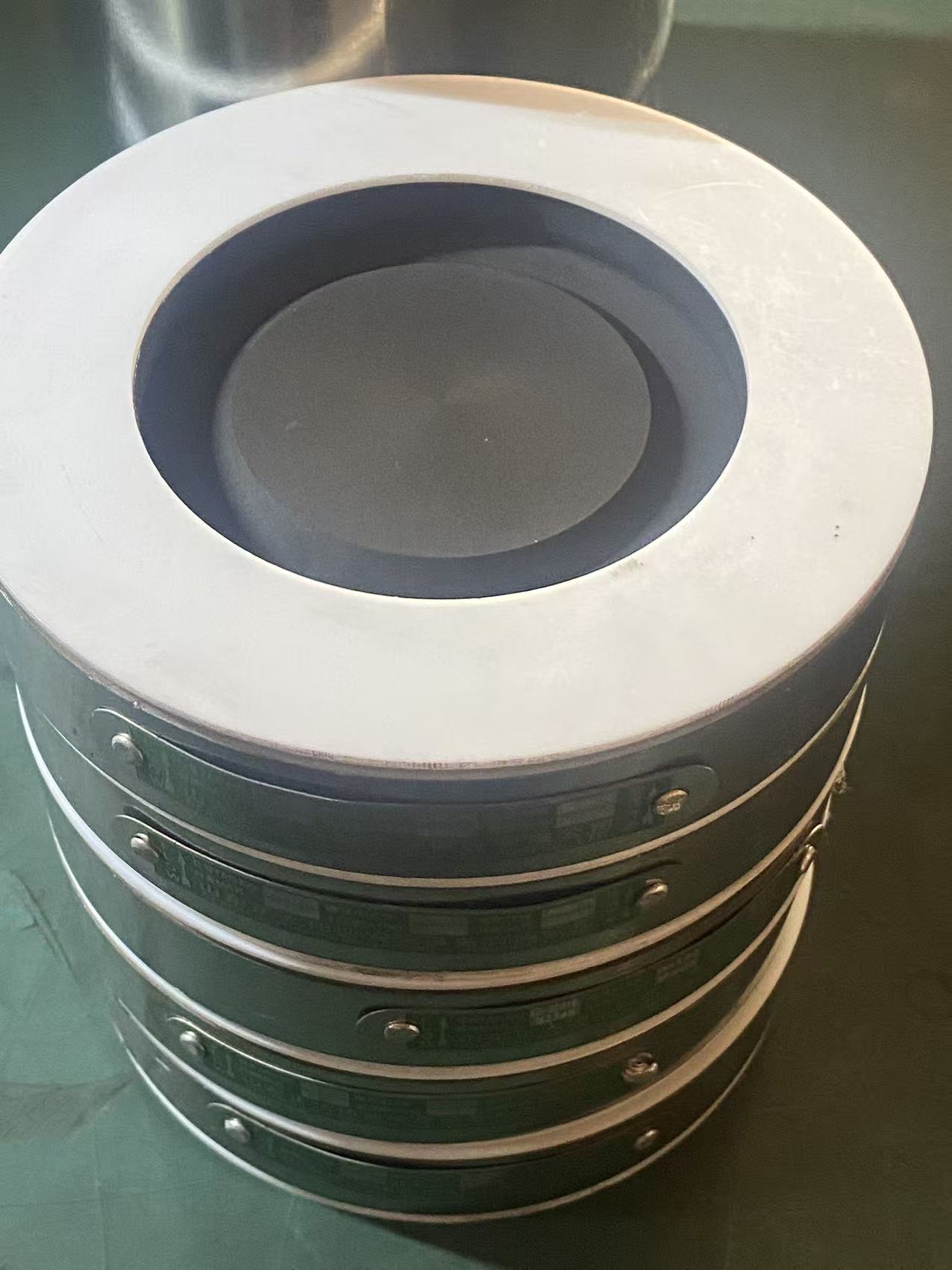
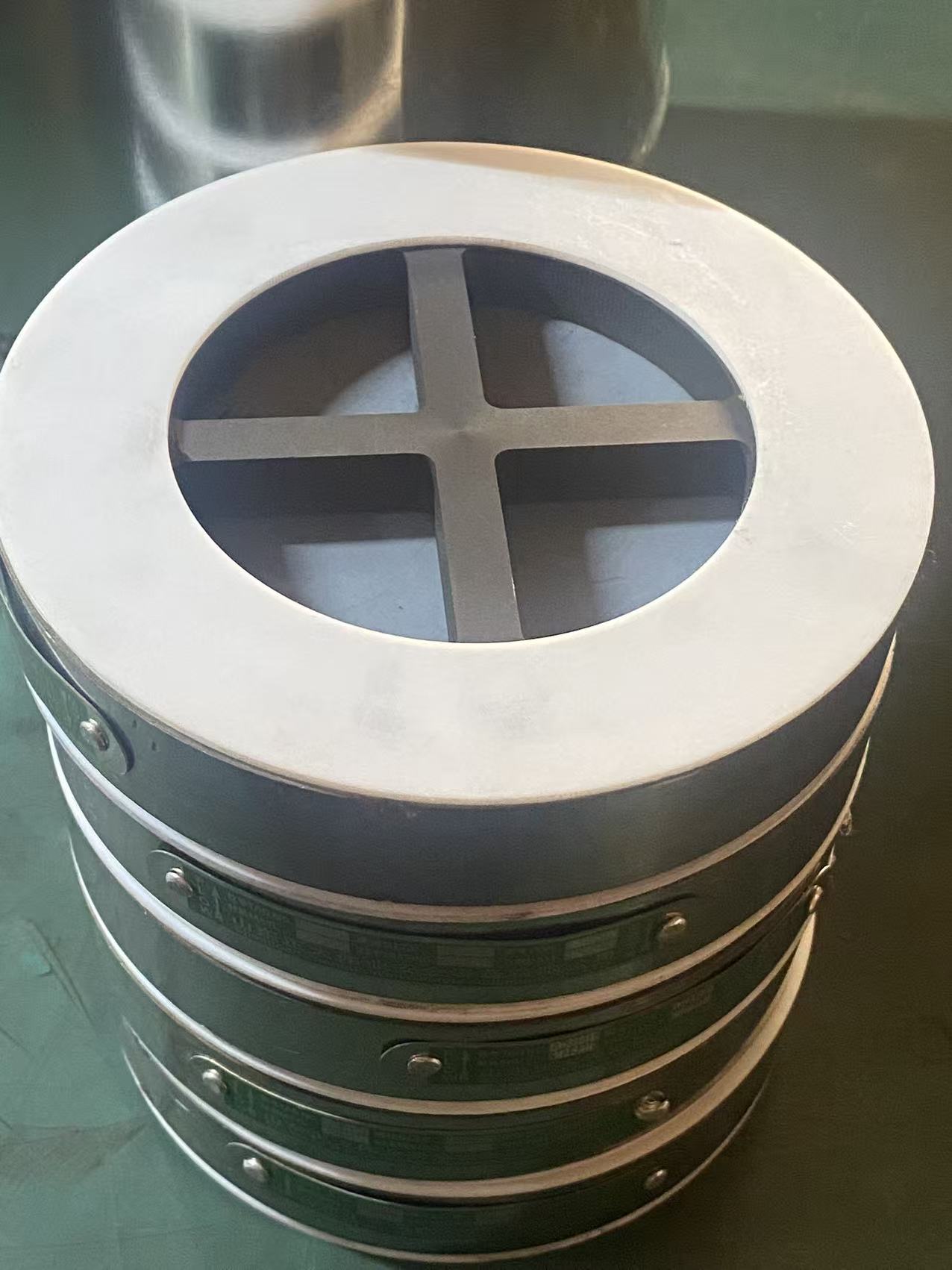
PTFE-Faced Graphite Rupture Disc
Product Model: ZD-G04 (Graphite with Fluoropolymer Layer)
Construction: Impervious graphite disc with a PTFE (Teflon) or PFA film laminated to the process side.
Key Feature: Adds an extra barrier against highly penetrating or adhesive media, and facilitates easier cleaning.
Benefit: Prevents product sticking and allows for use with a wider range of ultra-aggressive chemicals.
Primary Use: Handling sticky polymers, monomers, concentrated halogen acids, or in high-purity applications where product adhesion or specific ion contamination must be avoided.
Overview
While impervious graphite is highly resistant, some ultra-aggressive or sticky substances can still present challenges. A PTFE-faced graphite disc adds an extra layer of defense. The inert, non-stick fluoropolymer layer is permanently bonded to the graphite surface exposed to the process. This combination provides an unparalleled barrier against chemical attack, prevents fouling or product buildup, and creates an ultra-smooth surface that is easy to clean. It is the ultimate choice for the most punishing chemical services and for processes where product purity or easy maintenance is paramount.
Features & Benefits
Enhanced Chemical Barrier: The PTFE/PFA layer provides definitive protection against even the few chemicals that can slowly attack graphite (e.g., strong oxidizers at elevated temperatures).
Non-Stick, Cleanable Surface: Prevents buildup of viscous or polymerizing materials, reducing maintenance headaches and ensuring consistent burst performance.
Product Purity Assurance: The inert fluoropolymer layer ensures zero metallic or carbon-based contamination, crucial for fine chemicals and electronics-grade materials.
Extended Service Life: The dual-layer protection can significantly extend inspection and replacement intervals in harsh service.
How It Works
The laminate acts as a unitary membrane. System pressure is transmitted through the flexible PTFE layer to the graphite substrate. At the burst pressure, the graphite fractures according to its design (plain or scored), and the PTFE layer tears concurrently. The opening is fully lined with the inert material, ensuring no process fluid contacts the graphite fragments or holder.
Specifications (Descriptive)
Sizes from DN25 to DN150. The burst pressure is determined by the graphite substrate's strength and design. The fluoropolymer layer is typically 0.5mm to 1mm thick and can be PTFE for general use or PFA for higher temperature resistance. The lamination process is critical and performed under controlled conditions to ensure a void-free bond that won't delaminate in service. Holders often have a similar PTFE lining on the bore to provide complete corrosion protection.
Q&A
Q: Does the PTFE layer affect the burst pressure?
A: Minimally. The layer is thin and non-structural. The disc is calibrated and tested with the laminate in place, so the rated burst pressure already accounts for its presence.
Q: Can this be used for food or pharmaceutical applications?
A: While PTFE and PFA are often compliant, graphite is typically not considered a sanitary material due to its porosity and potential for particle shedding. For true sanitary service, a fully metallic, electropolished design is recommended.
Q: What is the temperature limit?
A: The limiting factor is usually the fluoropolymer. Standard PTFE is limited to about 150°C, while PFA can extend to 180°C or higher. The graphite itself can handle much higher temperatures.
About ZD Safety
We pursue perfection in corrosion protection. Our PTFE-faced graphite discs represent a premium solution, designed to deliver flawless performance and simplified maintenance in the face of the industry's most challenging fluids.