Composite Graphite-Metal Rupture Disc
Product Model: ZD-G03 (Graphite with Metal Support)
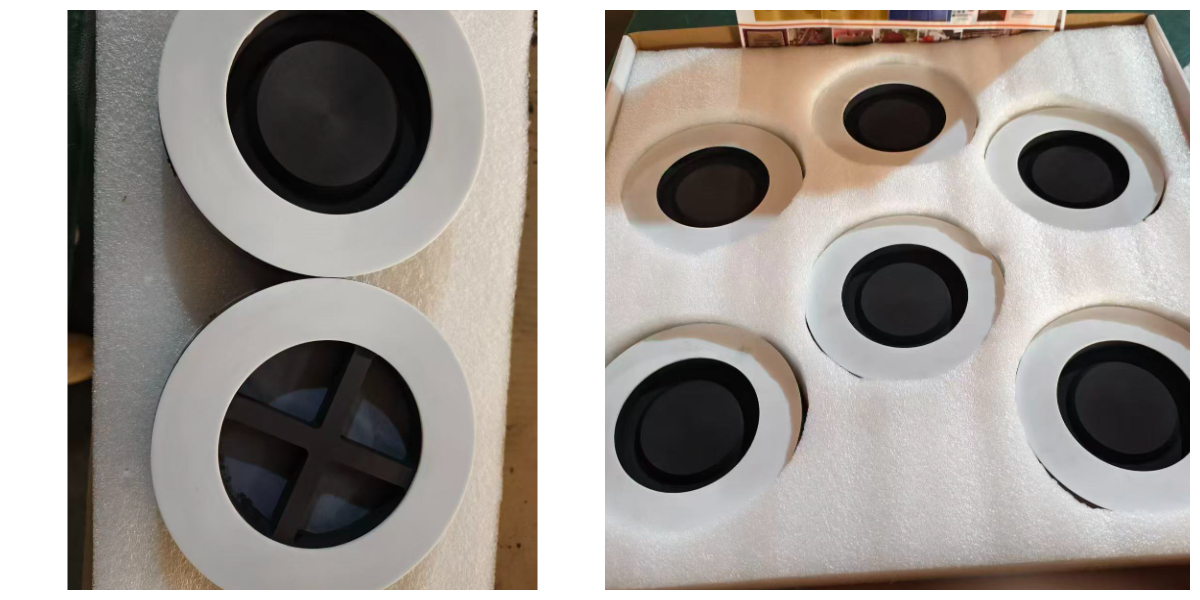
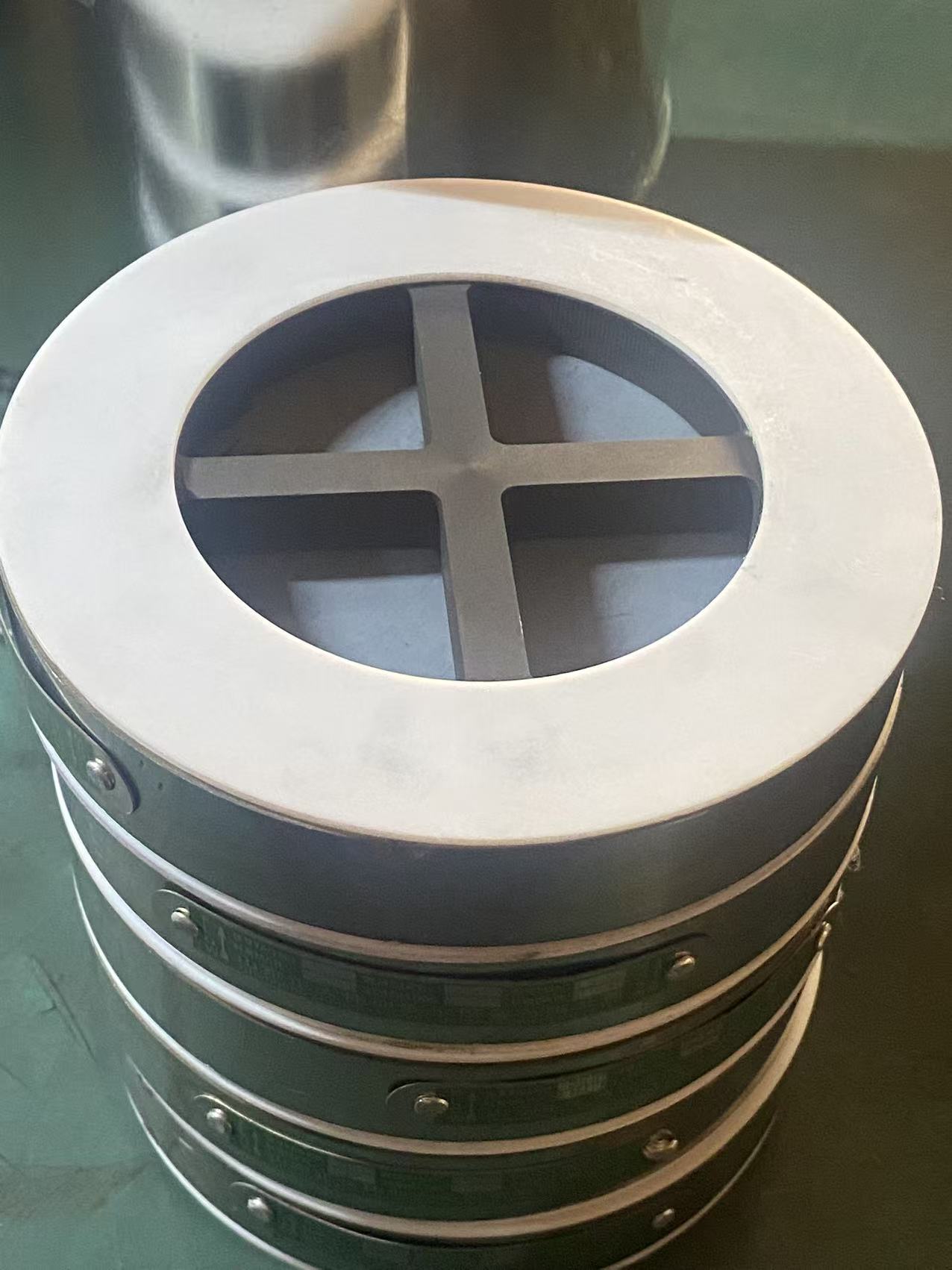
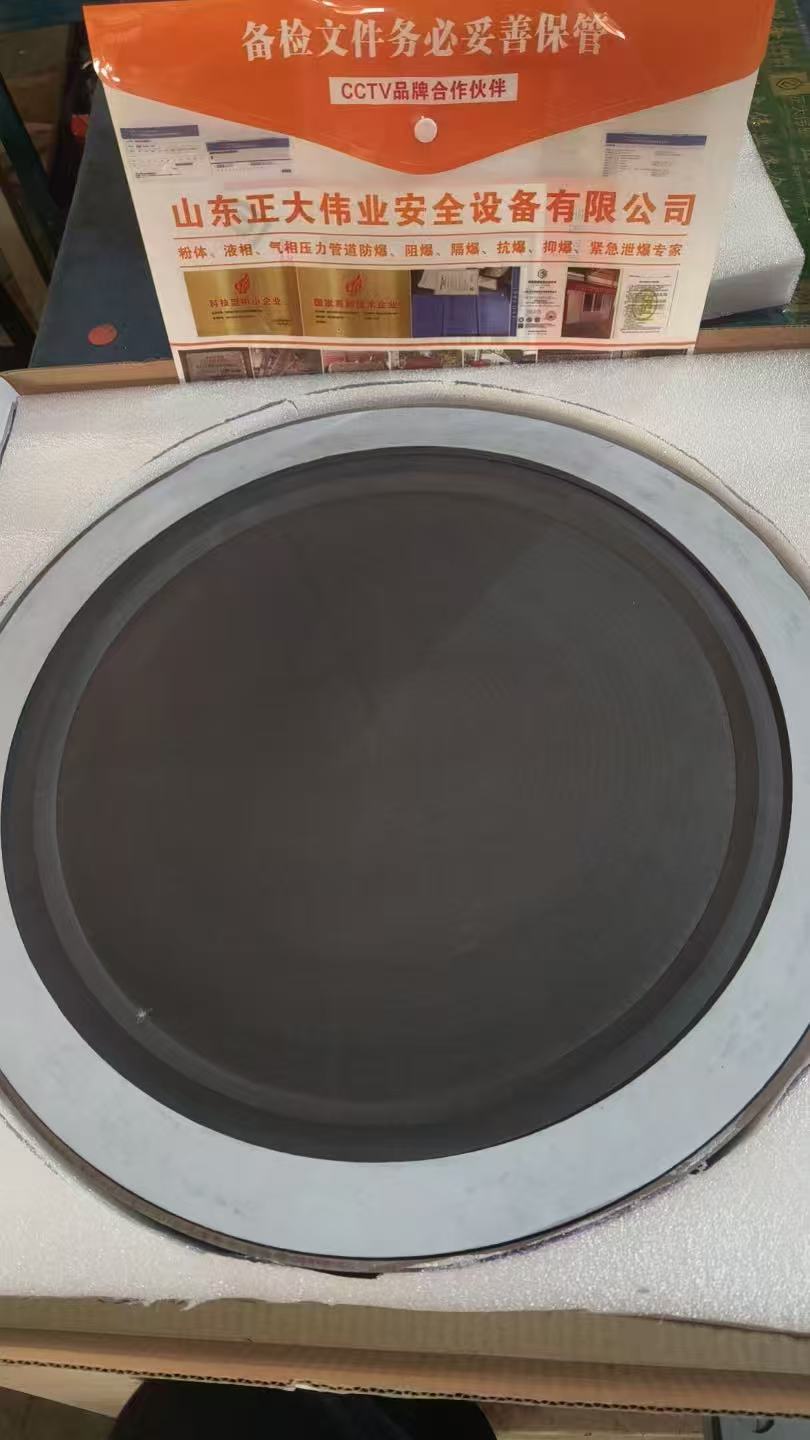
Construction: A graphite membrane (plain or scored) backed by a metallic support grid or plate.
Key Feature: The metal support provides mechanical strength, allowing for higher burst pressures and resistance to backpressure/vacuum.
Pressure Range: Extended range compared to pure graphite, typically 0.5 barg to 10 barg.
Primary Use: Applications requiring graphite's corrosion resistance but operating at higher pressures, with cyclic conditions, or where vacuum is present.
Overview
Pure graphite discs have limitations in strength and resistance to mechanical fatigue. The composite graphite-metal disc overcomes these by marrying a corrosion-facing graphite membrane with a structural metal support. This innovative design leverages graphite's inertness on the process side while utilizing the metal's strength to achieve higher burst ratings, withstand system vacuum, and offer improved resistance to pressure cycling. It is the advanced solution for demanding corrosive services that exceed the capabilities of standard graphite discs.
Features & Benefits
Higher Pressure Capability: The metal backbone enables reliable operation at pressures where plain graphite would be too thick or unreliable.
Vacuum and Backpressure Resistance: The supported design can withstand full vacuum and significant backpressure without collapse, eliminating the need for external vacuum supports.
Improved Fatigue Performance: More resilient to pressure pulsations compared to brittle, unsupported graphite.
Corrosion Protection Maintained: The process fluid still only contacts the impervious graphite layer, ensuring full chemical resistance.
How It Works
The graphite layer acts as the corrosion-resistant seal. The metal support grid bears the majority of the mechanical load from system pressure. Upon overpressure, failure occurs in the graphite layer, but the metal support often controls the opening pattern, potentially retaining larger pieces or opening in a defined way. The design ensures the graphite fails at the precise pressure dictated by the composite structure's calibration.
Specifications (Descriptive)
Available in sizes from DN50 to DN200. This design significantly extends the usable pressure range for graphite technology. For example, a composite DN100 disc can be rated for 8 barg, far exceeding a plain disc's limit. The metal support is typically made from Hastelloy or 316L stainless steel to handle potential weepage or for overall durability. The selection of graphite grade and metal alloy is tailored to the specific process chemistry and conditions.
Q&A
Q: If the graphite cracks, won't corrosive fluid reach the metal support?
A: The design typically includes a sealing method at the periphery to minimize this risk. For weeping or minor cracks, the chosen support metal (e.g., Hastelloy) provides a secondary line of defense. However, upon full rupture, the metal is exposed, so material selection for the support is critical based on the service.
Q: Is this a "fallback" or redundant design?
A: Not exactly. It's a unified component engineered for higher performance. The metal is not a separate safety device but an integral structural part that enables the graphite to function reliably under more strenuous conditions.
Q: How does it compare in cost to exotic metal discs?
A: It is often more economical than a solid tantalum or Hastelloy C276 disc of equivalent size and pressure rating, while offering similar or superior corrosion resistance on the wetted surface.
About ZD Safety
We innovate at the intersection of materials science and safety engineering. Our composite graphite-metal discs solve complex application challenges, providing robust protection where traditional materials fall short.