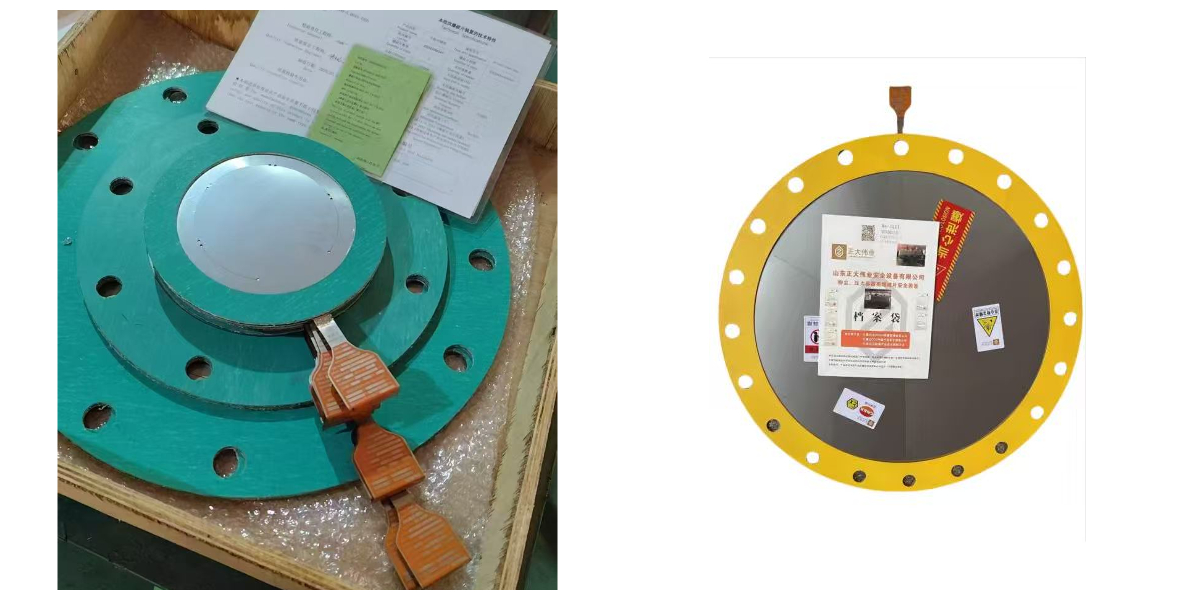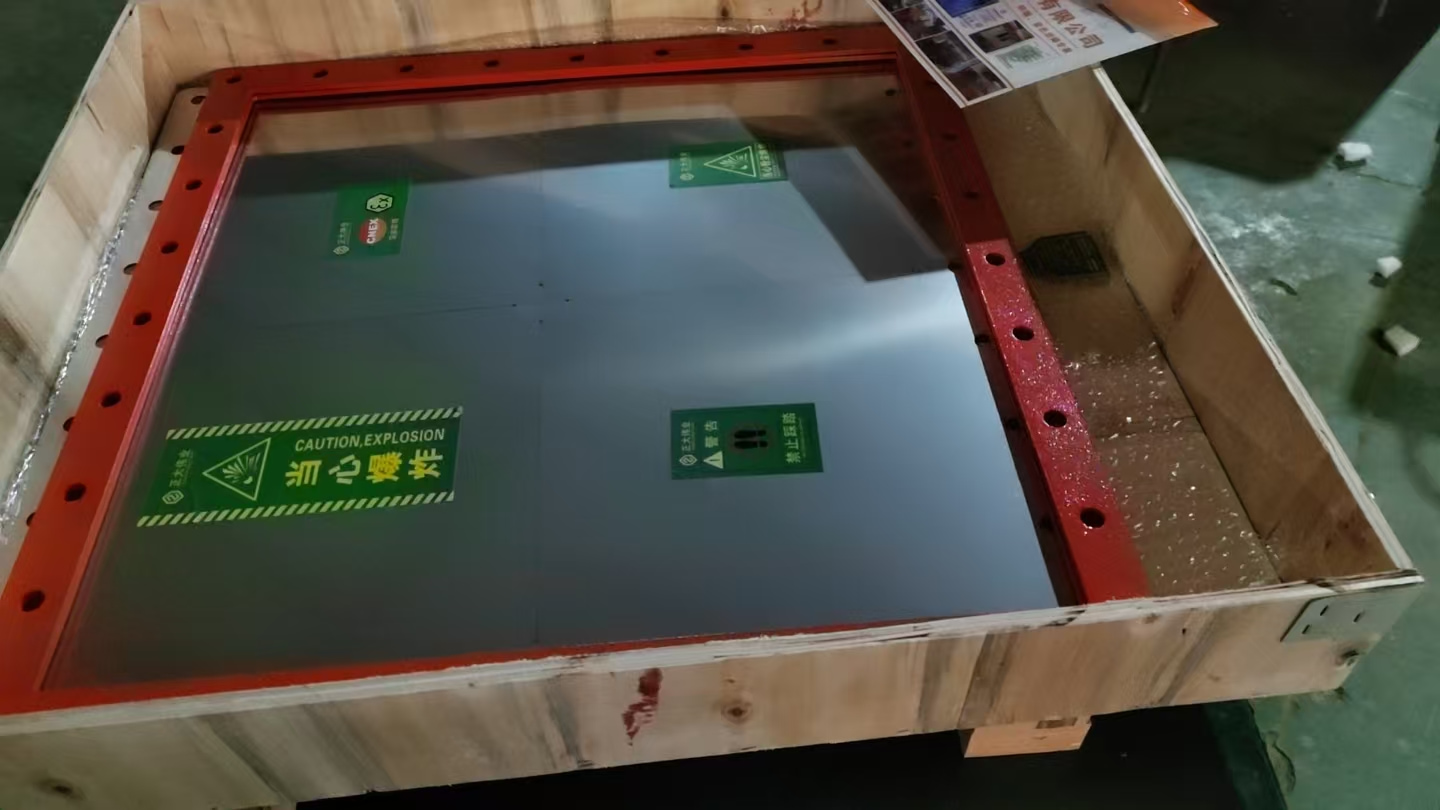
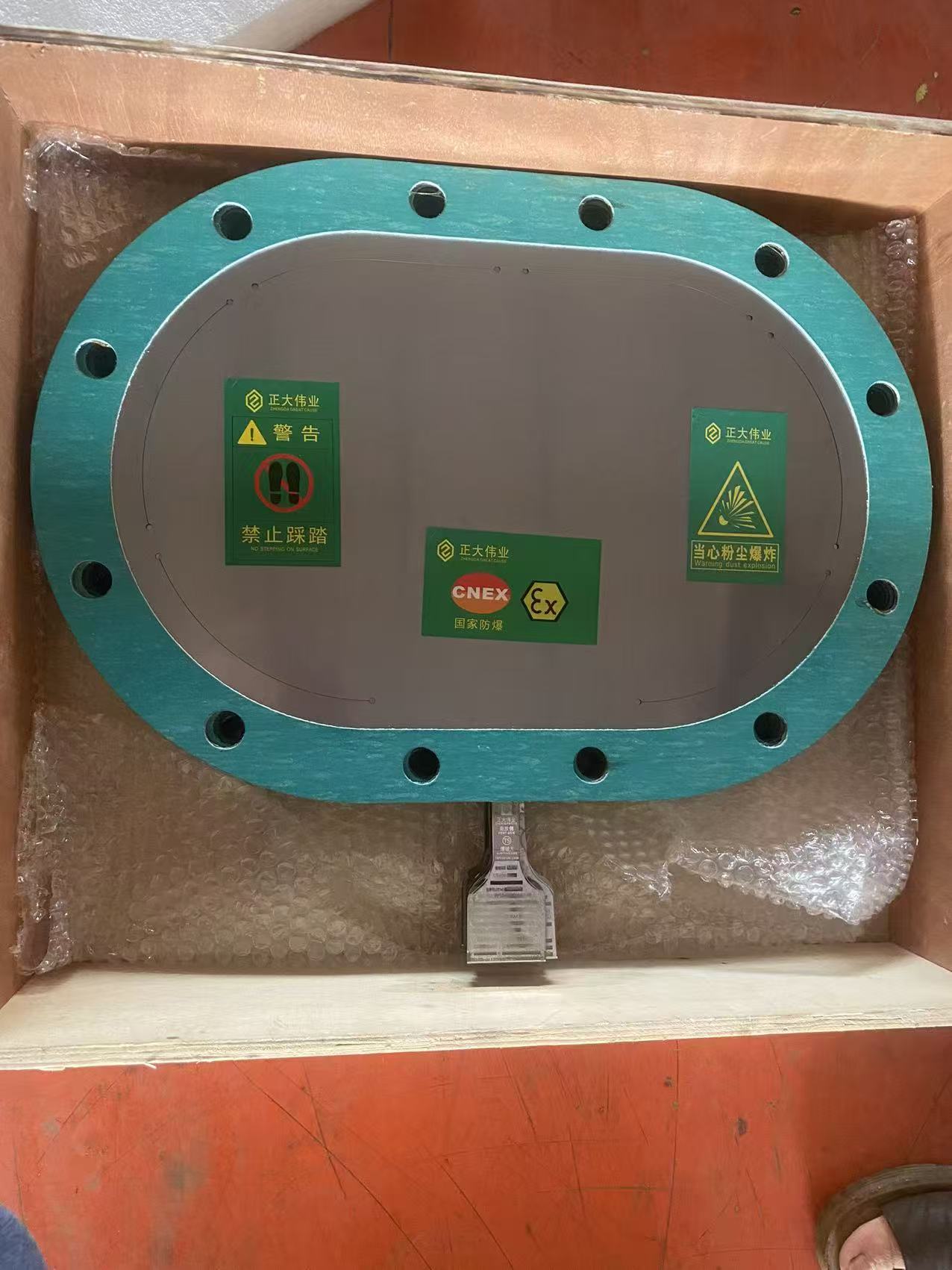
Graphite Flat Rupture Disc
Product Model: ZD-FL03 (Flat Graphite Disc)
Material: Impervious Graphite.
Design: Solid, flat graphite membrane. Available plain (fragmenting) or with controlled scores.
Key Feature: Exceptional corrosion resistance to most acids, alkalis, and solvents.
Pressure Range: Very low, typically 0.05 barg to 2.0 barg.
Primary Use: Venting and overpressure protection of tanks, reactors, and ductwork in chemical plants handling highly corrosive media like HCl, HF, chlorine, or sulfuric acid.
Overview
When corrosion is the primary challenge, a graphite flat rupture disc provides a fundamentally different solution. Crafted from impervious graphite, it offers near-universal resistance to chemical attack where metals quickly fail. This simple, flat disc is ideal for protecting vessels and low-pressure systems in aggressive environments. It serves as a sacrificial element, bursting to safeguard much more expensive capital equipment. Available in plain (fully fragmenting) or scored (controlled opening) versions, it can be tailored to the needs of the downstream system.
Features & Benefits
Unmatched Corrosion Resistance: Withstands the vast majority of industrial chemicals, providing long service life in extremely harsh conditions.
Cost-Effective for Aggressive Media: Often more economical than discs made from exotic corrosion-resistant metals.
High-Temperature Capability: Can operate at temperatures up to 400°C in inert atmospheres, exceeding the limits of most polymers.
Electrical Conductivity: Will not generate sparks from static discharge, an important safety consideration for some applications.
How It Works
As a flat membrane, it fails in brittle fracture under tensile stress. A plain disc shatters into multiple fragments, while a scored disc opens along its pre-defined grooves. The graphite material itself provides the sealing and burst function without any metallic components exposed to the process fluid.
Specifications (Descriptive)
Sizes from DN50 to DN400 are common. Burst pressures are very low; a DN150 disc might be rated for 0.2 barg. Thickness is the main variable controlling burst pressure. Holders are often FRP (Fiber Reinforced Plastic) or coated carbon steel to resist external corrosion. Gaskets are typically graphite or PTFE. For outdoor use, a weather hood is recommended.
Q&A
Q: What are the limitations of graphite discs?
A: They are brittle and can be broken by over-torquing during installation or mechanical impact. They are not suitable for strong oxidizing agents (e.g., hot nitric acid) at high concentration. Their pressure range is limited to low/medium pressures.
Q: How do I install a brittle graphite disc without breaking it?
A: Use a torque wrench and tighten bolts evenly in a cross pattern to the manufacturer's specified value. Do not use impact tools. Ensure flange faces are smooth and clean.
Q: Can it withstand backpressure or vacuum?
A: Standard flat graphite discs have very poor resistance to reverse pressure. For vacuum service, a supported or domed graphite design is necessary.
About ZD Safety
We provide the right material for the job. Our graphite flat discs are a purpose-built, highly effective solution for one of industry's toughest problems: reliable safety in the midst of extreme corrosion.