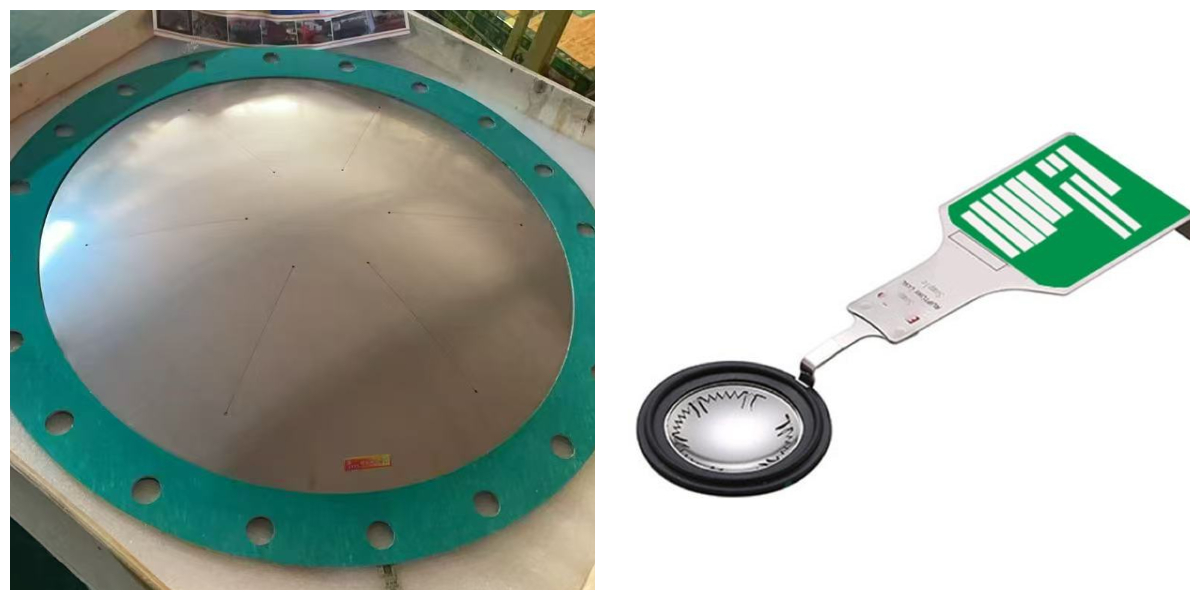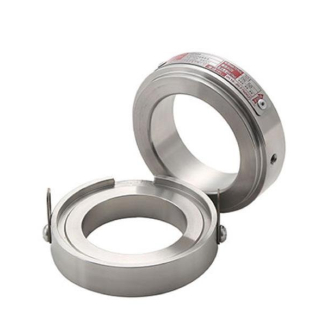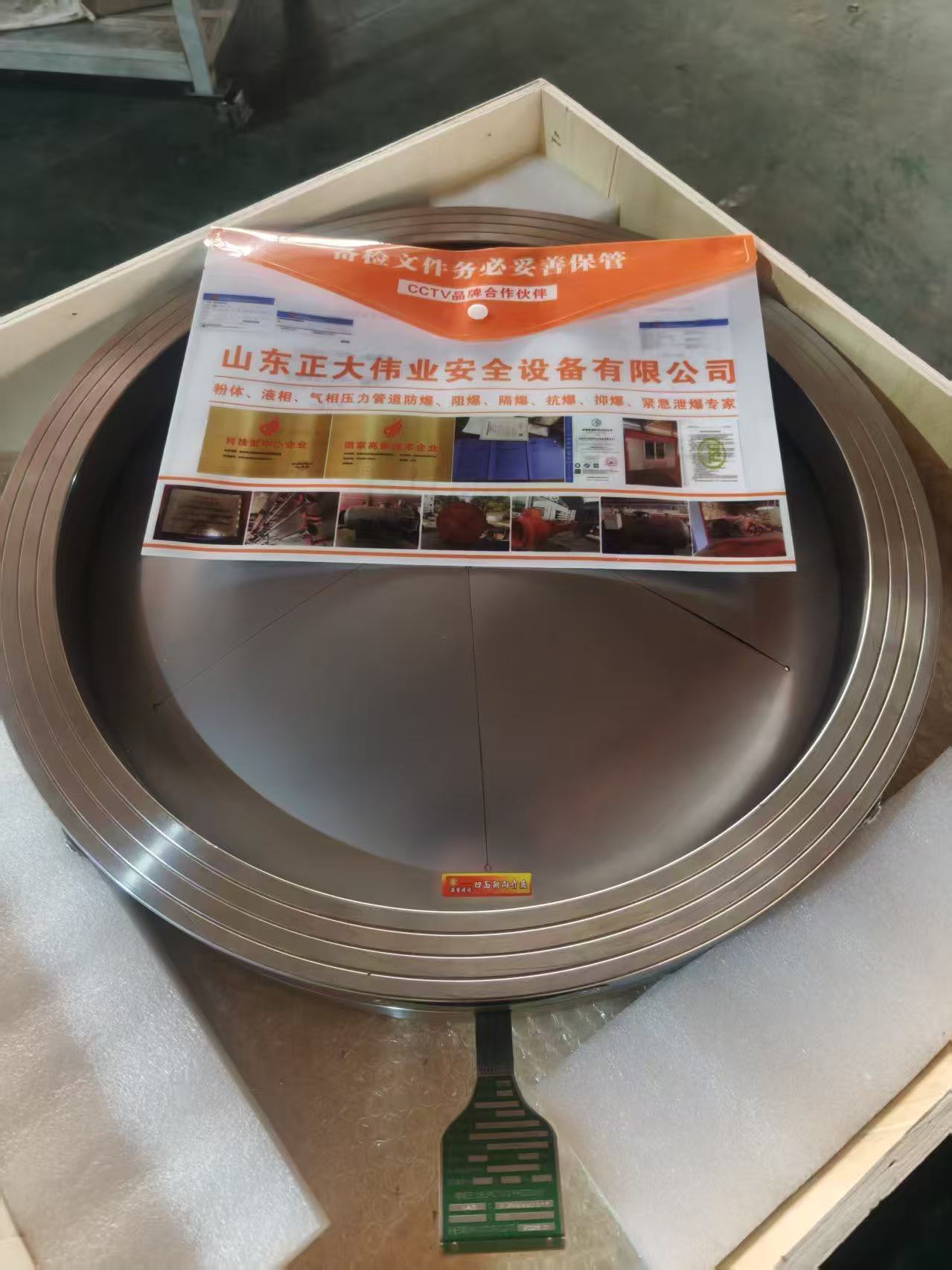
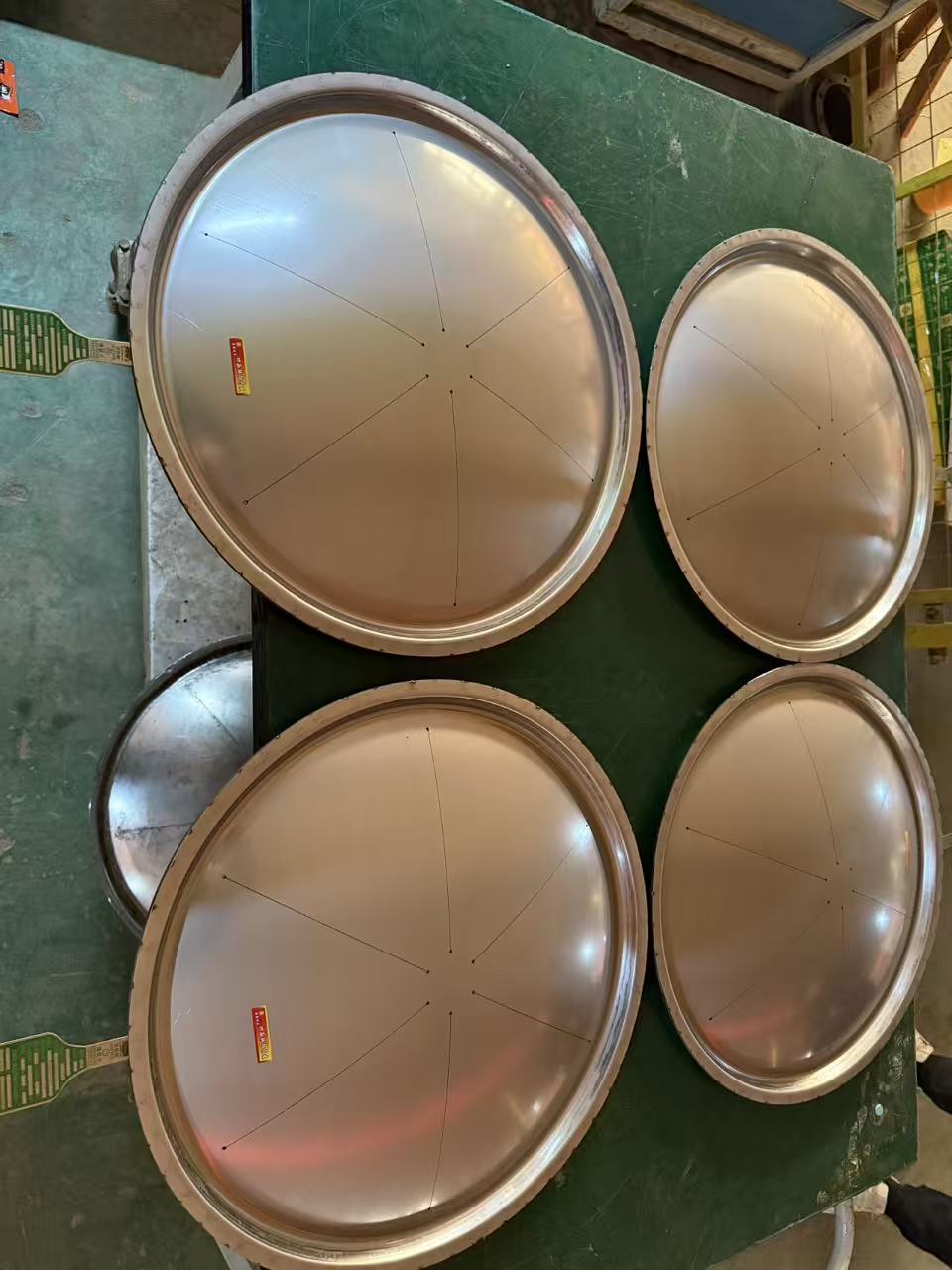
Certified Forward-Acting Rupture Disc
Product Model: ZD-019 (API Certified)
Standards: Specifically designed and certified per API Standard 520 Part I & Part II, and ASME Section VIII, Div. 1.
Key Feature: Certified coefficients of discharge (Kd) for precise relief system sizing according to API guidelines.
Documentation: Includes certified flow resistance data (Kr value) and capacity certification report.
Typical Use: Sizing critical pressure relief systems for refineries, petrochemical plants, and oil & gas production facilities.
Overview
In the hydrocarbon processing industry, precise sizing of pressure relief systems is not just good practice—it's a safety imperative governed by API standards. Our API-certified forward-acting rupture discs are manufactured and tested to provide the verified hydraulic performance data required for accurate system design. With a certified coefficient of discharge (Kd) and documented flow resistance (Kr), engineers can confidently size these discs according to API 520/521 methodologies, ensuring adequate protection for flares, blowdown systems, and equipment in refineries and chemical plants.
Features & Benefits
Certified Performance Data: Eliminates guesswork and excessive safety margins in relief system sizing, potentially leading to more optimal and cost-effective designs.
Industry Acceptance: Certification per API standards ensures acceptance by most oil & gas companies and their engineering contractors.
Comprehensive Testing: Discs are flow tested in accordance with API standards to determine actual capacity and resistance values.
Complete Documentation: Supplied with a formal Certification Package including the Kd, Kr, and test summary.
How It Works
The disc operates as a standard forward-acting device. The certification pertains to its fluid dynamic performance—how much it resists flow when open (Kr) and its effective discharge capacity relative to a theoretical perfect nozzle (Kd). This data is used in the complex equations of API 520 to calculate the required relief area.
Specifications (Descriptive)
Available in common refinery line sizes from DN25 to DN400. Burst pressures cover the typical range for refinery process vessels and columns. The certified coefficient of discharge (Kd) is typically 0.62 to 0.67 for liquid service and 0.80 to 0.85 for vapor service, depending on design and size. The resistance coefficient (Kr) is provided in the test report. Holders are designed for high-pressure hydrocarbon service, often with raised face or ring-type joint (RTJ) flanges.
Q&A
Q: What is the difference between Kd and Kr?
A: Kd (Coefficient of Discharge) accounts for friction and turbulence in the device, relating its actual flow capacity to an ideal nozzle. Kr (Resistance Coefficient) is a dimensionless number used directly in pressure drop calculations for the open disc. Both are derived from flow testing and are essential for API sizing.
Q: Is this disc mandatory for all refinery applications?
A: For new systems designed per API 520/521, using certified devices with known Kd/Kr values is considered industry best practice and is often required by company specifications. For less critical or non-API applications, standard discs may be used.
Q: Who performs the certification testing?
A: Testing is performed at independent, accredited flow laboratories that specialize in safety device certification, ensuring impartial and credible results.
About ZD Safety
We serve the exacting needs of the energy sector. Our API-certified products come with the engineering pedigree and verified performance data that process safety engineers rely on to protect some of the world's largest and most complex industrial facilities.