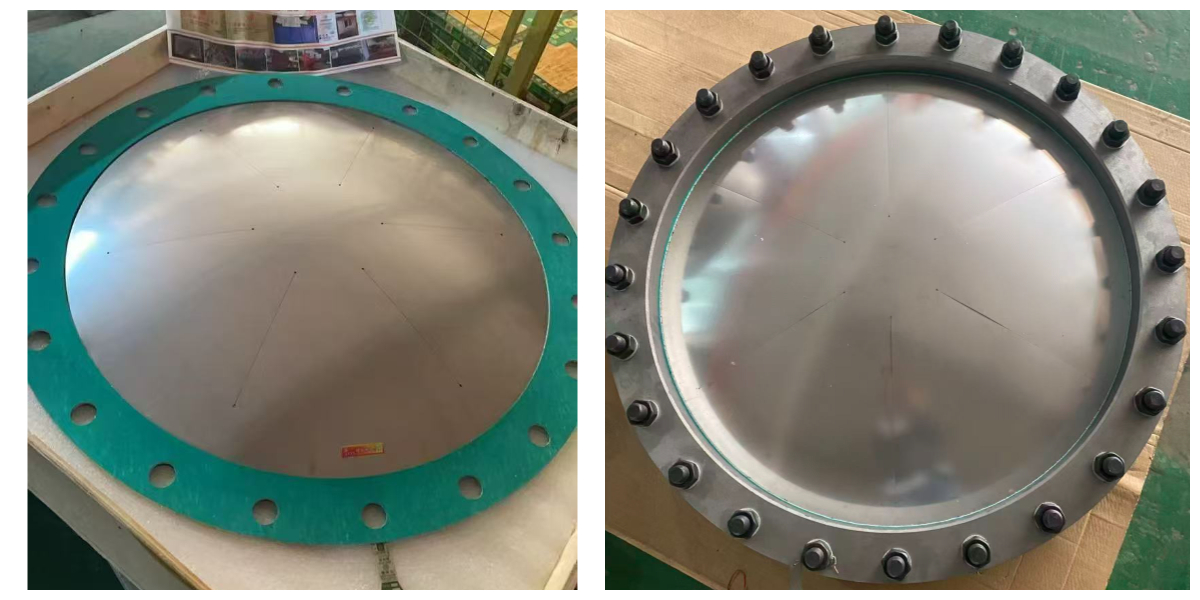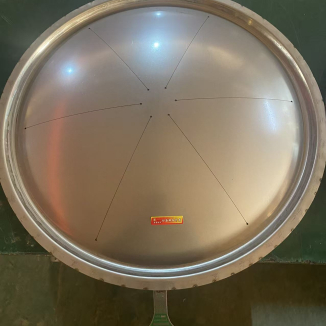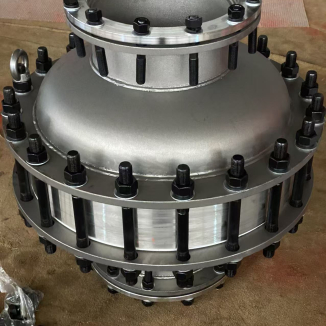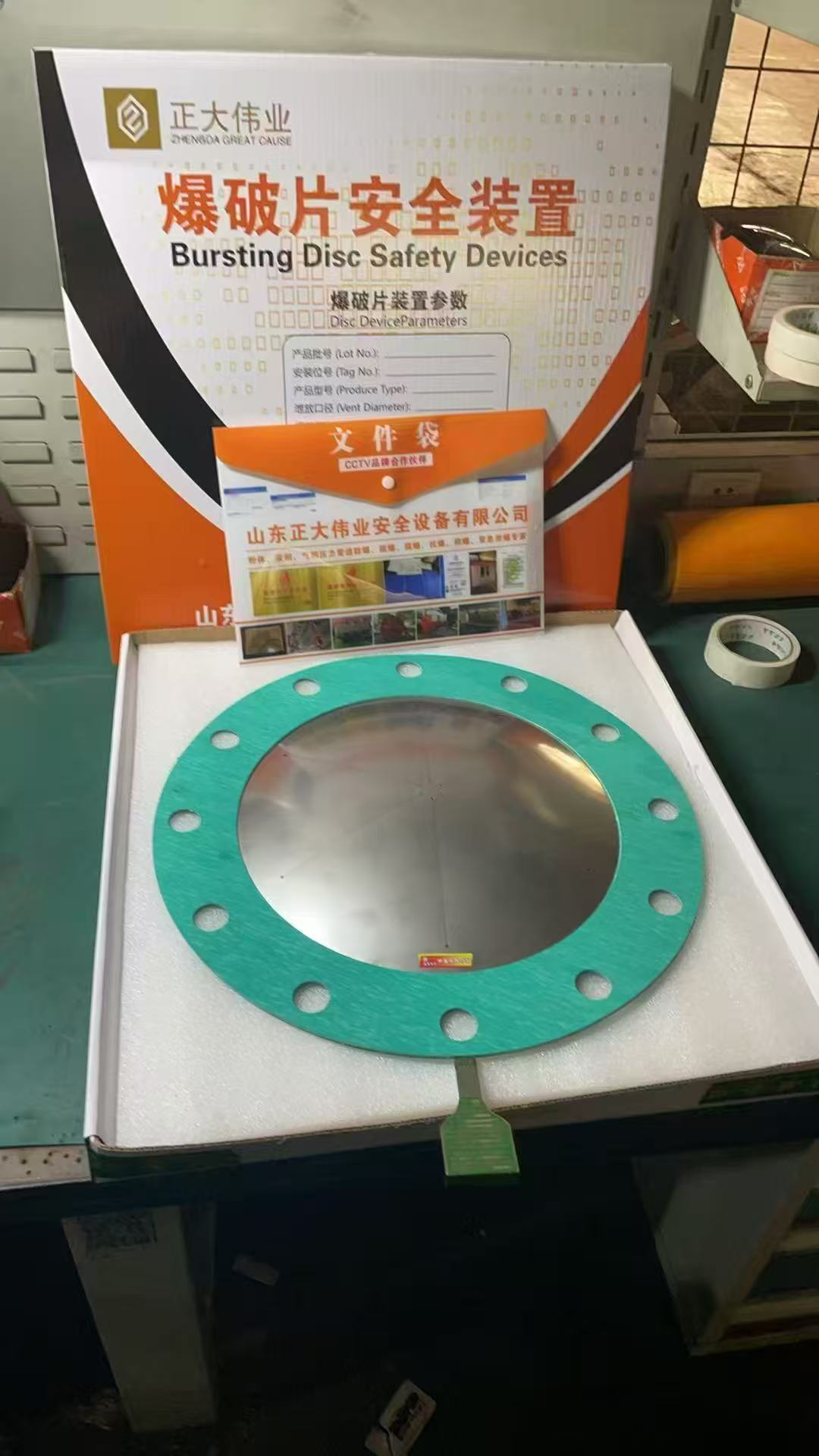
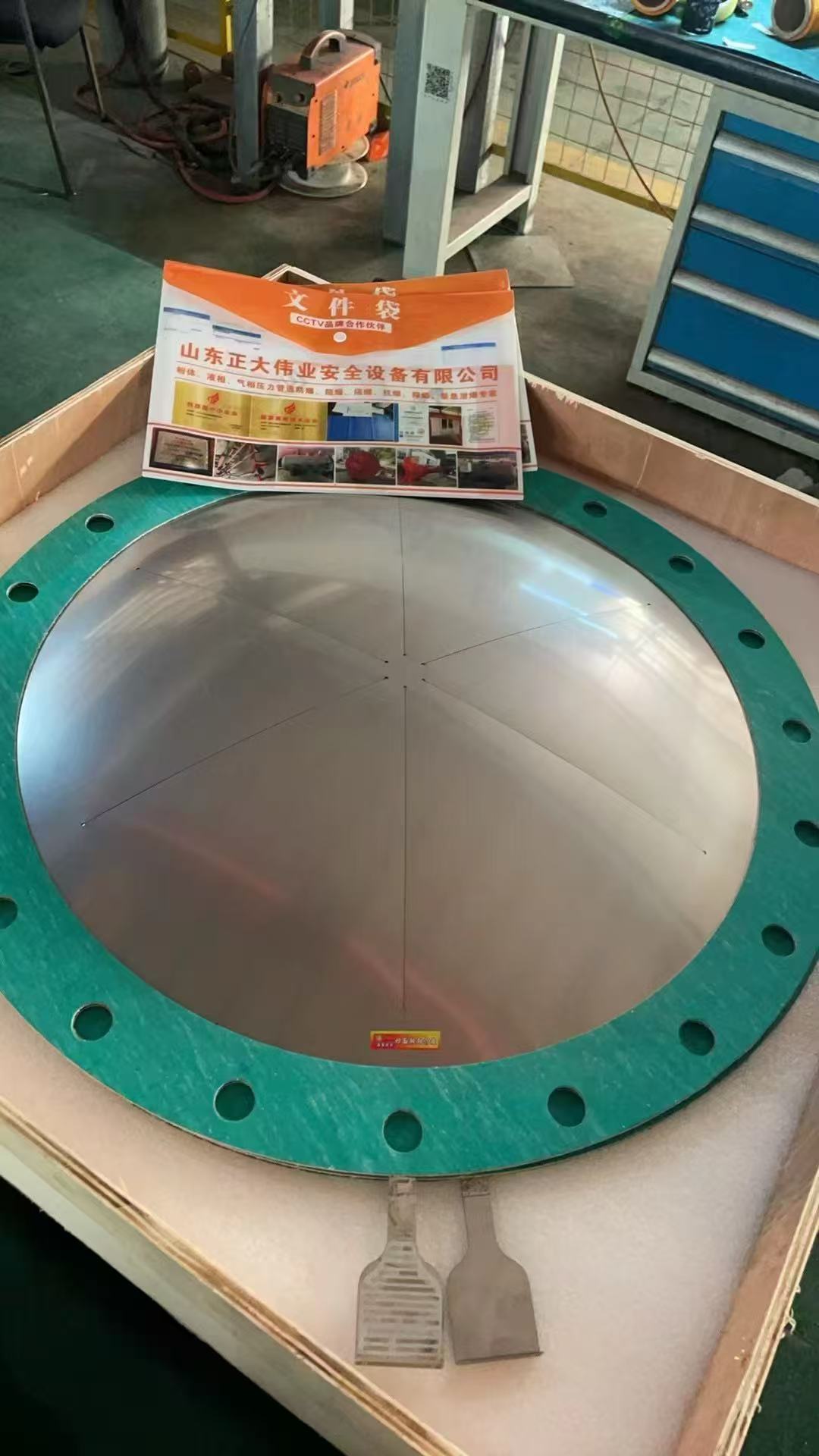
Forward-Acting Rupture Disc Device
Product Model: ZD-001 (Forward-Acting Type)
Material Construction: Bursting membrane made of 316L stainless steel; holders made of carbon steel with nickel plating.
Burst Pressure Range: Standard specifications cover 0.1 barg to 40 barg. Custom higher pressures available upon request.
Operating Pressure Ratio: Capable of continuous stable operation at pressures up to 90% of the minimum rated burst pressure.
Product Detailed Description
Product Overview
In industrial sectors such as petrochemicals, power generation, pharmaceuticals, and food processing, overpressure protection for pressure vessels and piping systems is paramount. The forward-acting rupture disc is a precision-engineered, non-reclosing safety relief device. When system pressure abnormally rises and reaches the preset burst pressure, the meticulously calculated membrane ruptures instantaneously, creating a full-bore discharge path to rapidly eliminate overpressure hazards, thereby safeguarding equipment integrity and personnel safety. This product can serve as an independent pressure relief terminal or be installed in series with a safety valve to provide dual protection or to isolate corrosive media.
Core Product Features
Instantaneous Response & Full-Bore Relief: The membrane ruptures immediately upon reaching the set pressure, with no relief action delay. The relief area equals the pipe cross-section, ensuring extremely high relief efficiency.
Absolute Seal & Zero Leakage: Prior to bursting, the membrane and holder form a metal-to-metal hard seal, guaranteeing zero leakage of process media. Ideal for applications with stringent sealing requirements.
Simple Structure, Reliable Performance: Contains no moving parts, eliminating failure risks associated with mechanical malfunction. Requires virtually no maintenance after installation and operates stably.
Cost-Effective Safety Solution: Offers a lower acquisition cost compared to complex mechanical safety valves, making it an economical and effective choice for protecting numerous low to medium-pressure vessels.
Precise Burst Pressure Control
Each production batch undergoes rigorous pressure testing (sampling or 100% testing), ensuring the actual burst pressure is strictly controlled within the allowable tolerance band of the nominal pressure (typically ±5% or better). This precision is crucial for process safety and stable operation.
Extensive Material & Media Compatibility
By selecting different membrane materials (such as Hastelloy C276, Monel 400, Titanium, Tantalum) and applying treatments like fluoroplastic lining (PTFE/PFA), the discs can withstand various harsh media ranging from strong acids and alkalis to high-purity materials, effectively addressing corrosion and contamination issues.
Advantages of Combination with Safety Valves
When installed upstream of a safety valve, the rupture disc completely isolates the valve's internal (core components, spring, etc.) from the process media. This not only extends the safety valve's service life but also allows for online testing and maintenance of the safety valve without process shutdown.
Burst Action Indication Function
Optional mechanical burst indicators (protruding indicator pin) or electrical burst sensors (micro-switch) are available. Upon disc activation, the indicator triggers immediately, providing local visual warning or remote electrical signal alarm, enabling prompt operator response and location.
Operating Principle
The forward-acting (also known as tension-type) rupture disc is installed with its domed convex side facing the protected process pressure. Under normal working pressure, the membrane is in a state of elastic tension. When the system pressure continuously rises and reaches its preset minimum burst pressure, the tensile stress on the dome area exceeds the material's ultimate strength, causing rapid tearing along pre-weakened score lines (if present) or the central area, resulting in full opening and safe pressure relief.
Product Specification & Selection Guide
This series offers a complete range of nominal diameters from DN15 (½") to DN600 (24"). The burst pressure coverage is extensive, from near-vacuum 0.1 barg to high pressures exceeding 100 barg. For example, the DN25 (1") specification typically offers a selectable burst pressure range of 2 to 15 barg; the DN100 (4") specification typically ranges from 0.5 to 10 barg. For high-pressure, small-bore applications like DN15 (½"), maximum burst pressures can exceed 60 barg. All specifications offer multiple base material options and can be customized with accessories such as knife blades and vacuum support rings. Specific model selection should be based on your system design pressure, temperature, media characteristics, and installation space.
Optional Accessories & Services
Burst Indicators: Available as mechanical pin type or electrical switch type with cable connection.
Backpressure Support Devices: Including vacuum support rings and backpressure supports to withstand system vacuum or high backpressure.
Discharge Guiding Attachments: Protective covers, discharge pipes, or flange adapters for safely directing discharged material.
Special Surface Treatments: PTFE/PFA lining, gold plating, electropolishing, etc., to meet corrosive or high-purity requirements.
Third-Party Inspection Services: Manufacturing surveillance and product certification by authorized bodies (e.g., TÜV, notified bodies for CE) can be provided.
Frequently Asked Questions (Q&A)
Q1: What is the main difference between forward-acting and reverse-acting rupture discs?
A: The primary difference lies in the pressure application mode and activation mechanism. Forward-acting (tension) discs burst open under tensile stress. Reverse-acting (compression) discs buckle inward under compressive stress and are then sheared open by knives. Reverse-acting discs often offer advantages like no fragmentation, better fatigue resistance, and higher backpressure tolerance, making them suitable for demanding applications or series installation with safety valves.
Q2: Since rupture discs are one-time use, isn't the cost high?
A: While there is a material cost for each replacement, their high reliability, zero-leakage characteristics, maintenance-free nature, and the prevention of potential losses from overpressure incidents often result in a very economical Total Cost of Ownership (TCO). They are a critical safety component representing "small cost for preventing major risks."
Q3: How do I determine the replacement interval for a rupture disc?
A: The replacement interval depends on service conditions. For continuously pressurized systems, follow the manufacturer's guidelines, typically 1-3 years, or align with plant shutdown maintenance schedules. More frequent inspection or replacement is needed if the system experiences pressure cycling (fatigue) or if the media is corrosive/ prone to crystallization. Immediate replacement is mandatory after any visible damage, severe corrosion, or an event exceeding the maximum operating pressure/temperature.
Q4: Can a rupture disc be reused?
A: Absolutely not. Rupture discs are single-use safety devices. Once the membrane has undergone plastic deformation (even without bursting) or has experienced an overpressure event, its burst pressure may have altered. It must be replaced to ensure reliability for the next activation.
Q5: What are the key installation precautions?
A: Key considerations include: ensuring holders and sealing surfaces are clean and undamaged; tightening bolts (crosswise) to the specified torque to avoid uneven force causing membrane distortion or leakage; confirming correct installation orientation (dome facing pressure side); and ensuring that if a pressure test is conducted post-installation, the test pressure does not exceed the disc's Maximum Allowable Working Pressure (typically 90% of MBST).