Oil & Gas Industry
In the Oil & Gas industry, bursting discs, flame arresters, and explosion isolation valves are critical safety devices that safeguard the entire industrial chain, from upstream exploration and extraction, through midstream storage and transportation, to downstream refining and chemical processing. They primarily address core risks such as high-pressure wellbore integrity, pipeline explosion isolation, and flashback prevention in refining units.
🔎 Analysis of Specific Application Scenarios
Bursting Discs: The Last Line of Defense for Wellbore Safety and Pipeline Emergencies
The high-pressure and high-risk environment of the Oil & Gas industry makes bursting discs an indispensable ultimate protection device.
Core Value: Compared to safety valves, bursting discs offer unique advantages such as zero leakage, extremely fast response, corrosion resistance, and suitability for harsh operating conditions. Especially downhole and within pipelines, they are often the only feasible means of pressure relief.
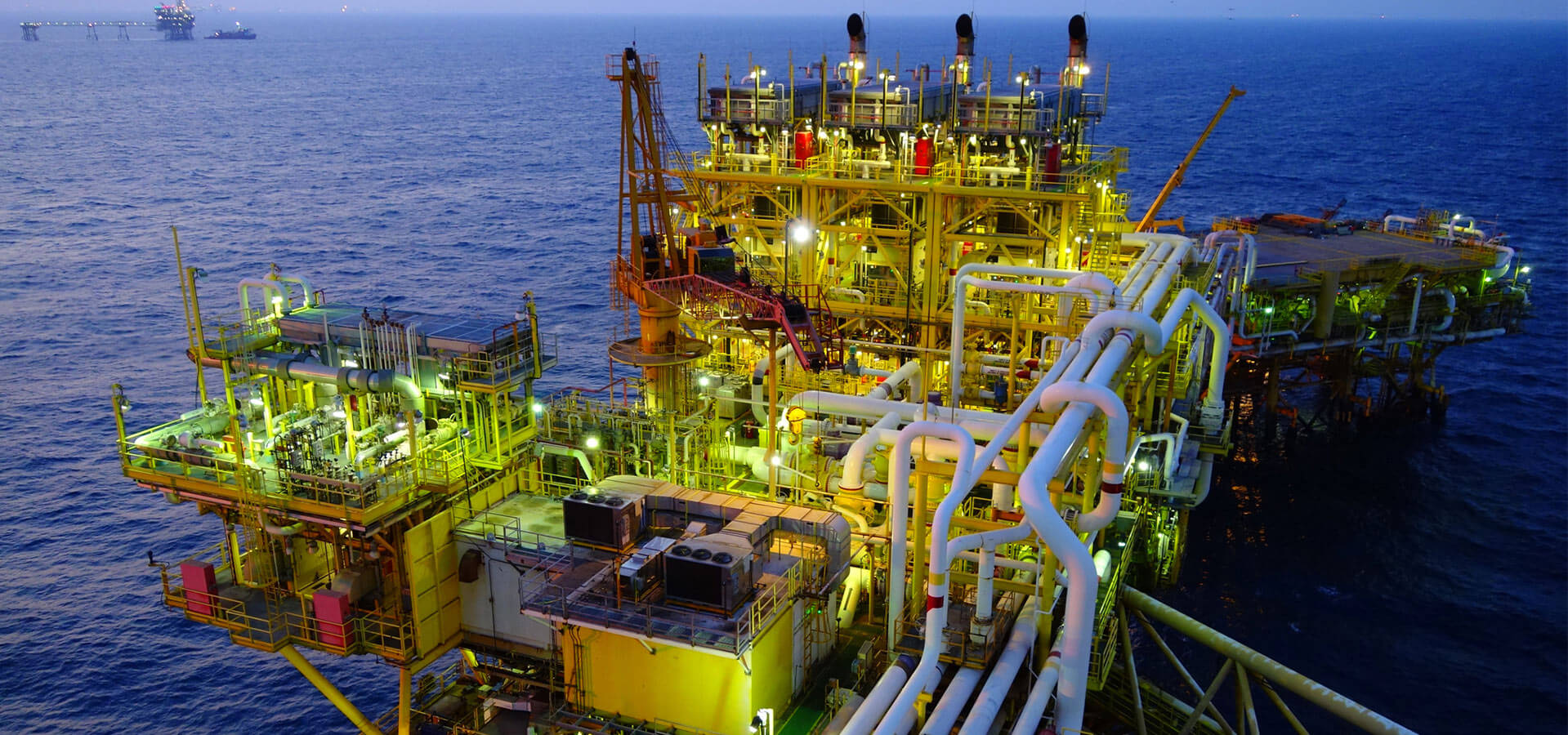
Typical Case 1: Casing Annulus Pressure Management in Deepwater Oil & Gas Wells – In deepwater oil & gas development in the South China Sea, due to high temperatures and pressures during production, the fluid within the sealed casing annulus (the space between multiple casing strings) expands, causing pressure to build continuously and potentially collapsing the casing. Technicians installed annulus pressure relief devices, centered around high-precision rupture discs, at critical locations. When the annulus pressure reaches a preset value (e.g., 36.6 MPa), the rupture disc bursts precisely, releasing the high-pressure fluid, thereby protecting the wellbore integrity. This has been successfully applied in multiple deepwater wells in the eastern South China Sea, with no downhole failures caused by annulus pressure occurring after production commenced.
Typical Case 2: Emergency Response for Pig Jamming in Long-Distance Natural Gas Pipelines – During initial or infrequent pigging operations in natural gas pipelines, the pig (a "piston" used to clean the pipeline) can become stuck due to debris, causing upstream pressure to rise continuously and potentially leading to pipeline rupture. Engineers designed a pressure-controlled pig, installing a pressure-actuated bursting disc at its front. If the pig gets stuck, the differential pressure across it increases rapidly, causing the bursting disc to burst, creating a flow path that quickly reduces upstream pressure and prevents pipeline rupture. This technology was successfully applied in the Jinan-Qingdao natural gas pipeline.
Flame Arresters: Key Equipment Evolving from Domestic Monopoly Breakthrough to International Leadership
In oil & gas refining, storage, and transportation, preventing flame propagation along piping systems is a core safety challenge.
Core Technological Breakthrough: The Sinopec Research Institute of Safety Engineering successfully developed a new type of flame arrester based on "detonation induction and mitigation technology," breaking through foreign technological monopolies.
Product Series and Applications: Based on this technology, a series of products have been developed, including low-pressure-drop in-line stable detonation arresters, IIC group types, unstable detonation arresters, endurance burning types, high-temperature types, and high-pressure types.
Low-Pressure-Drop In-Line Stable Detonation Arrester: Pressure drop is 20% lower than existing technologies, setting a domestic record for the largest diameter flame arrester successfully tested.
IIC Group Type: Filled a market gap, suitable for the most demanding media like acetylene and hydrogen.
Unstable Detonation and Endurance Burning Types: Successfully broke foreign monopolies.
Application Scope: These flame arresters are now widely used in major energy and chemical enterprises such as Sinopec, PetroChina, and CNOOC. For example, CNOOC Refining & Chemical Co., Ltd. purchased in-line detonation flame arresters for the hydrogenation unit of its higher alcohol project to prevent flashback explosions in this high-risk unit.
Explosion Isolation Valves: The Key "Check Valves" for Dust Explosion Protection in Oil & Gas Processing
Compared to upstream extraction and long-distance pipelines, the downstream refining and chemical sectors of the oil & gas industry—especially processes like polyolefin production (e.g., polyethylene, polypropylene), sulfur forming and packaging, and catalyst preparation—face risks associated with combustible dust explosions.
Working Principle and Importance: Installed horizontally in dust collection systems or material conveying pipelines. During normal operation, the valve is held open by the airflow. When an explosion occurs in downstream equipment (e.g., a dust collector), the resulting shockwave instantaneously closes the valve disc and mechanically locks it, isolating the explosion to a localized area and preventing secondary explosions.
Application Scenarios: In the pneumatic conveying systems of polypropylene/polyethylene plants, and the forming and packaging units of sulfur recovery units, the combination of explosion isolation valves and bursting discs (flameless venting) is a common configuration to prevent the spread of dust explosions.
💡 Safety Focus for Different Oil & Gas Processes
The oil & gas industry has a long chain, with different segments emphasizing different safety devices:
Upstream (Exploration & Production): The focus is on wellbore pressure control and wellhead safety. Bursting discs (downhole annulus, pigs) are specialized applications.
Midstream (Storage & Transportation): The focus is on pipeline explosion protection and tank safety. Flame arresters (pipelines, flares, tank breather valves) are standard equipment.
Downstream (Refining & Chemicals): The focus is the most comprehensive. This includes overpressure protection for process units (bursting discs), flashback prevention for furnaces and flare systems (flame arresters), and dust explosion isolation for solid material handling processes (explosion isolation valves).
In summary, these three types of equipment collectively form the comprehensive passive safety protection network for the oil & gas industry, from downhole to surface, and from pipelines to refineries. Selection must be specifically designed based on the specific medium (natural gas/crude oil/hydrogen/hydrogen sulfide/dust), pressure, temperature, pipe size, and regulatory standards.