Industrial Gases
In the Industrial Gases sector—covering the production, storage, and transportation of gases like oxygen, nitrogen, hydrogen, acetylene, and chlorine—the risk of overpressure, backflow, flashback, and dust explosions is extremely high. Bursting discs, flame arresters, and explosion isolation valves are critical safety devices deployed throughout the supply chain.
🔎 Analysis of Specific Application Scenarios
Bursting Discs: Protecting Cryogenic and High-Pressure Gas Systems
Industrial gases often exist in extreme conditions—either as cryogenic liquids or at very high pressures. Bursting discs are essential safety devices in these environments.
Core Value: Bursting discs offer perfect leak tightness, which is critical for valuable or hazardous gases. Unlike safety valves, they do not rely on moving parts that could freeze or stick.
Typical Case 1: Marine Engine Starting Air Systems — On large ships, high-pressure air (around 30 bar) is used to start the main propulsion engines. If a starting air valve leaks, hot combustion gases can flow back into the air line, creating an explosive mixture. A bursting disc is fitted in the starting air pipe. In the event of an explosion, the disc bursts to relieve the excessive pressure. It is designed with a protective cap that can be turned to cover the opening, allowing the engine to continue running on remaining cylinders even after the disc has ruptured, which is critical for ship maneuvering in restricted waterways. This concept is analogous to protecting compressed gas tube trailers or high-pressure storage banks in industrial gas facilities.
Special Considerations for Oxygen Service: Bursting discs used in oxygen systems require special cleaning to remove any hydrocarbons that could cause ignition. Products are available that are certified "Cleaned for Oxygen Service" according to international standards like EIGA 13/12.
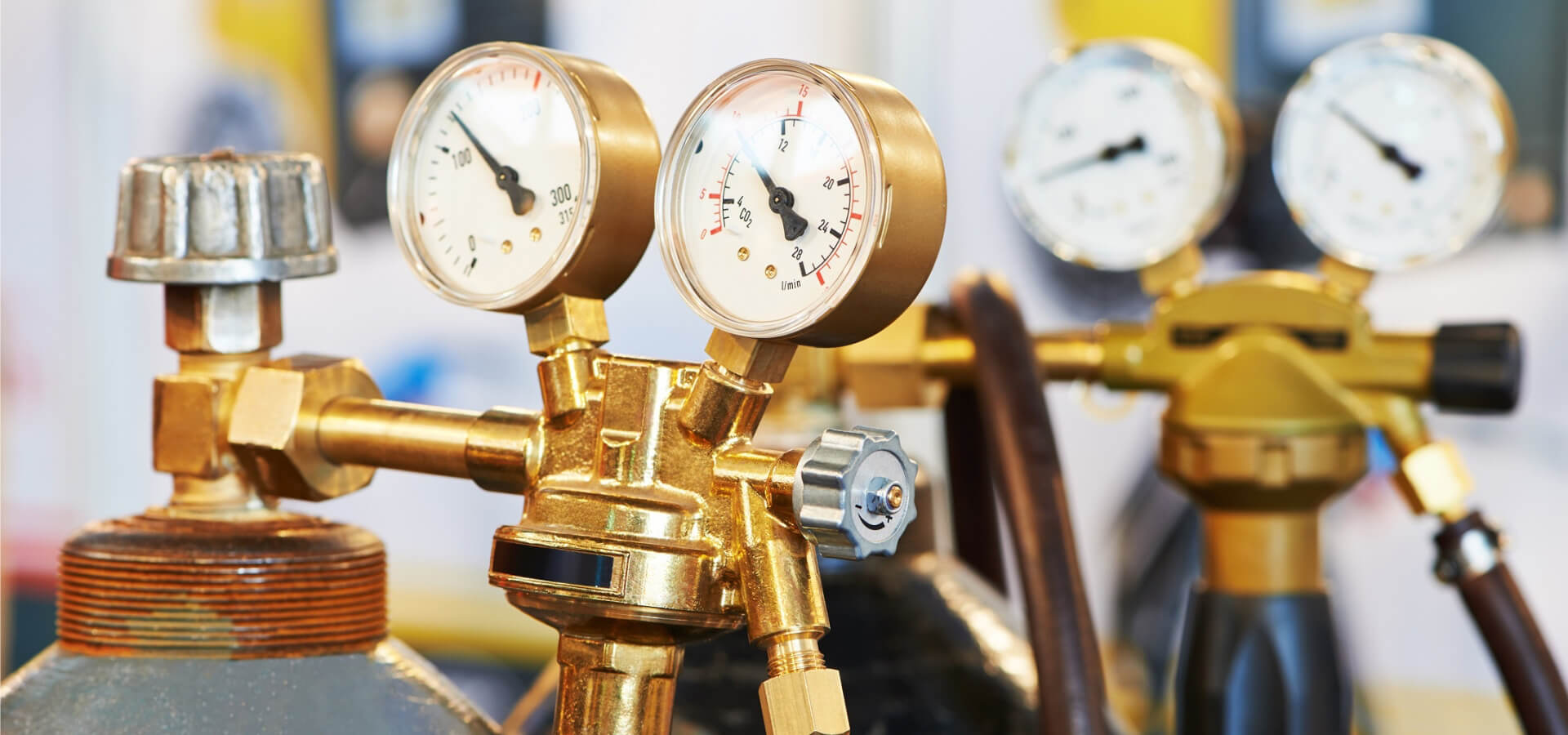
Flame Arresters / Flashback Arrestors: The "Guardian" at the Point of Use
In industrial gas applications, the greatest risk often occurs at the point where the gas is being used—such as a welding torch, a laboratory burner, or a chemical reactor.
Core Technology: These devices combine multiple safety functions in a compact unit: a flame arrestor (a stainless steel matrix that quenches the flame), a temperature-sensitive cutoff valve (stops the gas flow if prolonged burning is detected), and a non-return valve (prevents reverse gas flow).
Typical Case 2: Hydrogen and Fuel Gas Protection — Hydrogen is the most challenging gas to protect against due to its extremely high flame speed and wide explosive range. Specialized flashback arrestors have been developed using sealing materials optimized for hydrogen and large-surface-area stainless steel flame arrestors. These are used at cylinder outlets and pipeline distribution points to protect the gas supply from flashbacks originating from burners or torches.
Marine Engine Cylinder Protection: On large diesel engines, small flame arrestors are fitted on every cylinder before the start air valve. Their job is to arrest any flame coming out of the cylinder through a leaking valve, preventing it from igniting the mixture in the starting air manifold.
Explosion Isolation Valves: Protecting Downstream Equipment in Gas Processing
The production of industrial gases like hydrogen via electrolysis, or the handling of by-products like carbon black, involves the risk of dust or gas explosions propagating through ductwork.
Passive vs. Active Systems:
Passive Flap Valves: Devices like the Fike DFI are "passive" isolation valves. They are held open by normal process flow. If an explosion occurs downstream (e.g., in a dust collector), the pressure wave slams the valve closed and mechanically locks it, isolating the explosion and protecting upstream areas. They are suitable for a wide range of applications, including protecting against ST1, ST2, and light metal dusts.
Active High-Speed Valves: For applications requiring a positive shut-off, active systems are used. For example, the IEP Technologies High-Speed Isolation Valve uses an explosion pressure detector to trigger a control unit, which then rapidly discharges nitrogen into a piston actuator to close a stainless steel gate valve in milliseconds. This is used to protect equipment like dust collectors, mills, fans, and vapor recovery lines in gas processing plants.
💡 Special Focus: Unique Challenges of Industrial Gases
Oxygen Compatibility: Any safety device used in oxygen service must be rigorously cleaned and made of compatible materials to avoid combustion. Non-return valves and flame arrestors in oxygen lines prevent the backflow of fuel gases into the oxygen supply.
Hydrogen Specifics: Hydrogen flames are nearly invisible and have a very high burning velocity. Flame arrestors for hydrogen must have very small gap widths to successfully quench the flame. Specialized arrestors are tested and certified for hydrogen up to specific pressures (e.g., 9 bar).
Cryogenic Service: Bursting discs used on liquid nitrogen or liquid oxygen tanks must be designed to function correctly at extremely low temperatures (below -150°C), where standard materials can become brittle.