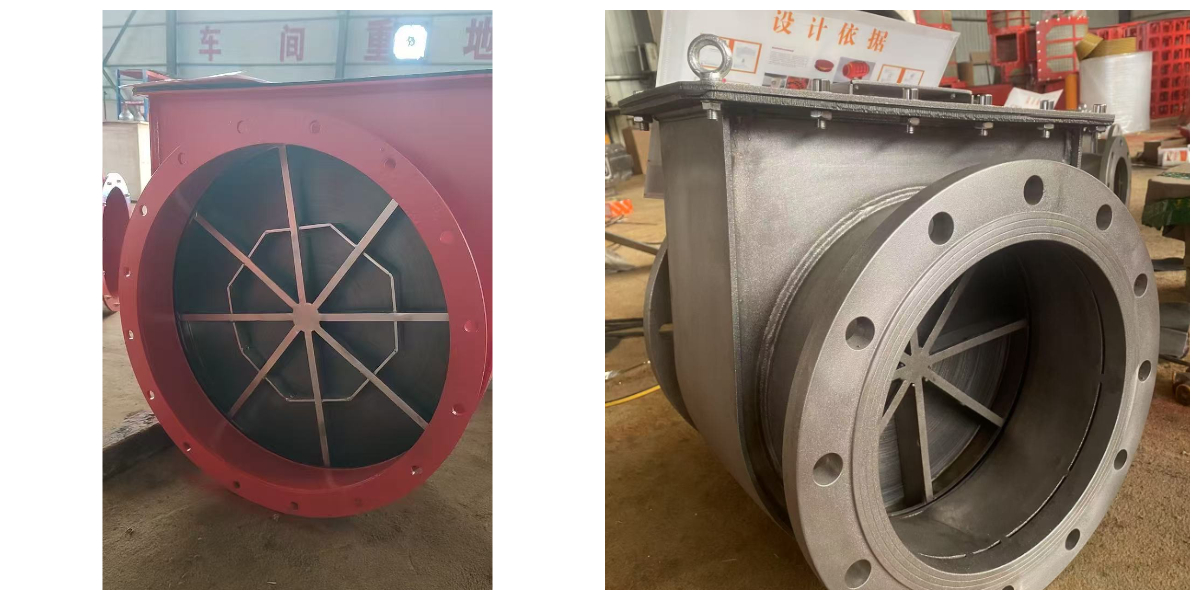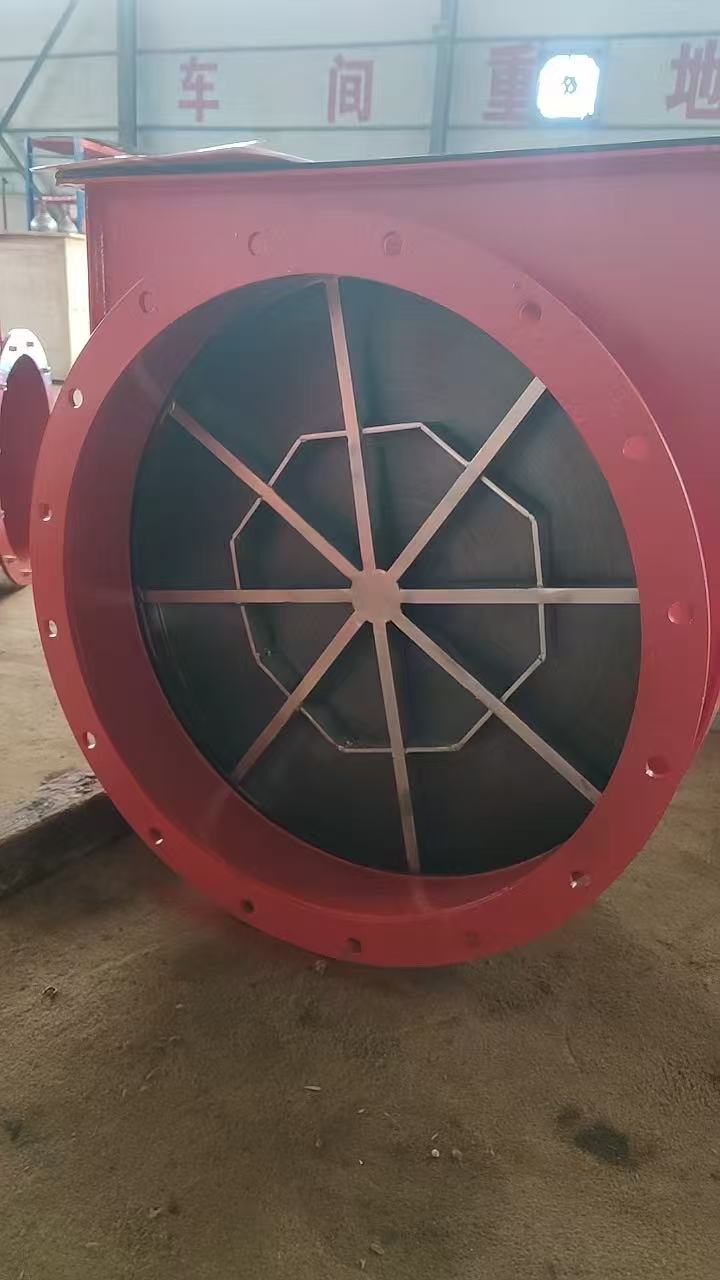
Detonation Flame Arrester
Product Model: ZD-FA03 (In-Line Detonation Arrester)
Type: Detonation (In-Line) Arrester
Material: Heavy-duty Housing: Forged or Cast Carbon/Stainless Steel. Element: Robust, multi-layer crimped metal ribbon or special alloy matrix.
Key Feature: Engineered to withstand and extinguish supersonic detonation flames and their associated high-pressure shocks.
Certifications: ATEX, IECEx, FM for detonation duty. Tested per EN ISO 16852, etc.
Typical Use: Long pipelines carrying flammable gases (e.g., hydrogen, acetylene, ethylene), reactor vent headers, flare system inlets, and anywhere deflagration-to-detonation transition (DDT) is possible.
Overview
A detonation is a more violent event than a deflagration, involving a supersonic shock wave coupled with a combustion wave. The pressures and forces are orders of magnitude higher. A standard deflagration arrester would be destroyed. The Detonation Flame Arrester is a heavy-duty device specifically engineered for this extreme duty. It is designed to survive the mechanical impact of the leading shock wave and then quench the following detonation flame. It is a critical safety component for systems where confinement and pipe length can cause an initial flame to accelerate into a detonation.
Features & Benefits
Withstands Extreme Forces: Rugged housing and element construction designed to survive overpressures of 20 barg or more, typical of detonations.
Stops Supersonic Flames: The element matrix is designed to quench flames traveling at speeds exceeding 2000 m/s.
Prevents Catastrophic Failure: Protects downstream equipment (e.g., flares, scrubbers, tanks) from the devastating effects of a detonation.
Validated for Severe Service: Undergoes rigorous testing with unstable gases and under conditions that guarantee DDT.
How It Works
It must perform two functions: 1) Structurally contain the initial shock wave pressure, and 2) Thermally quench the detonation flame. The element is typically thicker and more robust than a deflagration element. As the shock wave passes through (causing a near-instantaneous pressure spike), the device holds. The following detonation flame enters the complex channels of the element, where its energy is dissipated as heat into the massive metal structure, extinguishing it.
Specifications (Descriptive)
Sizes range from DN50 to DN300 due to the high forces involved. Pressure ratings are high, e.g., ANSI 300#, 600# or higher. Key specs include certified stable and unstable detonation velocities, maximum explosion pressure (Pmax) withstand, and distance from ignition source requirements. The housing is often a forged steel block with reinforced flanges. Elements are typically welded into robust cartridges.
Q&A
Q: How do I know if I need a deflagration or detonation arrester?
A: The need is determined by system geometry and gas properties. Long, straight pipes with minimal obstructions and gases with high flame speeds (like Hydrogen) are prone to DDT. Engineering standards (e.g., EN 14942) provide guidelines and calculations. If DDT is possible within the pipe run, a detonation arrester is required.
Q: Can a detonation arrester be used for deflagration?
A: Yes, it will also stop a deflagration. However, it is more expensive, heavier, and may have a higher pressure drop than a dedicated deflagration arrester. It is used where the more severe hazard exists.
Q: What is the "critical length" or "run-up distance"?
A: This is the pipe length required for a flame to accelerate from a slow deflagration to a detonation. The detonation arrester must be installed before this critical point to be effective. This distance is gas and pipe-specific.
Q: Is maintenance different?
A: Inspection intervals may be similar, but the consequences of failure are higher. After any suspected detonation event, the arrester must be inspected internally by a specialist. The element should be replaced if there is any sign of deformation or damage.
About ZD Safety
We specialize in protection against the most severe explosion hazards. Our detonation arresters are the product of advanced combustion dynamics engineering and rigorous testing, providing the ultimate barrier against propagating detonations in pipeline systems.