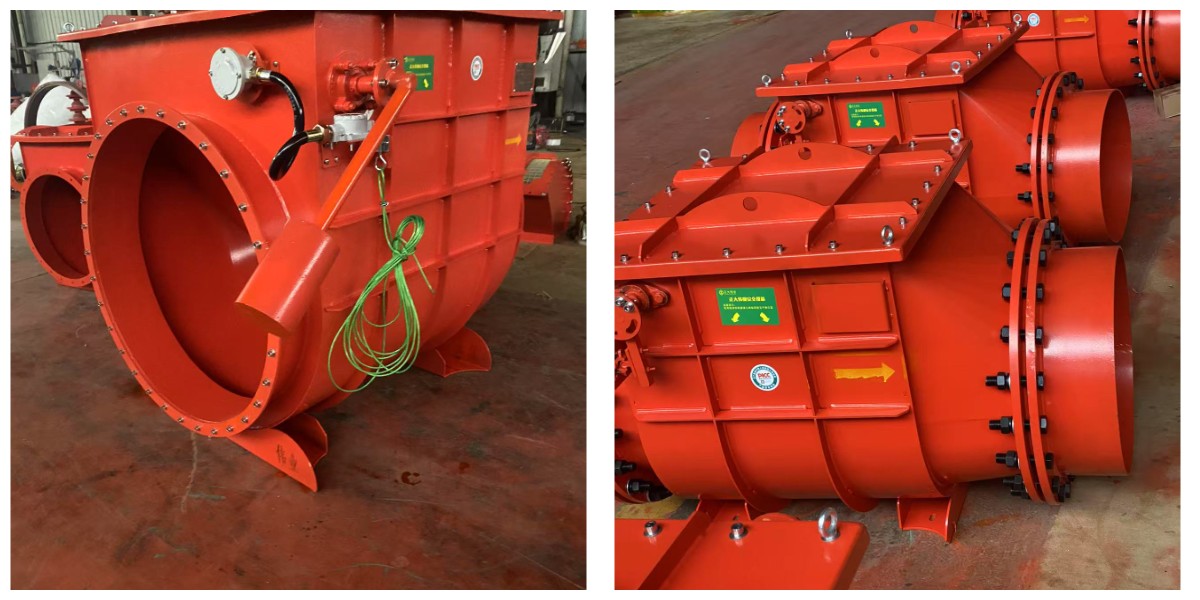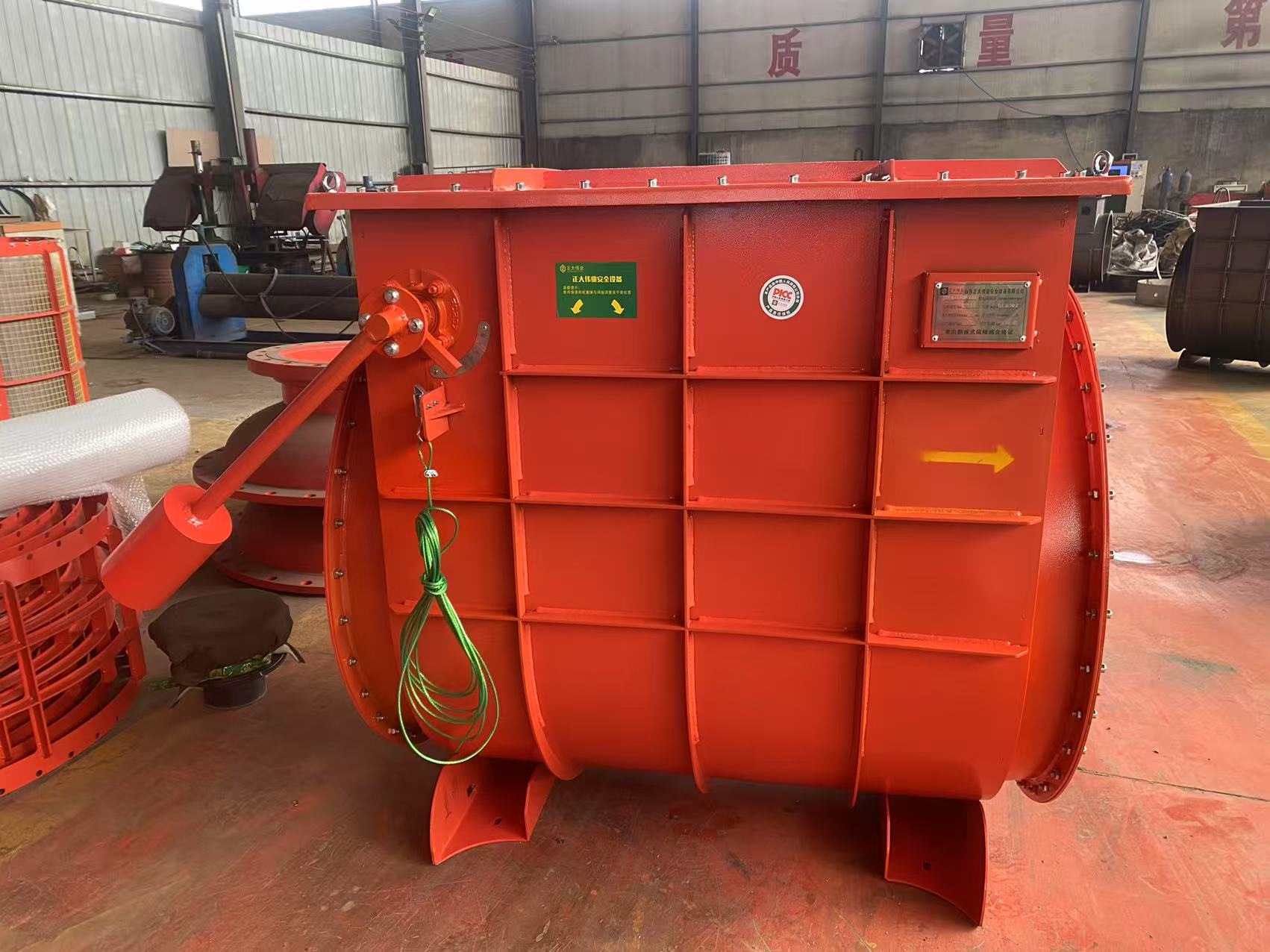
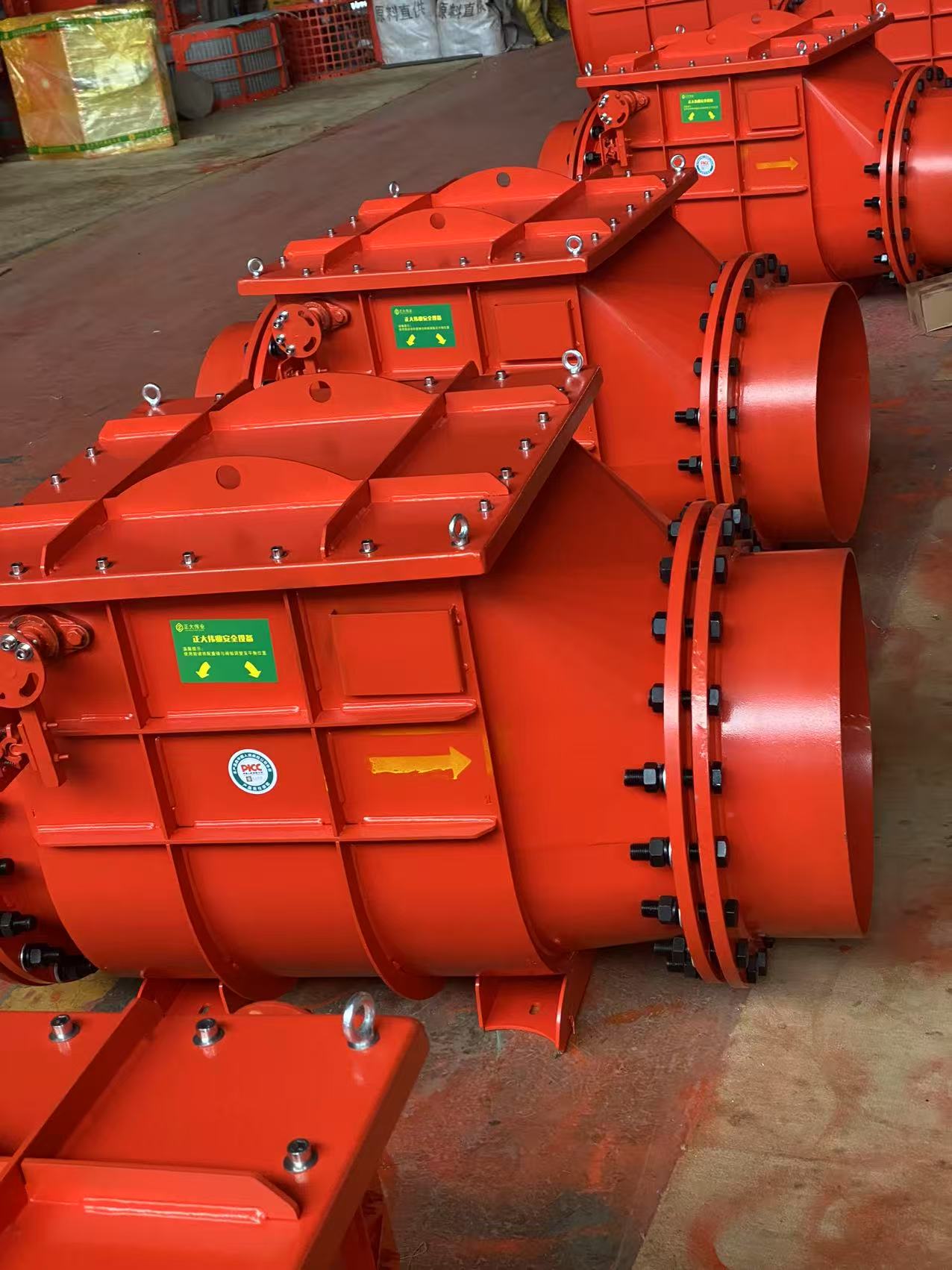
Pipeline Explosion Isolation Valve
Materials: Housing Carbon Steel + Valve Disc Stainless Steel
Pressure Drop: ≤500Pa @ 25 m/s
On-site servicing possible without pipeline removal
Standard horizontal mounting; vertical installation available for specific applications
Normally open valve disc design; optional blast detection sensor for closure monitoring
Integrated anti-bounce locking mechanism
Magnetic actuation for ultra-fast response
Aerodynamic internal profile prevents dust accumulation
Industries & Applications
This valve is widely used in industries where combustible dust is generated or processed, including:
Metal Processing: (e.g., aluminum, magnesium powder)
Food & Grain: (e.g., flour, starch, sugar)
Chemical & Pharmaceutical
Woodworking
Power & Environmental Protection
Selection & Installation Considerations
Material Choice: Select carbon or stainless steel based on the corrosiveness of the material being conveyed and environmental conditions.
Size (DN): Must match the pipeline diameter. Larger sizes are available for big systems.
Dust Characteristics: Confirm the valve's Kst rating is suitable for your specific dust type (e.g., organic, metal).
Installation Position: Critical: Must be installed horizontally. Ensure the arrow indicating flow direction is correct.
Safety Distance: Install at the manufacturer's recommended distance from the protected equipment (like a dust collector) for optimal performance.
Advantages
High Reliability: Passive design ensures operation even during power failure.
Fast Response: Closes within milliseconds upon detecting an explosion pressure wave.
Low Maintenance: Robust design requires minimal upkeep.
Low Pressure Loss: Streamlined internal design minimizes impact on normal system airflow.
Notes for Your Reference
The provided information is synthesized from multiple Chinese manufacturers' data. For precise procurement, engineering, or installation:
Obtain Official English Catalogs: It is strongly recommended to contact the specific manufacturer (e.g., Ventex, ZTAK, JuGe Industrial) for their official, detailed English-language technical documentation.
Consult Experts: Always involve safety engineers or explosion protection specialists when designing or modifying systems involving combustible dust.