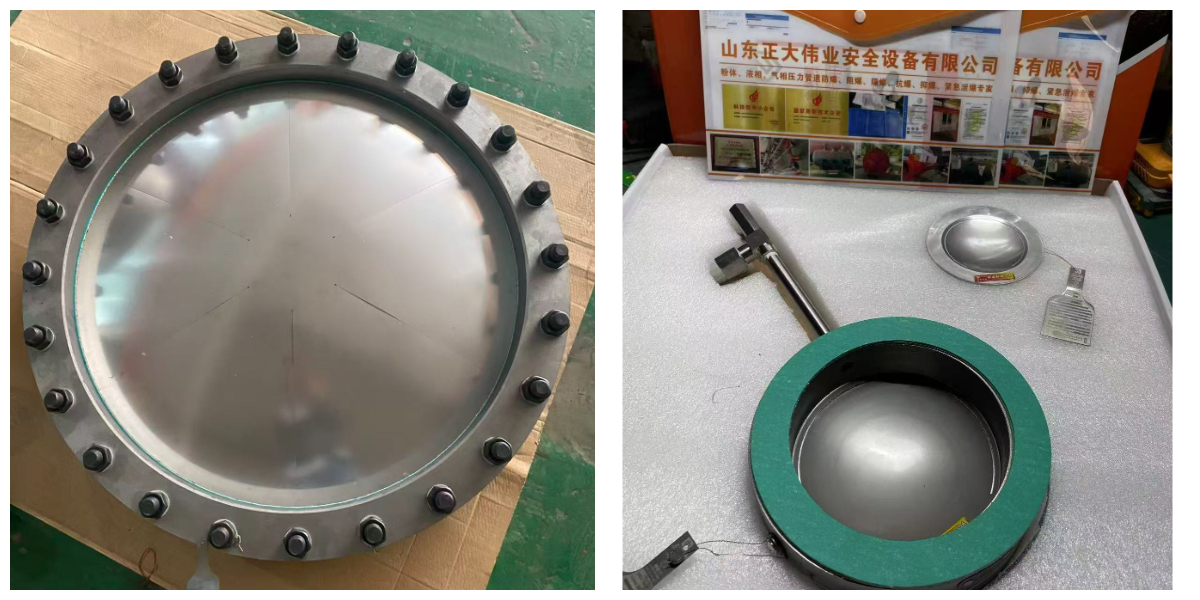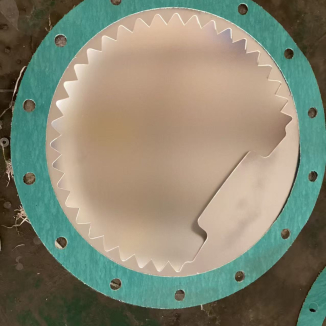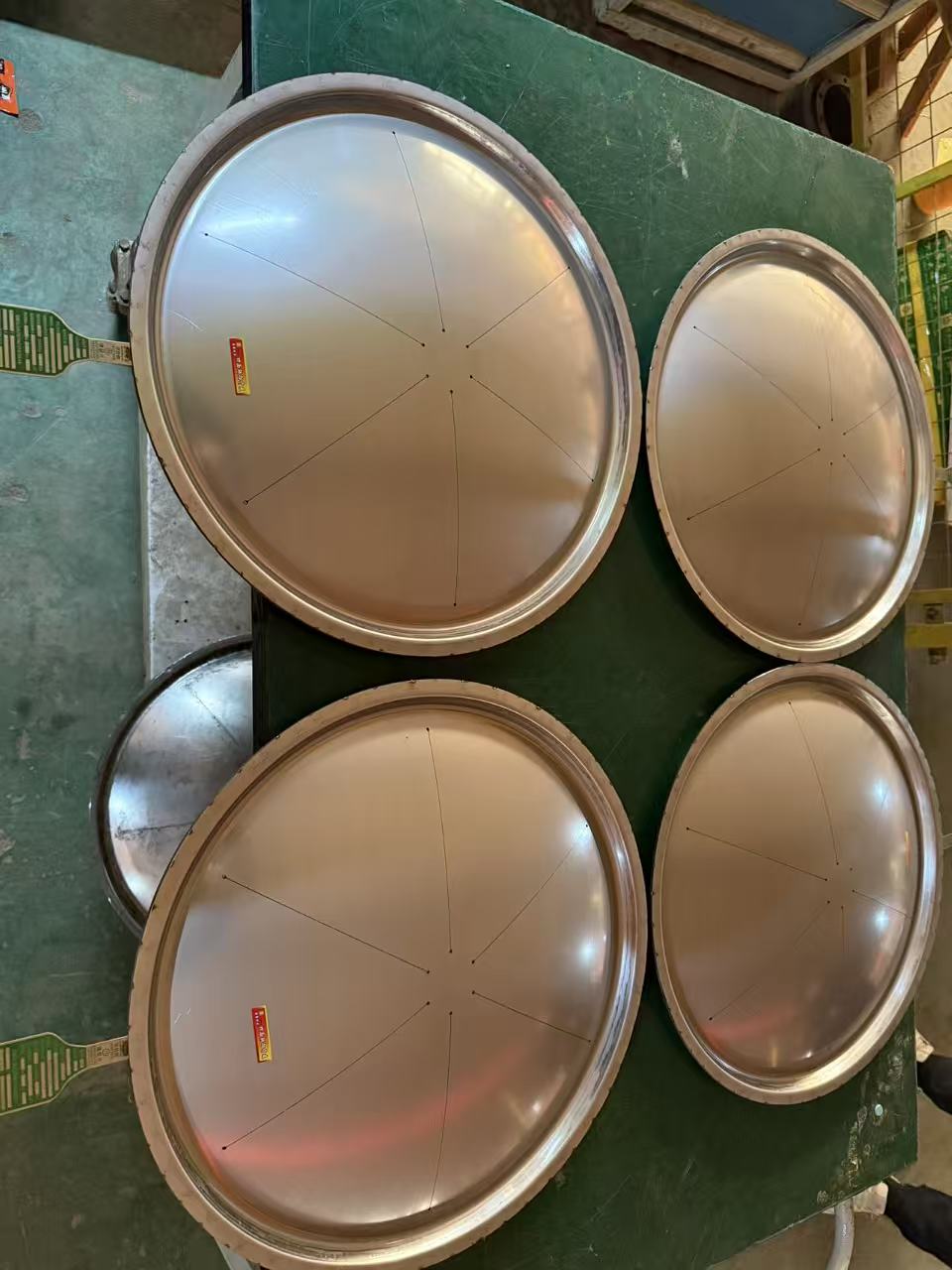
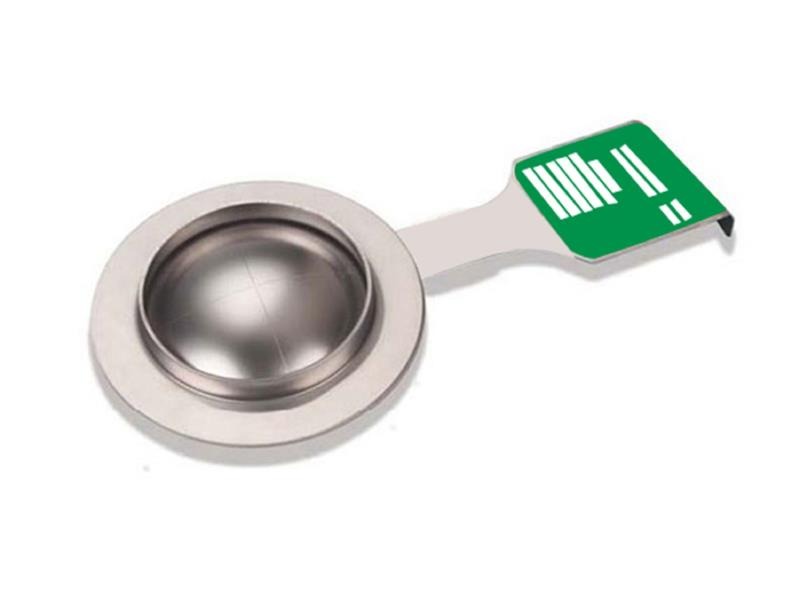
Corrosion Resistant Forward-Acting Disc
Product Model: ZD-012 (PFA-Lined)
Material: Metal membrane (Hastelloy C276) with full PFA (Perfluoroalkoxy) lining.
Key Feature: Full fluoropolymer lining provides a barrier against the most aggressive acids, bases, and solvents.
Temperature Limit: Liner suitable for continuous service up to 180°C.
Burst Range: 0.5 barg to 16 barg, based on the underlying metal strength.
Typical Use: Ultra-corrosive processes in chemical synthesis, pharmaceutical API production, and semiconductor etching.
Overview
For processes involving hydrofluoric acid, hot concentrated sulfuric acid, halogen gases, or aggressive solvent mixtures, standard alloys may not suffice. This disc combines the mechanical strength and precise burst performance of a high-grade alloy membrane with the near-universal chemical resistance of a PFA liner. The liner is bonded to create a seamless barrier, ensuring the process fluid only contacts inert PFA, eliminating corrosion of the metal disc and preventing product contamination.
Features & Benefits
Unmatched Chemical Barrier: PFA liner resists almost all industrial chemicals, providing protection where even exotic metals like tantalum may fail.
Product Purity: Ideal for high-purity processes, as the inert liner prevents metallic ion leaching.
Extended Service Life: By completely isolating the structural metal from the process, the disc's lifespan in corrosive duty is significantly extended.
Easy to Clean: The smooth, non-stick PFA surface prevents buildup and simplifies cleaning or flushing.
How It Works
System pressure is transmitted through the flexible, non-structural PFA liner to the underlying metal rupture disc. When the pressure reaches the disc's calibrated burst point, the metal membrane ruptures. The PFA liner, being thin and in tension, tears concurrently with the metal, providing an unobstructed opening lined with PFA all the way to the flange face.
Specifications (Descriptive)
Sizes range from DN25 to DN200. The burst pressure is determined by the metal membrane, typically Hastelloy C276 or similar, with a common range of 1 to 10 barg for a DN80 size. The PFA liner thickness is standardized to ensure reliability without affecting burst pressure. Flange connections are standard ANSI or DIN, with the PFA liner typically extending as a gasket to protect the flange face. Holders are often coated or made of corrosion-resistant alloy.
Q&A
Q: What is the difference between PTFE and PFA lining?
A: Both are fluoropolymers. PFA has a higher continuous service temperature (up to 180°C vs. 150°C for PTFE) and is often more resistant to permeation and chemical attack, making it suitable for more severe services. It is also more fusible, allowing for better seam welding in liners.
Q: Can the liner detach and block the outlet?
A: Proper design and manufacturing are critical. Our discs are constructed with mechanically locked or fusion-bonded liners that are engineered to tear completely and open with the metal petals, minimizing any risk of blockage.
Q: Is this disc suitable for sanitary service?
A: While chemically inert, the standard design is for industrial flanges. For sanitary (Tri-Clamp) connections and polished finishes, please refer to our dedicated Sanitary/Hygienic model (ZD-009).
About ZD Safety
We solve extreme corrosion challenges. Our PFA-lined discs represent the pinnacle of material science applied to safety devices, allowing safe operation of processes that push the boundaries of chemistry.